

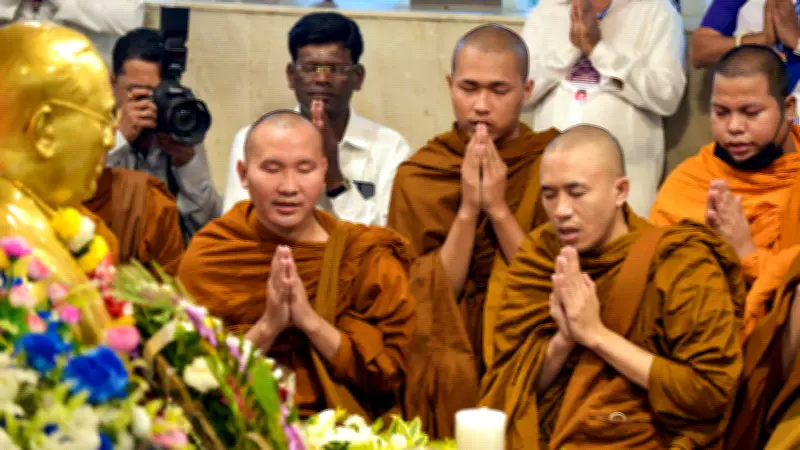
The Burden of Enlightenment: Mahar Community's Call to Expand Ambedkarite Buddhism
In the landscape of India's social and religious movements, the Mahar community stands at a pivotal crossroads, bearing the profound responsibility of carrying forward the legacy of Ambedkarite Buddhism. This movement, initiated by Dr. B.R. Ambedkar as a path to liberation from caste oppression, has historically been closely associated with the Mahars, a Dalit group from Maharashtra. However, the current discourse emphasizes the urgent need for this community to transcend its own boundaries and propagate the principles of Ambedkarite Buddhism to a wider audience, fostering a more inclusive and equitable society.
Historical Roots and Ambedkar's Vision
Ambedkarite Buddhism, also known as Navayana Buddhism, was founded by Dr. B.R. Ambedkar in 1956 as a radical reinterpretation of Buddhism aimed at dismantling the caste system. By converting to Buddhism along with hundreds of thousands of followers, primarily from the Mahar community, Ambedkar sought to provide a spiritual alternative that rejected Hindu caste hierarchies and promoted social justice, equality, and human dignity. This act was not merely a religious conversion but a political statement against centuries of discrimination, embedding the movement with a transformative ethos that continues to resonate today.
The Mahar Community's Central Role
The Mahar community has been the bedrock of Ambedkarite Buddhism, with its members actively participating in and sustaining the movement through various socio-religious practices. From organizing mass conversions to establishing Buddhist viharas and educational institutions, the Mahars have played a crucial role in keeping Ambedkar's vision alive. Their lived experiences of caste-based marginalization have fueled a deep commitment to the movement, making it a cornerstone of their identity and struggle for empowerment.

Challenges in Expanding Beyond Community Lines
Despite its profound impact, Ambedkarite Buddhism has largely remained confined within the Mahar community and other Dalit groups, facing significant hurdles in reaching broader segments of Indian society. Key challenges include:
- Societal Resistance: Deep-rooted caste prejudices and religious conservatism often hinder the acceptance of Ambedkarite Buddhism among non-Dalit communities, who may view it as a divisive or political movement rather than a spiritual path.
- Resource Constraints: Limited access to financial and institutional resources restricts the ability to conduct widespread outreach, educational programs, and community-building activities beyond the Mahar demographic.
- Internal Focus: The community's primary focus on addressing its own socio-economic issues, such as education, employment, and political representation, can sometimes overshadow efforts to engage with external groups, leading to a perceived insularity.
- Interpretation and Adaptation: Translating the core tenets of Ambedkarite Buddhism—such as anti-casteism, rationalism, and social equality—into relatable messages for diverse audiences requires nuanced communication strategies and contextual adaptations.
Strategies for Broader Dissemination
To overcome these obstacles and fulfill the "burden of the enlightened," the Mahar community and its allies can adopt several proactive strategies:

- Educational Initiatives: Developing and promoting curricula, workshops, and digital content that highlight the universal values of Ambedkarite Buddhism, targeting schools, colleges, and online platforms to reach younger generations across caste lines.
- Intercommunity Dialogues: Facilitating conversations and collaborations with other religious and social groups to build bridges, dispel misconceptions, and showcase the movement's relevance to contemporary issues like inequality and human rights.
- Cultural Integration: Leveraging art, literature, music, and media to portray Ambedkarite Buddhism in accessible and engaging ways, emphasizing its message of compassion and justice to resonate with a wider public.
- Policy Advocacy: Engaging with governmental and non-governmental organizations to advocate for policies that support religious freedom and social inclusion, using Ambedkarite principles as a framework for broader societal reform.
- Global Outreach: Connecting with international Buddhist communities and human rights organizations to amplify the movement's global significance, drawing parallels with other struggles for justice and equality worldwide.
The Path Forward: A Collective Responsibility
The expansion of Ambedkarite Buddhism beyond the Mahar community is not solely the responsibility of its members but a collective endeavor that requires support from allies, intellectuals, and activists across society. By embracing this challenge, the movement can evolve from a community-specific identity to a universal force for change, inspiring others to join in the pursuit of a caste-free and just world. As the Mahar community navigates this journey, it carries forward Ambedkar's legacy, transforming the "burden" into an opportunity for enlightenment and solidarity on a grand scale.
In essence, the call for the Mahar community to take Ambedkarite Buddhism beyond itself is a testament to the movement's enduring potential. It underscores the need for continuous effort, innovation, and collaboration to ensure that its revolutionary ideals of equality and dignity reach every corner of society, paving the way for a more inclusive future.





