

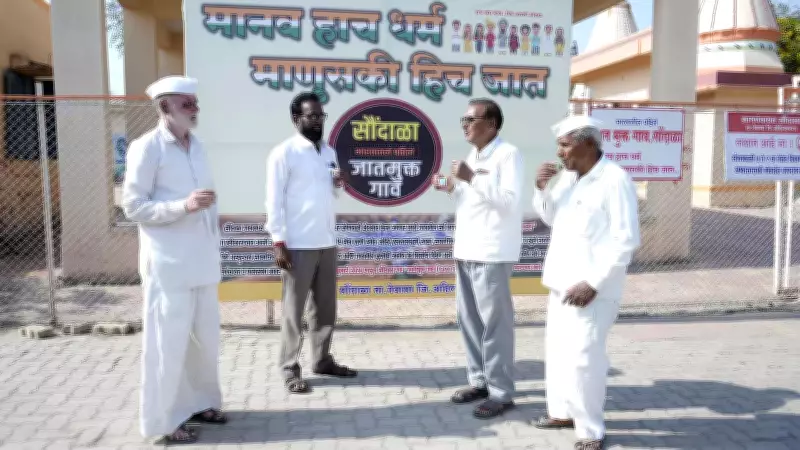
Maharashtra Village Takes Historic Stand Against Caste Discrimination
At first glance, Soundala appears indistinguishable from countless other villages scattered across the semi-arid Khandesh region of Maharashtra. The community of approximately 2,500 residents grapples with the same infrastructural and resource challenges that plague rural India: dilapidated roads, insufficient funding for essential development projects, and chronic water scarcity.
A Resolution for Radical Social Change
However, on February 5 of this year, Soundala distinguished itself in a profound and historic manner. The village convened its gram sabha, the foundational unit of local self-governance, and passed a formal, binding resolution. This resolution declared Soundala a caste-free village, marking a deliberate and collective attempt to dismantle one of India's most deeply rooted and persistent social hierarchies at the very grassroots level.
This unprecedented move represents a direct confrontation with centuries-old practices of caste-based discrimination and segregation. While the village continues to face significant material challenges, its residents have chosen to prioritize social unity and equality as a cornerstone for future development and community well-being.

Context and Implications
The resolution emerges against a complex national backdrop where caste identity often influences social interactions, economic opportunities, and access to public resources. By taking this formal step through the gram sabha, Soundala has institutionalized its commitment to eradicating these discriminatory practices from within its own social fabric.
The decision signifies a powerful assertion of local agency, demonstrating how village communities can initiate social reform from the bottom up. It challenges the notion that such deep-seated change must always be mandated or driven by state or national policy alone.
The residents of Soundala have set a notable precedent, showing a willingness to address social inequity alongside their ongoing struggles for better infrastructure and water security. The implementation and long-term sustainability of this caste-free declaration will be closely watched as a potential model for other villages across India seeking to foster greater social harmony and inclusivity.






