Maharashtra's Resilient Widows Defy Patriarchy to Reclaim Lives After Farmer Suicides
In the drought-stricken and migration-prone districts of Maharashtra, where the wives of men lost to agrarian suicide typically inherit only debt, societal neglect, and an expectation of perpetual dependence, a remarkable transformation is unfolding. Against overwhelming odds, women are fighting with extraordinary determination to rewrite their destinies.
The Times of India recently spoke with several such widows in Beed district, which recorded nearly 149 eligible farmer suicides in just ten months—the highest in the Marathwada region. Their stories reveal that even small victories require battling not just immediate family but the deeply entrenched patriarchy of entire villages, where women asserting ownership over their own lives is viewed as the ultimate rebellion.
Education Over Customs: Jyoti's Journey to Independence
Jyoti Ausarmal, 35, resides in a modest first-floor 1BHK apartment whose balcony overlooks a small garden with a chiku tree. However, she has no leisure to enjoy the view. Married immediately after school despite aspirations to join the police force, she was widowed in 2018 when her marginal-farmer husband died by suicide due to insurmountable loans and crop failures.

Suddenly responsible for three children and in-laws with zero household income, Jyoti faced fierce opposition from both family and village elders who forbade her from stepping outside to work or even speak. "When I sent my daughter to study in a free residential hostel in Pune, the village opposed but I stood my ground. What I couldn't do, my children must," she asserts.
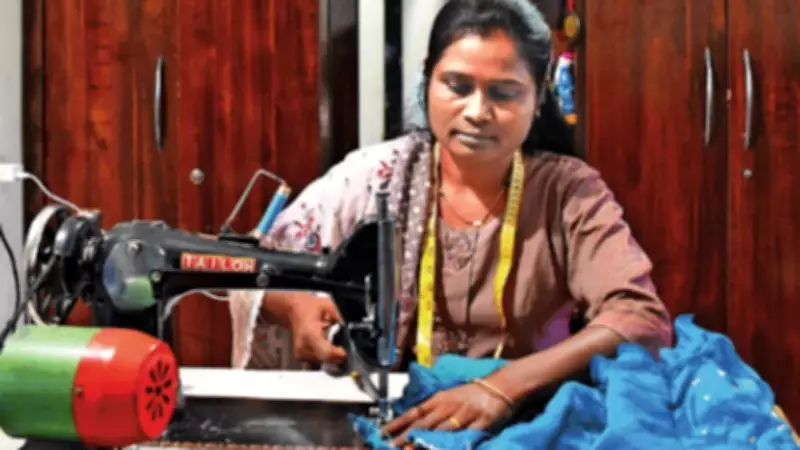
With her children's education suffering and no food, she retreated to her mother's house for fifteen days—a temporary stay that became permanent as she rebuilt her life. Learning sewing and beautician skills, she now works toward a master's degree while managing a grueling schedule that begins at dawn and ends past midnight. "People back in the village badmouth me for staying in the city," she notes, adding firmly that her children will not face early marriage. "My kids' destiny must not depend on any person."
Systemic Barriers: Vaishali's Fight for Land and Knowledge
Vaishali Fuljhalke, also 35, faced devastation when her husband died by suicide after years of crop losses, medical expenses for their elder son's heart condition, and mounting debt. Her younger son was merely twelve days old. With no land in her name and nowhere to go, she worked for four years on her in-laws' fields without income.
Extreme poverty and lack of funds for her son's treatment forced her to demand her share of her husband's land, resulting in her being expelled from the family home. "When they refused to let me claim even what belonged to my sons, I had no option but to protest and claim the land as my own," Vaishali explains.
Villagers criticized her for "demanding too much," but with support from women farmer organizations, she navigated local government offices to learn about land claims and eligible schemes. She describes facing dismissive attitudes from officials who insulted her as illiterate. "I had endured worse so their tart words were nothing. I repeated the questions till they responded," she says, now cultivating cotton, potatoes, and peanuts on the 3/4th acre of her husband's land—though it remains not in her name, she retains the earnings.
Living in her mother's house, Vaishali has turned her bureaucratic struggles into a resource, forming a group of ten women workers. "We are taught not to ask questions. Our own shortcomings make us vulnerable... But we need to ask, till we understand," she emphasizes. "Villages punish women. At least govt officials can be empathetic."
A Mother's Sacrifice: Manisha's Quest for Her Daughter's Future
Manisha Bhadgile, 32, married underage and spent years as a daily wage migrant sugarcane cutter before her husband's suicide. With no support from in-laws or parents, she and her two children were driven out, only to be taken back after village intervention. "I slept on an empty stomach," she recalls.

Connecting with a self-help group under MAVIM provided a turning point, enabling her children's education in hostels. When her elder son quit, she enrolled her daughter in a village school that only went up to Std VIII. Determined to secure better opportunities, Manisha fought every norm and shifted to a rented single room in Beed so her daughter could study without interference.
Her son, influenced by relatives, returned to the village and now blames her for living alone. "I miss him," she admits, "but there're drunk men in the village, including my relatives. It was not safe for us."
Life in Beed presented severe challenges: landlords refused to rent to a single woman, families hesitated to employ her, and caste-based discrimination compounded her struggles. Starting as a domestic helper in one house, her diligence earned her work in multiple homes, providing a low but steady income. Her tiny 10x10 room with an asbestos roof and shared toilet is humble, but it offers security.
Manisha ends her workday by 1 PM to be home when her daughter returns from school, managing food, rent, fees, and small savings within these constraints. "Everything I do is for my daughter so she doesn't repeat my life," she declares.
These women's victories—securing ancestral land, educating daughters, forming labor groups, assisting others with documentation, and pursuing their own education—may seem modest by urban standards. Yet in Maharashtra's patriarchal rural landscape, they represent profound acts of courage and resilience, forging new paths where none existed before.