

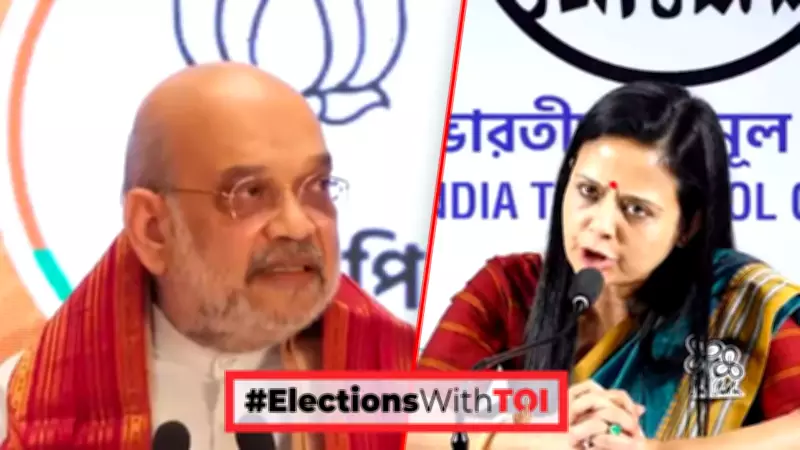
When Clown Sits On Throne: TMC MP's Scathing 'Circus' Metaphor Targets Amit Shah's Bengal Chargesheet
West Bengal's political arena has erupted into a fierce war of words as Trinamool Congress MP Mahua Moitra delivered a blistering response to Union Home Minister Amit Shah's recently released chargesheet against the Mamata Banerjee-led state government. In a sharply worded retort, Moitra employed a powerful theatrical metaphor, suggesting that the Bharatiya Janata Party has transformed serious political discourse into a mere spectacle.
Fiery Rhetoric and Accusations of Political Theater
Moitra's criticism went beyond mere political disagreement, delving into what she described as a deliberate pattern of targeting Bengali identity. The TMC parliamentarian alleged that the chargesheet extends far beyond governance issues, instead reflecting what she characterized as a systematic effort to brand Bengalis as outsiders or illegal migrants within their own state. This accusation strikes at the heart of regional identity politics that has become increasingly prominent in West Bengal's electoral landscape.
"When politics becomes performance art, the people suffer," Moitra implied through her colorful language, suggesting that substantive issues were being overshadowed by political theatrics designed for electoral gain rather than genuine governance concerns.

BJP's Counter-Narrative: Corruption, Security and Infiltration
Meanwhile, the Bharatiya Janata Party has framed the upcoming election around what it describes as critical issues facing West Bengal. The party's chargesheet against the Mamata Banerjee administration focuses on three primary concerns:
- Allegations of widespread corruption within state institutions
- Questions about law and order security across Bengal
- Claims regarding illegal infiltration across state borders
For the BJP, this election represents what party leaders have called "a decisive moment for West Bengal's future," positioning themselves as the alternative to what they characterize as years of mismanagement under TMC rule.
Deeper Narrative Battle: Development Versus Identity Politics
This escalating exchange between Moitra and Shah reflects a much broader contest over political narrative in West Bengal. The confrontation highlights several fundamental divides:
- Development versus identity as competing frameworks for understanding the state's priorities
- Governance achievements versus public perception of those achievements
- Regional autonomy versus central oversight in administrative matters
As campaign rhetoric intensifies in the lead-up to the 2026 elections, political discourse has become increasingly personal and sharply polarized. Both major parties are investing significant resources in shaping public sentiment, with each attempting to frame the election around issues that favor their respective political bases.
Setting the Stage for a Fiercely Contested Election
The exchange between Moitra and Shah represents just one front in what promises to be a multi-dimensional political battle for West Bengal. With rhetoric becoming more pointed and personal by the day, political observers anticipate an exceptionally competitive election where narrative control may prove as important as policy platforms.
The chargesheet controversy has effectively become a microcosm of larger tensions between regional and national political forces, between different visions of Bengali identity, and between competing interpretations of what constitutes good governance. As both sides sharpen their messaging and mobilize their supporters, West Bengal appears headed toward one of its most closely watched and hotly contested electoral battles in recent memory.






