

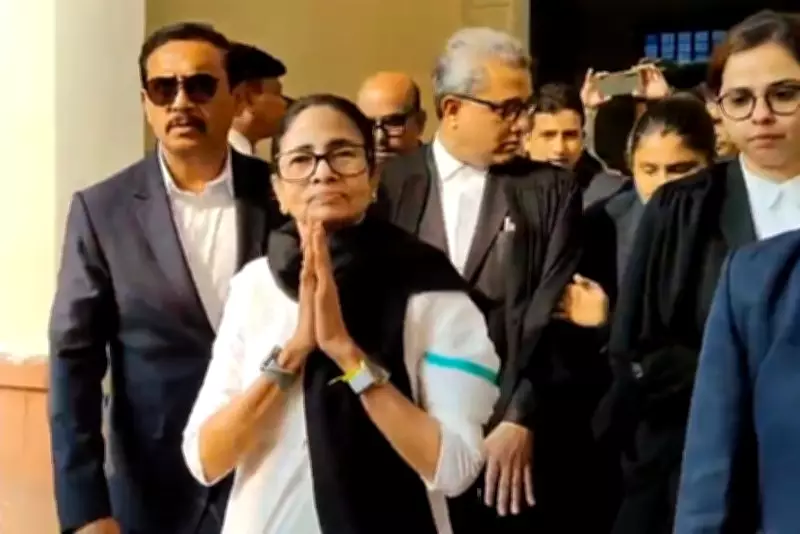
In a rare and historic legal spectacle, West Bengal Chief Minister Mamata Banerjee personally appeared before the Supreme Court of India to argue a case, drawing an unprecedented crowd of lawyers, litigants, and onlookers to the courtroom of the Chief Justice of India. The event, which unfolded on Wednesday, saw the courtroom packed to capacity as individuals gathered to witness the high-profile political figure engage in legal proceedings.
A Unique Legal Appearance by a Sitting Chief Minister
Mamata Banerjee, known for her fiery political persona, took to the Supreme Court to present arguments in a case related to the State Information Report (SIR). This marks a significant moment, as it is uncommon for a sitting chief minister to personally argue in the apex court, highlighting the importance she attaches to the matter. Her presence not only underscored the case's gravity but also showcased her direct involvement in legal advocacy.
Courtroom Buzzed with Anticipation and Curiosity
The courtroom, typically reserved for legal professionals and parties involved in cases, was abuzz with excitement as lawyers and litigants thronged to catch a glimpse of the proceedings. Many attendees were seen standing in aisles and peering through doors, eager to observe Banerjee's arguments. The scene reflected the public's keen interest in the intersection of politics and law, with the Chief Minister's appearance adding a dramatic flair to the judicial environment.

Legal experts noted that such personal appearances by high-ranking politicians are rare and can influence public perception of the judiciary. Banerjee's decision to argue the case herself, rather than relying solely on legal counsel, demonstrates her commitment to the issue at hand and her hands-on approach to governance. This move has sparked discussions among legal circles about the implications for future cases involving political leaders.
Background of the Case and Its Implications
The case in question pertains to a State Information Report (SIR), which involves matters of state governance and transparency. While specific details of the arguments were not fully disclosed, sources indicate that Banerjee focused on defending the state's position and addressing legal challenges. Her participation is expected to have ramifications for West Bengal's administrative policies and could set precedents for how similar cases are handled in the future.
The gathering in the courtroom also highlighted the broader public fascination with political figures engaging in legal battles. It served as a reminder of the dynamic relationship between India's political and judicial systems, where high-stakes cases often capture national attention. Observers commented that the event may encourage more transparency and public engagement in legal processes.
Reactions from the Legal Community and Public
Lawyers present at the scene expressed mixed reactions, with some praising Banerjee's dedication and others questioning the practicality of such appearances. Litigants, many of whom were there for their own cases, found the experience surreal, as they witnessed a chief minister in a role typically reserved for advocates. The incident has generated widespread media coverage and social media buzz, further amplifying its significance.
In summary, Mamata Banerjee's argument in the Supreme Court not only made legal history but also captivated audiences, underscoring the powerful blend of politics and law in India's democratic framework. As the case progresses, it will be closely watched for its outcomes and potential impacts on governance and legal practices.






