

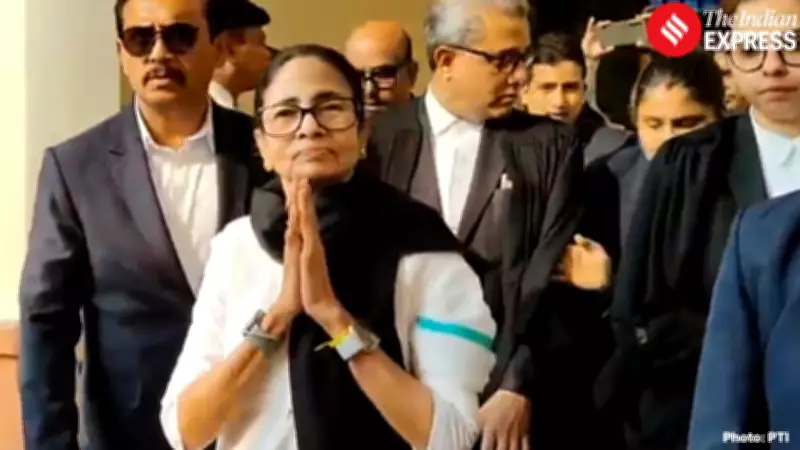
West Bengal Chief Minister Flags Voter Deletion Concerns in Supreme Court Hearing
West Bengal Chief Minister Mamata Banerjee made a rare personal appearance before the Supreme Court of India on Wednesday, directly challenging the Election Commission's Special Intensive Revision (SIR) of electoral rolls in her state. The Chief Minister sought judicial intervention over what she described as selective and wrongful deletions of voters from the electoral lists.
Personal Plea Before the Bench
Appearing before a Bench led by Chief Justice of India Surya Kant, along with Justices Joymalya Bagchi and Vipul M Pancholi, Banerjee requested permission to address the court personally. After initially asking for five minutes, she was granted 15 minutes to present her case, during which she appealed to the judges to "save democracy."
Accompanied by a legal team headed by senior advocate Shyam Divan, the Chief Minister began her submission by thanking the court and the Bar. In her remarks, she quoted Rabindranath Tagore, emphasizing the importance of democratic principles and fair electoral processes.

Allegations of Selective Voter Deletions
Banerjee presented detailed allegations before the Supreme Court Bench, claiming that the SIR exercise was being misused to selectively delete voters rather than focusing on inclusion. She argued that the process appeared designed to target specific voter demographics in West Bengal.
The Chief Minister revealed that despite writing six letters to Chief Election Commissioner Gyanesh Kumar expressing her concerns, she had received no response from the Election Commission. This lack of communication, she contended, necessitated judicial intervention to protect voters' rights.
Specific Concerns and Evidence Presented
During her submission, Banerjee raised several specific concerns:
- Wrongful deletions of married women from voter lists due to surname changes
- Presentation of photographic evidence in court supporting her claims
- Allegations that micro observers were overriding Booth Level Officers (BLOs) during the revision process
- Claims that approximately 58 lakh names had been deleted through the SIR exercise
Questioning the Speed and Targeting of the Process
Banerjee questioned the unprecedented speed of the SIR process, noting that what typically takes two years was being completed in just three months. She alleged that West Bengal was being specifically targeted through this accelerated revision, potentially compromising the integrity of the electoral rolls.
The Chief Minister emphasized that such rapid revisions could lead to errors and exclusions that would disenfranchise legitimate voters, particularly in a state with complex demographic patterns and migration flows.
Supreme Court's Response and Next Steps
After hearing Banerjee's detailed submissions, the Supreme Court issued notice to the Election Commission on her plea. The court has directed both the Election Commission and the West Bengal Chief Electoral Officer to file their replies by February 9.
This judicial intervention marks a significant development in the ongoing debate about electoral roll revisions and voter rights protection in India. The Supreme Court's involvement underscores the constitutional importance of maintaining accurate and inclusive voter lists as fundamental to democratic functioning.
The case highlights the tension between state governments and central electoral authorities during election preparation periods, particularly in politically sensitive states like West Bengal. As the February 9 deadline approaches, all eyes will be on the Election Commission's response to these serious allegations.






