

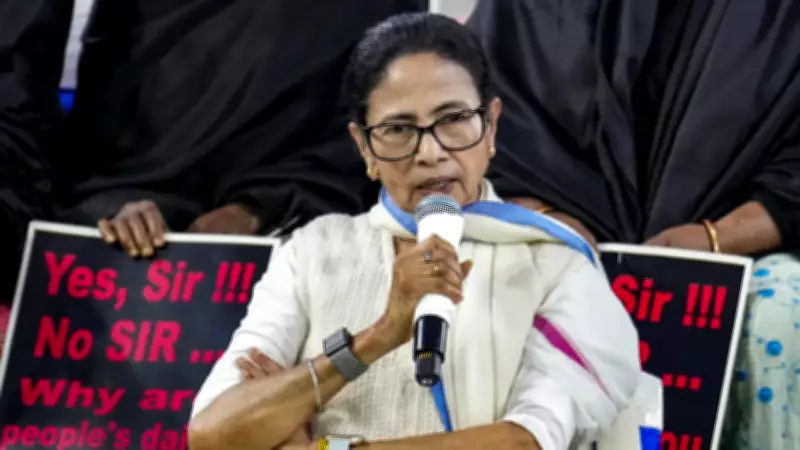
West Bengal Chief Minister Mamata Banerjee Presents Legal Challenge in Supreme Court
West Bengal Chief Minister Mamata Banerjee arrived at the Supreme Court on Wednesday morning to personally argue her legal battle against the ongoing Special Intensive Revision (SIR) exercise being conducted by the Election Commission of India. The Trinamool Congress supremo has been engaged in a prolonged confrontation with the election body over this contentious electoral revision process.
Supreme Court Bench to Hear the Contentious Matter
A Supreme Court bench comprising Chief Justice of India Surya Kant along with Justices Joymala Bagchi and Vipul Pancholi will preside over the hearing of this significant case. The judicial proceedings come at a critical juncture in the ongoing political and administrative tussle between the West Bengal government and the central election authority.
Background of the Election Commission Standoff
Earlier this week, Mamata Banerjee traveled to New Delhi specifically to register her strong objections to the SIR exercise. During her visit, she met with Chief Election Commissioner Gyanesh Kumar to discuss her concerns about the electoral revision process. According to sources quoted by news agency ANI, the meeting took a dramatic turn when Mamata reportedly "raised false allegations, misbehaved, thumped the table and left," leading to an abrupt and premature conclusion of the discussions.

Multiple Confrontations Mark Delhi Visit
The West Bengal chief minister's Delhi visit was marked by multiple confrontations. Prior to her meeting with the Election Commission, Mamata Banerjee had a notable face-off with Delhi Police personnel outside Banga Bhawan in the diplomatic enclave of Chanakyapuri. This incident added to the tense atmosphere surrounding her objections to the electoral revision process.
Allegations of Humiliation During CEC Meeting
In subsequent statements, Mamata Banerjee recounted her Monday meeting with Chief Election Commissioner Gyanesh Kumar, alleging that she was "humiliated" during the interaction. These allegations have further intensified the political dimensions of what began as an administrative disagreement over electoral procedures. The chief minister's decision to personally argue her case before the Supreme Court underscores the seriousness with which she views both the SIR exercise and her treatment during the Delhi meetings.
The legal proceedings represent a significant development in the ongoing power dynamics between state governments and central constitutional bodies, with potential implications for electoral processes across India. As the Supreme Court hears arguments from both sides, political observers are closely watching how this confrontation between one of India's most prominent regional leaders and the country's premier election authority will unfold in the coming days.






