

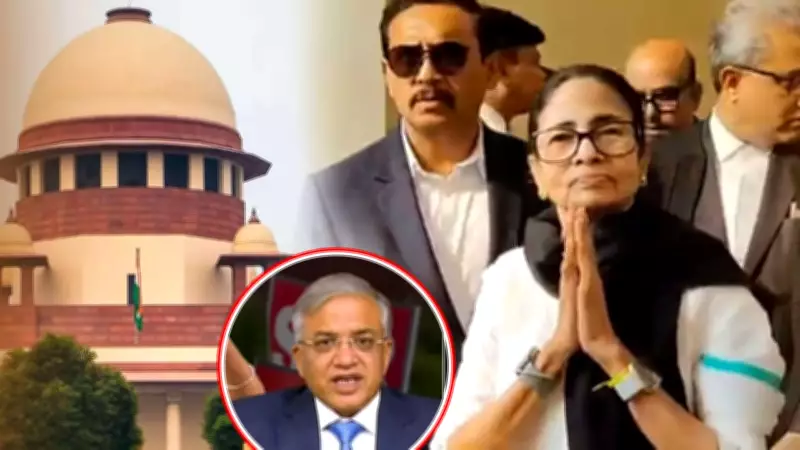
'Justice Is Crying...': Mamata Banerjee's Supreme Court Showdown With Election Commission Over Bengal Voter Roll Row
The Supreme Court of India witnessed a dramatic and politically charged confrontation today as West Bengal Chief Minister Mamata Banerjee personally appeared before a constitutional bench to challenge the Election Commission's controversial Special Intensive Revision (SIR) of voter rolls in her state. The hearing, presided over by Chief Justice Surya Kant, transformed from a routine legal proceeding into a significant national moment with far-reaching implications for India's electoral democracy.
Allegations of Institutional Neglect and Voter Disenfranchisement
In an emotionally charged submission, Chief Minister Banerjee declared that "justice is crying behind closed doors" as she detailed her administration's fruitless attempts to engage with the Election Commission. She revealed that multiple written communications from the West Bengal government had gone completely unanswered while what she described as "wholesale deletions" of legitimate voters continued unabated across the state.
The Supreme Court bench acknowledged the seriousness of these allegations and promptly issued formal notice to the Election Commission of India. The justices also cautioned election officials to exercise greater sensitivity in their voter verification processes, recognizing the fundamental importance of voting rights in a democratic system.

Specific Grievances and Systematic Concerns
Banerjee's petition highlighted several specific patterns of voter deletion that she argued were systematically disenfranchising ordinary citizens:
- Voters being removed from rolls due to minor spelling discrepancies in their names
- Eligible citizens losing voting rights because of language mismatches in documentation
- Women being excluded following marriage-related surname changes
- Rejection of Aadhaar verification despite Supreme Court directives permitting its use
The Chief Minister further alleged what she termed "selective targeting" of West Bengal, questioning why the intensive voter roll revision was being implemented with particular urgency in her state after decades of standard procedures. She expressed concern about the timing of this exercise, suggesting it could influence upcoming electoral contests in the politically significant region.
Broader Implications for Electoral Integrity
With the Supreme Court listing the matter for further hearing, this legal battle extends beyond West Bengal to raise fundamental questions about:
- The fairness and transparency of India's electoral processes
- Protection of fundamental voting rights for all citizens
- Institutional accountability of constitutional bodies
- The balance between electoral roll accuracy and voter inclusion
The case represents a rare direct confrontation between a sitting chief minister and the Election Commission, bringing to the forefront critical debates about federalism, institutional independence, and democratic safeguards. As the legal proceedings continue, all eyes remain on how India's highest court will navigate these complex constitutional questions while ensuring that no legitimate voter is unjustly excluded from participating in the world's largest democracy.






