

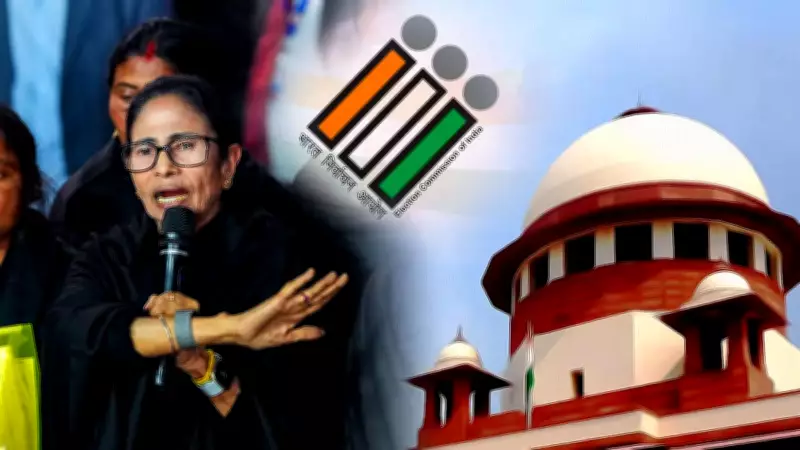
West Bengal Chief Minister Takes Electoral Battle to Apex Court
In a significant development that could reshape India's electoral landscape, West Bengal Chief Minister Mamata Banerjee has escalated her confrontation with the Election Commission by approaching the Supreme Court. The legal challenge targets the Commission's Special Intensive Revision exercise, which has become a flashpoint in India's democratic processes.
Allegations of Massive Voter Exclusion
At the heart of the controversy lies Banerjee's claim that the revision process has led to the removal of approximately 58 lakh names from voter lists in West Bengal. The Chief Minister has framed this as a direct assault on democratic participation, warning that such actions undermine constitutional rights and could disenfranchise millions of legitimate voters.
"This isn't just about West Bengal—it's about protecting the fundamental right of every Indian citizen to vote," Banerjee stated in her petition, emphasizing the nationwide implications of the case.

Accusations of Political Bias and Selective Implementation
Banerjee's legal challenge contains serious allegations of institutional bias, claiming the Election Commission has disproportionately targeted opposition-ruled states while sparing BJP-governed regions from similar scrutiny. The petition argues this selective implementation creates an uneven playing field ahead of crucial elections.
The controversy intensified following Banerjee's heated exchange with the Chief Election Commissioner during a meeting in Delhi, where she reportedly challenged the transparency and accountability of the entire revision process.
Documentation Concerns and Elderly Voter Disqualification
Beyond the immediate removal of names, Banerjee has raised alarms about documentation requirements that could potentially disqualify significant voter segments. Particular concern has been expressed for older citizens who may face difficulties in meeting new verification standards, potentially excluding them from the electoral process entirely.
The Chief Minister's petition outlines several specific concerns:
- Lack of proper notification to affected voters
- Inadequate grievance redressal mechanisms
- Questionable methodology in identifying "duplicate" voters
- Potential violation of natural justice principles
Election Commission's Constitutional Defense
The Election Commission has maintained that the Special Intensive Revision represents a constitutional duty aimed at ensuring accurate and updated electoral rolls. Officials have defended the process as necessary for maintaining electoral integrity and preventing fraudulent voting practices.
"Our mandate is clear—to conduct free and fair elections with credible voter lists," an EC spokesperson commented, emphasizing the Commission's commitment to its constitutional responsibilities.
National Implications and Legal Precedent
As the Supreme Court prepares to hear the case, legal experts anticipate far-reaching consequences. The verdict could establish important precedents regarding:
- Voter verification standards across India
- The balance between electoral integrity and voter inclusion
- The Election Commission's discretionary powers in voter list management
- Constitutional protections for voting rights
The timing of this legal battle adds to its significance, coming as India prepares for future electoral cycles. Political observers note that the Supreme Court's decision could influence not just West Bengal's political landscape but electoral practices nationwide.
With both sides preparing their legal arguments, this case represents a critical juncture in India's democratic evolution—testing the boundaries between electoral administration, political competition, and fundamental voting rights.






