

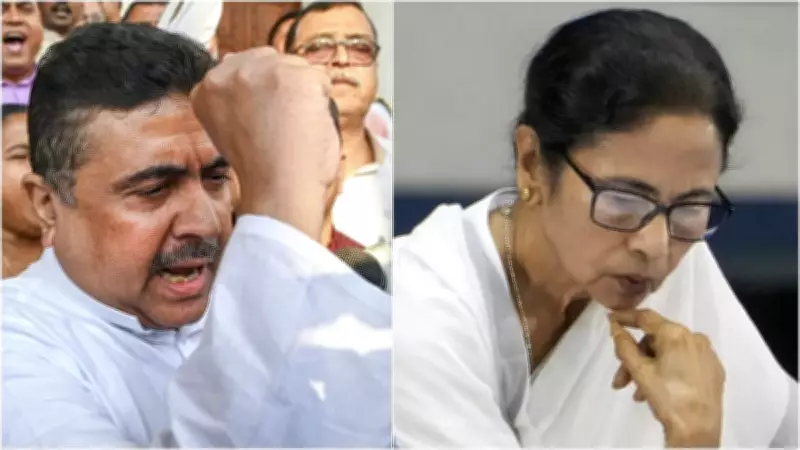
Mamata Banerjee vs Suvendu Adhikari: TMC's Emotional Pitch Versus BJP's Caste Calculus Sharpens Bhabanipur Battle
The political landscape in West Bengal is heating up as the Bhabanipur bypoll draws near, with a fierce contest brewing between Chief Minister Mamata Banerjee of the Trinamool Congress (TMC) and her former protégé Suvendu Adhikari of the Bharatiya Janata Party (BJP). This electoral clash is reminiscent of their intense 2021 Assembly polls face-off in Nandigram, where Banerjee challenged Adhikari on his home turf shortly after he defected to the BJP. The current battle in Bhabanipur is shaping up to be a high-stakes duel, with the TMC leveraging emotional appeals and the BJP employing strategic caste-based calculations to sway voters.
Echoes of the 2021 Nandigram Showdown
In 2021, Mamata Banerjee took on Suvendu Adhikari in Nandigram, a constituency that was once his stronghold. Adhikari had just joined the BJP, turning from a close ally into a formidable rival. That election was marked by personal attacks and deep-seated political animosity, setting the stage for the current confrontation. The Bhabanipur bypoll is seen as a continuation of this rivalry, with both leaders bringing their established tactics to the forefront. Banerjee's campaign emphasizes her emotional connection with the people, while Adhikari's strategy revolves around meticulous caste arithmetic to consolidate support.
TMC's Emotional Appeal: A Strategy Rooted in Sentiment
The Trinamool Congress is banking on an emotional pitch to secure victory in Bhabanipur. Mamata Banerjee, known for her grassroots connect, is highlighting her long-standing service to West Bengal and portraying herself as a defender of regional identity against national parties. The TMC's campaign focuses on themes of loyalty, betrayal, and resilience, aiming to evoke sympathy and solidarity among voters. This approach taps into the personal narrative of Banerjee's political journey, contrasting it with Adhikari's switch to the BJP, which is framed as an act of disloyalty.

BJP's Caste Calculus: A Data-Driven Approach
On the other side, the Bharatiya Janata Party, under Suvendu Adhikari's leadership, is employing a calculated caste-based strategy. The BJP has been analyzing demographic data to target specific caste groups in Bhabanipur, aiming to build a coalition that can challenge the TMC's dominance. This involves outreach programs, promises tailored to different communities, and leveraging Adhikari's local influence. The party's focus is on pragmatic voter mobilization, moving beyond emotional rhetoric to address tangible issues like development and governance.
The Stakes and Implications for West Bengal Politics
The outcome of the Bhabanipur bypoll holds significant implications for West Bengal's political future. A win for Mamata Banerjee would reinforce her position as a resilient leader and bolster the TMC's morale ahead of future elections. Conversely, a victory for Suvendu Adhikari could signal a shift in voter sentiment and strengthen the BJP's foothold in the state. The battle is not just about one constituency; it is a microcosm of the larger tussle between regional sentiment and national party machinery in Indian politics.
As the campaign intensifies, both sides are leaving no stone unturned. The TMC's emotional appeals and the BJP's caste calculations are set to collide, making this one of the most watched electoral contests in recent times. Voters in Bhabanipur will ultimately decide which strategy resonates more, shaping the trajectory of West Bengal's political narrative.






