DMK MP's Comparison of Women's Status Ignites Political Firestorm
DMK parliamentarian Dayanidhi Maran has stirred a significant political controversy with his recent comments comparing the status of women in Tamil Nadu to those in northern India. The remarks, made during a college event, have drawn sharp criticism from the Bharatiya Janata Party, escalating tensions between the two political forces.
Maran's Controversial Statements at Women's College Event
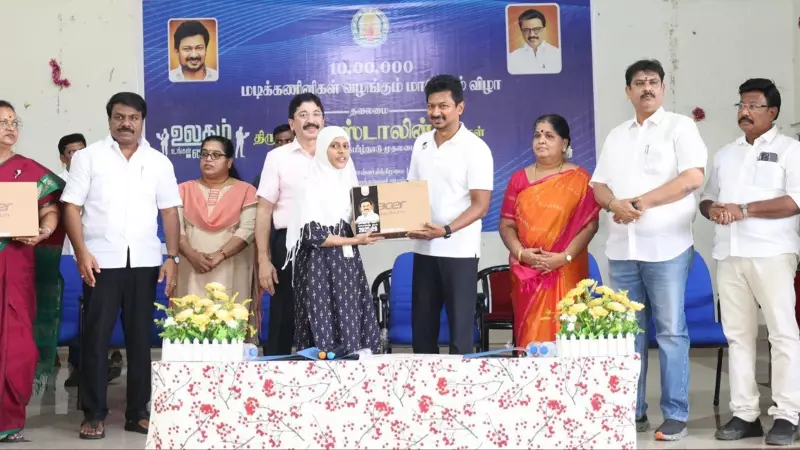
Speaking to students at Quaid-E-Millath Government College for Women in Chennai, Maran presented what he described as a stark contrast between Tamil Nadu's approach to women's education and that of northern states. The event was attended by Tamil Nadu Deputy Chief Minister Udhayanidhi Stalin, adding political weight to the occasion.
"In Tamil Nadu, we encourage women to pursue education and build careers," Maran told the gathering. "But what do they say in North India? They tell girls not to work, to stay at home, remain in the kitchen, and focus on bearing children. That's your job, they say."

The DMK MP, who is the brother of billionaire media mogul Kalanithi Maran, positioned his comments within the framework of what he called the "Dravidian Model" of governance under Chief Minister M.K. Stalin. He described this model as operating on the principle of "everything for everyone" (ellarukum ellam in Tamil).
Praising Tamil Nadu's Educational Initiatives
Maran highlighted several state government initiatives that he claimed have created a more confident generation of young people in Tamil Nadu. He specifically mentioned the free laptop scheme for students, which he said prepares them for higher education and employment opportunities.
"This is Tamil Nadu. This is Dravida Nadu," Maran declared during his speech. "It is the land of M. Karunanidhi, Anna, and M.K. Stalin. In this soil, women's progress means Tamil Nadu's progress."
The parliamentarian also connected educational achievements to economic development, suggesting that global companies choose Chennai because of the population's education in both Tamil and English.
BJP's Strong Reaction and Demand for Apology
The Bharatiya Janata Party responded swiftly and strongly to Maran's comments. Party representatives accused the DMK leader of stereotyping and insulting people from Hindi-speaking states of northern India.
BJP Tamil Nadu spokesperson Narayanan Thirupathy condemned the remarks as derogatory and divisive. "It is unfortunate that such statements are made repeatedly," Thirupathy said, questioning Maran's conduct and suggesting a pattern within the DMK of targeting people from northern India.
The BJP has demanded an apology from Maran, calling his comments inappropriate for a public representative. The party's reaction has turned the incident into another flashpoint in the ongoing political rivalry between the DMK and BJP in Tamil Nadu.
Broader Political Implications
This controversy adds to existing political tensions between the two parties and fuels a wider debate about regional comparisons in Indian politics. Maran's remarks have sparked discussions about:
- The appropriateness of making sweeping generalizations about different regions of India
- The actual status of women's education and empowerment across various states
- The political motivations behind such comparative statements
- The impact of such rhetoric on national unity and regional harmony
The incident comes at a time when political parties are increasingly using regional identity and development comparisons as part of their political messaging. Maran's comments, while praising his own state's policies, have clearly touched a nerve with political opponents who see them as divisive rather than celebratory.
As the controversy continues to develop, it remains to be seen whether Maran will respond to the BJP's demand for an apology or whether the DMK will defend his statements as highlighting genuine policy differences between states. The episode underscores how discussions about women's empowerment and regional development can quickly become politicized in India's competitive democratic landscape.