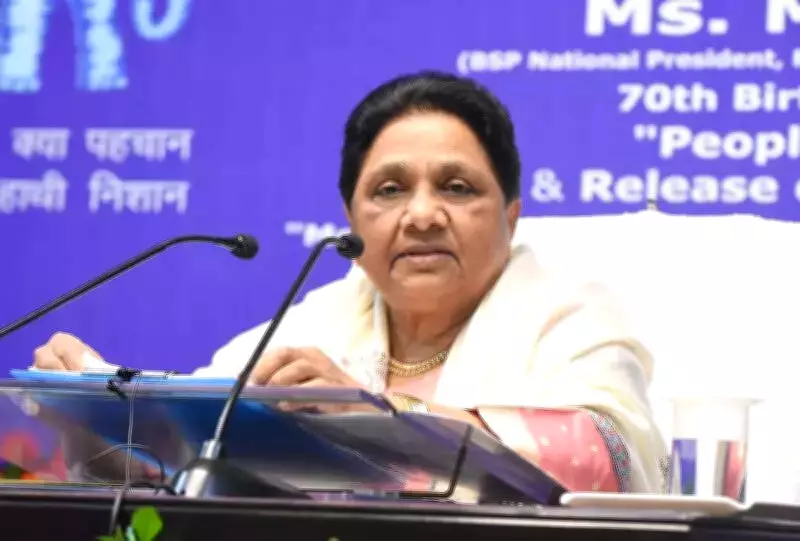
Mayawati Urges Caution in Assessing US Tariff Impact on India
BSP national president Mayawati on Tuesday expressed that it would be premature to evaluate the potential impact of the 18% tariff imposed by the United States on India's national and public interest. The political leader emphasized that a proper assessment can only be made after observing the implementation of this tariff agreement on the ground.
Social Media Statement Highlights Concerns
In a detailed post on social media platform X, Mayawati elaborated on her position regarding the recently announced tariff measures. She stated, "In the absence of proper information, it would be premature to make any immediate assessment about how much the news of imposition of 18% tariff by the US after mutual agreement between India and America with many conditions is in the national and public interest.
Only after its implementation on the ground will it be known properly what benefit it brings to the people of the country, especially the Bahujans, the poor, labourers, farmers and women."
Call for Government Transparency
The BSP leader further added that the government should have provided comprehensive information about this tariff agreement during the Parliament session itself. She suggested that such transparency would have enabled citizens to access correct and detailed information about the implications of this international trade development.
Mayawati's comments come at a time when trade relations between India and the United States are undergoing significant examination. Her emphasis on waiting for ground-level implementation before drawing conclusions reflects a cautious approach to international economic agreements.
The political leader specifically highlighted the need to understand how this tariff arrangement would affect vulnerable sections of Indian society, including marginalized communities, agricultural workers, and women. Her statement underscores the importance of evaluating economic policies through the lens of social welfare and equitable development.