

From Caste Marker to Political Emblem: The Journey of the Melthundu
At its core, the melthundu is a piece of cloth—'mel' meaning upper and 'thundu' meaning cloth in Tamil. For generations, it has served as a traditional gesture of respect among Tamil people. However, over decades, this simple shoulder cloth has evolved into a powerful political and social symbol within Tamil Nadu, carrying meanings far beyond its humble origins.
A Symbol of Protest Against Caste Hierarchy
The first major political moment for the thundu occurred in 1924 during a nadaswaram performance attended by Periyar E V Ramasamy, the pioneering leader of the Self-Respect Movement. During that era, people from lower castes were strictly prohibited from wearing any cloth or shawl over their shoulders—a privilege reserved exclusively for dominant castes.
At the event, when a musician removed a towel from his waist, wiped his face, and placed it on his shoulder, the host—belonging to a dominant caste—objected vehemently, declaring that someone from a "lower caste" should not wear the thundu in that manner. This incident prompted Periyar to introduce the practice of placing shawls on people's shoulders during functions as a powerful symbol of dignity and equality.

"Periyar transformed the thundu into a symbol of equality," explains Tamil writer Olivannan G. "It became a way of saying, 'You are my fellow human being.'" From that moment forward, Periyar's followers began wearing the melthundu as a deliberate political statement against caste-based discrimination.
The Evolution into Political Identity
"Since then, Dravidian politicians began insisting that those on stage drape the thundu over the shoulder as a way of rejecting caste hierarchies," says advocate V Kannadasan. "What began as a social equalizer gradually evolved into a method for leaders to craft their distinct political images."
This evolution became visible through the distinctive styles adopted by various political figures:
- C N Annadurai, founder of the DMK, consistently wore a long white shawl as part of his public persona.
- M Karunanidhi, former DMK chief, initially wore white before famously switching to a yellow thundu—a change that became integral to his trademark style along with dark glasses.
- Vaiko, founder of MDMK, became known for his black thundu, worn specifically as a mark of protest concerning issues related to Tamil Eelam during the Sri Lankan Civil War.
Political anthropologist Nisar Kannangara observes, "Clothing is considered one of the major tools that Dravidian parties have employed in politics. The veshti-shirt and melthundu are worn as traditional Tamil male attire. That's why Prime Minister Narendra Modi consistently wears one when campaigning in Tamil Nadu—he even wore it during his 2019 meeting with Chinese President Xi Jinping in the state to appeal to Tamil sentiments."
Cinematic Usage and Contemporary Ironies
During the 1970s, the thundu entered cinema as a political device. Actor and ADMK founder M G Ramachandran, who rarely wore the shoulder cloth himself (preferring instead his trademark dark glasses and fur hat), utilized the thundu in films like 'Idhayakkani' to reportedly caricature his political rival, Karunanidhi. According to political science professor Subramaniam Chandran's 2023 paper, these films featured characters wearing long shawls while delivering verbose dialogue.
Fashion designer Purushu Arie, who traces the evolution of political attire, notes emerging distinctions: "Sometimes, within parties, simpler cotton towels are meant for cadres, while silk shawls are reserved for senior members. Ironically, the cloth originally intended to erase hierarchy appears to be recreating it in new forms."
The Modern Comeback: Branding Over Symbolism
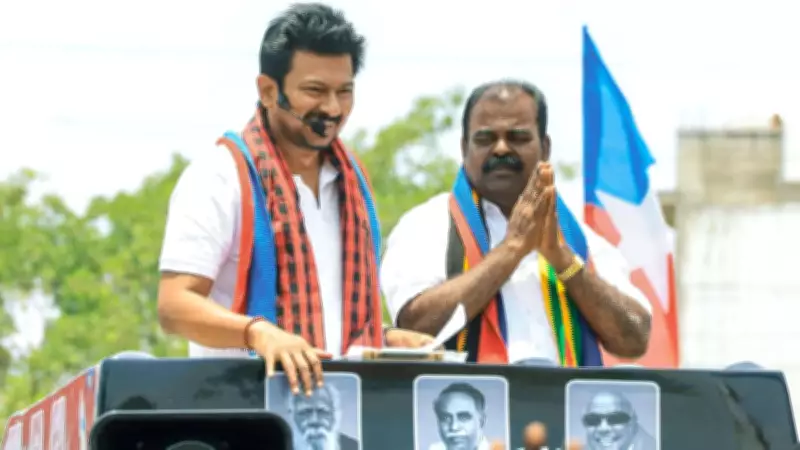
In recent years, most party members in Tamil Nadu had stopped wearing the thundu regularly. However, in the lead-up to the 2026 elections, the melthundu has made a significant comeback. This revival appears less focused on traditional symbolism and more oriented toward political branding and visual distinction.

"We wanted to try a new design," reveals a DMK source, referring to the black-and-red checked thundu that has recently debuted. "The strategy team first introduced the chequered thundu during a party engagement program with hamlet secretaries. It gained popularity, and this time, most workers and senior leaders decided to adopt it instead of the usual striped version."
Notable Historical Moments and Controversies
The Yellow Transformation: In 1989, upon his return to office, M Karunanidhi was presented with a yellow shawl by Pattali Makkal Katchi (PMK) founder S Ramadoss. This gift denoted the Vanniyar flag, honoring Karunanidhi's 20% reservation policy for the community. He wore this yellow shawl for decades as part of his signature style, later offering various explanations including comparisons to Buddha's yellow angavastram.
Karnataka's 'Political Fixer' Uniform: In a 2000 article in Asian Survey, political scientist James Manor described how the phrase "towel over armpit" was used to characterize small-time political fixers in Karnataka—intermediaries who moved between villages and government offices wielding "informal power." Though often parodied, Manor notes they play crucial roles in elections across most southern states.
When Prabhakaran Refused: According to a 2011 article in the journal Sanglap by Swarnavel Eswaran Pillai, professor at Michigan State University, there was significant pressure from Western entities on LTTE leader Velupillai Prabhakaran to abandon his guerrilla fatigues for either modern "coat-suit attire" or the "traditional white veshti-thundu" to present a more "acceptable" political image. Prabhakaran steadfastly refused.
The MGR Shawl Controversy: In 2020, a statue of MGR in Puducherry was discovered draped in a saffron shawl, triggering immediate political protests. While leaders condemned the act as an attempt to "saffronize" the Dravidian icon, subsequent CCTV footage revealed that a woman had placed the shawl as a gesture of respect, unaware of its political implications.
The melthundu's journey—from a cloth forbidden to lower castes to a symbol of equality, then a political identifier, and now a tool for party branding—demonstrates how everyday objects can accumulate profound cultural and political significance. As Tamil Nadu approaches another election cycle, this simple shoulder cloth continues to shoulder the weight of history while adapting to contemporary political realities.





