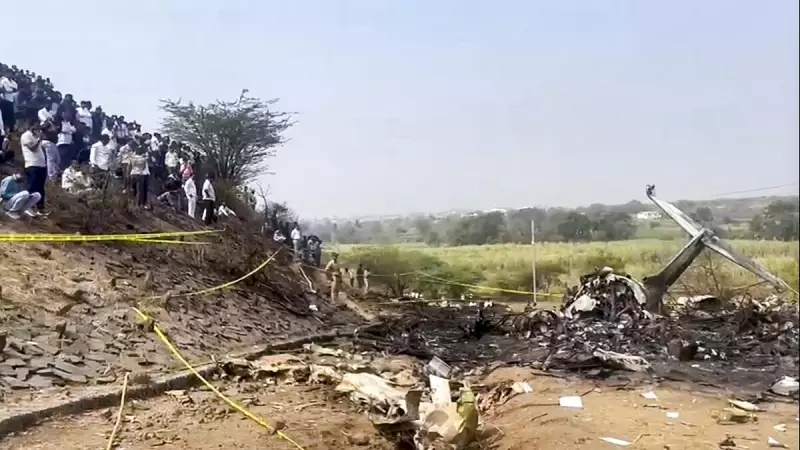
The Ministry of Civil Aviation has provided a comprehensive account of the sequence of events that culminated in the distressing plane crash at Baramati, involving prominent political figure Ajit Pawar. This incident has drawn significant attention to aviation safety protocols and infrastructure in regional areas.
Detailed Chronology of the Baramati Accident
According to the official report released by the ministry, the accident unfolded under specific operational conditions at the Baramati airfield. The ministry emphasized that Baramati operates as an uncontrolled airfield, which fundamentally shapes the safety dynamics and communication procedures at this location.
Operational Framework at Uncontrolled Airfield
In uncontrolled airfields like Baramati, there is no air traffic control tower to manage and coordinate aircraft movements. Instead, the responsibility for traffic information and situational awareness falls directly on the pilots and instructors associated with the Flying Training Organizations based at Baramati. This system relies heavily on pilot-to-pilot communication and visual flight rules.

The ministry's findings indicate that during the approach phase, the pilot reportedly faced visibility challenges, with the runway not being clearly in sight. This critical factor is believed to have played a pivotal role in the accident sequence, though the investigation continues to examine all contributing elements.
Safety Implications and Regional Aviation Concerns
This incident has sparked broader discussions about aviation safety in India's regional and training airports. Key concerns highlighted include:
- The adequacy of infrastructure at uncontrolled airfields
- Training protocols for pilots operating in such environments
- Communication systems between flying training organizations
- Weather monitoring and reporting mechanisms at regional airports
The Ministry of Civil Aviation has assured that a thorough investigation is underway to determine the exact causes and contributing factors. The findings are expected to inform future safety enhancements and regulatory measures for similar aviation facilities across the country.
As the investigation progresses, aviation authorities are reviewing operational procedures at uncontrolled airfields to prevent similar incidents. The Baramati accident serves as a crucial case study for improving safety standards in India's growing regional aviation sector.