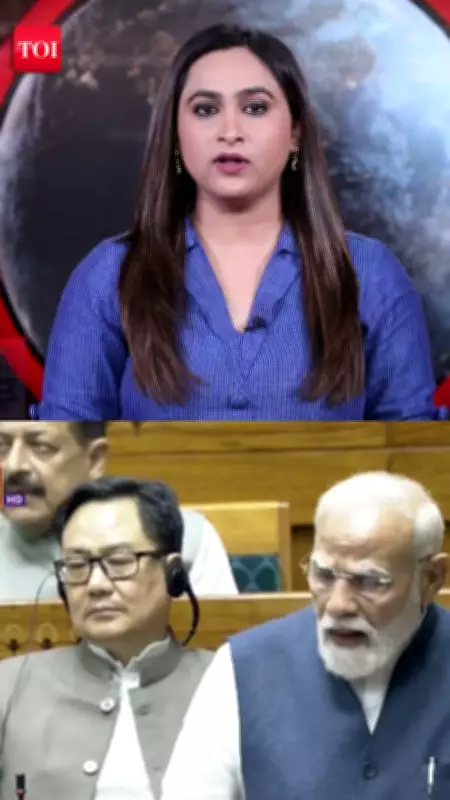
PM Modi Champions Women's Quota Bill as Historic Step for Indian Democracy
Prime Minister Narendra Modi has passionately defended the women's reservation bill during a special session of Parliament, describing it as a transformative measure that will reshape India's democratic future. In a powerful address, Modi emphasized that greater participation of women in policymaking will provide the nation with a new direction and strengthen its democratic foundations.
Modi's Vision for Women in Politics
Speaking before Parliament, the Prime Minister articulated his vision for the legislation, stating that India as the mother of democracy must lead by example in empowering women politically. This bill is not just about representation—it's about building a stronger, more inclusive future for our nation, Modi declared, framing the legislation as essential for national progress.
The Prime Minister addressed the bill's significance within the broader context of Indian democracy, noting that increased female participation in legislative bodies would bring diverse perspectives to policymaking and governance. He positioned the legislation as a natural evolution of India's democratic traditions rather than a radical departure.

Opposition Questions Timing and Implementation
While the government celebrates the bill's passage, opposition parties have raised significant concerns about its timing and practical implementation. Congress leader Priyanka Gandhi Vadra has been particularly vocal, questioning why the legislation was introduced during this specific parliamentary session and whether it represents genuine commitment or political maneuvering.
Other opposition figures have echoed these concerns, suggesting that the bill's timing raises questions about the government's priorities and legislative agenda. The debate has become increasingly polarized, with opposition members calling for greater clarity on implementation timelines and mechanisms.
Modi's Response to Political Criticism
In response to mounting criticism from opposition benches, Prime Minister Modi issued a firm rebuke against what he described as attempts to politicize what should be a non-partisan issue. The empowerment of women should transcend political divisions and become a shared national objective, the Prime Minister asserted during his parliamentary address.
Modi emphasized that the legislation represents a long-overdue correction in India's political landscape and urged all parties to support the measure without reservation. His comments reflect the government's position that the bill addresses fundamental democratic principles rather than partisan interests.
The Bill's Parliamentary Journey
The women's reservation bill has emerged as one of the most discussed and debated reforms during this special session of Parliament. Lawmakers from across the political spectrum have engaged in extensive deliberations about its provisions, implementation framework, and potential impact on India's political system.
Despite the controversy surrounding its timing, the legislation has generated unprecedented discussion about gender representation in Indian politics. Parliamentary records indicate that the bill has received more attention and debate than any other single measure during the current session, reflecting its significance in the national political conversation.
As the debate continues, political observers note that the bill represents a potential turning point in India's democratic evolution, regardless of the disagreements about its timing and implementation. The legislation's passage marks a significant milestone in the ongoing struggle for gender equality in Indian political institutions.