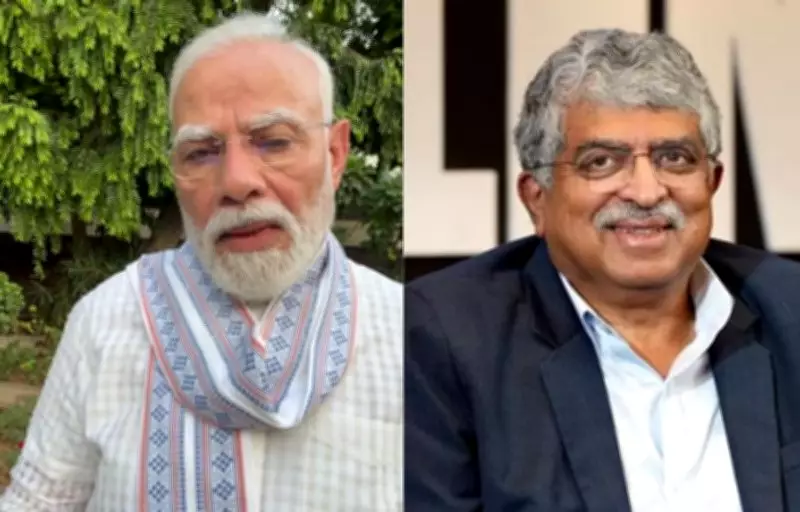
Prime Minister Narendra Modi has appointed Infosys co-founder Nandan Nilekani to lead a high-powered task force on examination reforms, following the NEET-UG paper leak controversy and the resignation of Education Minister Dharmendra Pradhan. The announcement was made through a video message on Sunday, where Modi emphasized the need for decisive action to restore trust in the examination system.
Task Force Composition and Mandate
The task force includes former ISRO Chairman S Somanath, former Intelligence Bureau Director Tapan Deka, IIT-Madras Director V Kamakoti, former Education Secretary Anita Karwal, and logistics expert Amrit Lal Meena. Their mandate is to examine the use of technology and recommend systemic reforms to improve transparency, credibility, and efficiency in conducting examinations. Modi stated that technology must become a key instrument in restoring confidence in competitive exams.
Notably, Nilekani was previously offered the post of Human Resource Development Minister by Congress leader Rahul Gandhi in 2009. Although Nilekani agreed and prepared to join the cabinet, the offer was withdrawn under pressure from other factions in the United Progressive Alliance. Instead, then-Prime Minister Manmohan Singh tasked him with leading the Unique Identification Authority of India (UIDAI), which implemented the Aadhaar card system. Nilekani served as UIDAI Chairman from July 2009 to March 2014. He contested the 2014 Lok Sabha election on a Congress ticket from Bangalore South but lost.

Government’s Response to NEET Paper Leak
In his video message, Modi referred to the investigation into the NEET-UG paper leak, noting that 13 accused are in judicial custody until August 6. He said, “Friends, the time has come to take decisive action. Those who have played with the future of students must be held accountable. We will raise this issue in Parliament and push for strict laws and necessary reforms. We cannot remain indifferent to our future. Our examination system must be credible and transparent, and it must make the maximum use of technology.”
The Prime Minister also announced plans for new legislation with stringent legal provisions to address malpractices. The announcement came a day after the government accepted demands from the Cockroach Janta Party (CJP), which had organized protests over the NEET paper leak. The CJP said it would follow up on its five-point charter for broader education and examination reforms within four weeks, with the Centre agreeing to further discussions.
Logistical Weaknesses and Technology Integration
The K Radhakrishnan Committee, formed in June 2024 after the paper leak, identified local transport, storage, and human handling as major weak links in the examination process. Its report, submitted in October 2024, emphasized using technology to curb malpractices, prevent impersonation, crack down on organized cheating networks, and blacklist unreliable centers. The government is also planning to shift NEET-UG to a computer-based test model to reduce leak risks, requiring a robust technology infrastructure capable of handling over 20 lakh medical aspirants.
The New Delhi-based task force is expected to build on these recommendations, ensuring that future examinations are transparent and secure. Modi reiterated that those responsible for compromising students’ futures are being held accountable, and the task force will play a crucial role in preventing future incidents.