

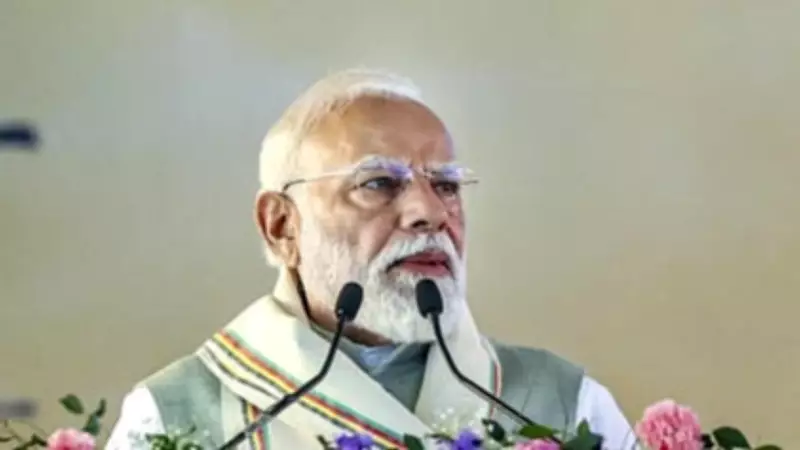
PM Modi Condemns TMC's Stance on Special Intensive Revision in West Bengal
Prime Minister Narendra Modi has launched a sharp critique against the Trinamool Congress (TMC), accusing the party of opposing the Special Intensive Revision (SIR) initiative in West Bengal to protect what he termed an illegal migrant vote bank. The remarks came during a significant infrastructure event in the state, highlighting the political tensions surrounding governance and electoral policies.
Foundation Stone Laid for Major Economic Corridor
Amidst the political discourse, PM Modi laid the foundation stone for five crucial sections of the 231 km-long four-lane Kharagpur-Moregram economic corridor. This ambitious project is designed to boost connectivity and economic growth in the region, with the Prime Minister emphasizing its importance for West Bengal's development. The corridor is expected to enhance trade, reduce travel time, and spur industrial activity along its route.
Allegations of Vote Bank Politics
In his address, Modi asserted that the TMC's resistance to the SIR is driven by vote bank considerations, specifically aimed at safeguarding the interests of illegal migrants. He argued that such opposition undermines efforts to ensure fair and transparent electoral processes in West Bengal. The SIR initiative is part of broader measures to revise voter lists and address issues related to illegal immigration, a topic that has long been contentious in Indian politics.

The Prime Minister's comments reflect ongoing debates over migration and electoral integrity in the state, with the ruling Bharatiya Janata Party (BJP) and TMC frequently clashing on these matters. Modi urged for bipartisan support to strengthen democratic institutions and promote development without political interference.
Infrastructure Development as a Priority
Beyond the political accusations, the event underscored the government's focus on infrastructure as a key driver of progress. The Kharagpur-Moregram corridor, once completed, will serve as a vital link for transportation and commerce, potentially transforming the economic landscape of West Bengal. Officials highlighted that the project aligns with national goals of improving road networks and fostering regional connectivity.
As the political and developmental narratives intertwine, the situation in West Bengal remains a focal point for national attention, with implications for both state politics and broader governance issues in India.






