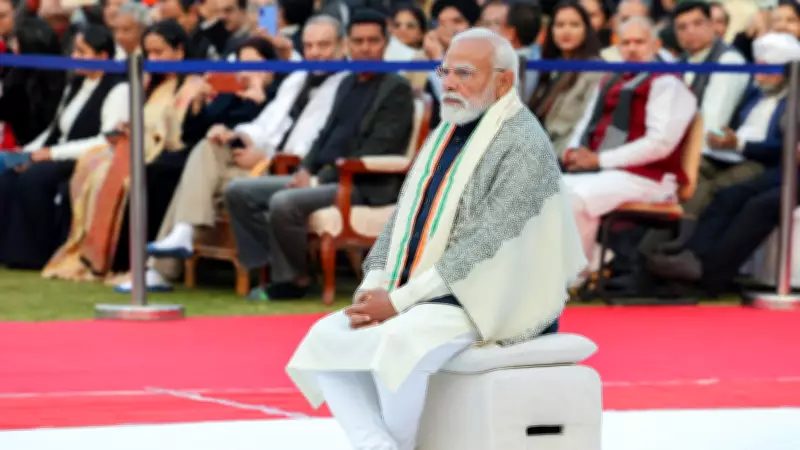
PM Modi's Dera Ballan Visit: A Symbolic Boost for Punjab's Inclusion and Economic Revival
Prime Minister Narendra Modi's scheduled visit to Dera Sach Khand Ballan, the spiritual headquarters of the Ravidassia community in Jalandhar on February 1, transcends mere ceremonial significance. This outreach should be interpreted as a profound symbol of recognition, reassurance, and resolute determination by the nation's leadership towards Punjab, a crucial border state currently navigating economic challenges, financial constraints, and a prolonged phase of uncertainty.
A Gesture of Empowerment and Social Inclusion
Dera Sach Khand Ballan is not only a pivotal religious institution but also embodies the fulfilment of Babasaheb Dr. Bhimrao Ambedkar's vision for an Indian society that provides equal opportunities for all, including historically marginalised communities. For decades, the followers of the Dera and the broader Ravidassia community have been an integral thread in Punjab's rich social and cultural fabric.
The Ravidassia community and other backward classes, constituting nearly one-third of Punjab's population, have often remained on the peripheries, lacking adequate representation in mainstream power structures. Consequently, the Prime Minister's visit carries deep symbolic weight for a community that has long sought recognition, respect, and genuine inclusion.

For many observers, this visit should be viewed as a powerful gesture of empowerment. It serves as an acknowledgment that the voice, contributions, and aspirations of the Dalit community are vital to the nation's progress. This moment potentially marks the dawn of a new chapter in Punjab's history, where communities that felt oppressed and overlooked for centuries can now envision themselves as active stakeholders in shaping the state's future.
Such symbolic acts are instrumental in promoting social harmony and reinforcing the fundamental principle that development must be participatory and equitable. The immense contribution of the Dalit community to the nation's advancement cannot be understated, and political narratives must evolve beyond narrow appeasement to reflect a changing societal landscape.
Restoring Confidence and Unlocking Economic Potential
Beyond its social dimensions, the visit stands as a critical confidence-building measure for all Punjabis. The state's challenges are multifaceted, spanning fiscal health, employment generation, youth aspirations, and overall investment sentiment. In this complex context, the Prime Minister's presence sends a robust signal to citizens, entrepreneurs, and investors alike that Punjab remains a priority for both the central government and the nation.
Border states like Punjab face unique constraints, and unlocking their full economic potential necessitates sustained and focused attention from the Union government. This moment presents a crucial opportunity that must be seized. Punjab's path to resurgence hinges on diversified growth. While agriculture continues to be a strong foundation, the future will be driven by sectors like education, skill development, industry, services, logistics, and innovation.
Punjab boasts a young, dynamic population that can be effectively harnessed to create opportunities and dignified work within the state itself. National initiatives focused on skilling, digital advancement, start-ups, and entrepreneurship are perfectly poised to leverage this demographic dividend. Success in these areas could help stem distress migration and rekindle hope among the youth.
Infrastructure and Psychological Renewal
Infrastructure development will be paramount to this transformation. Enhanced connectivity through modernised roads and railways, coupled with advancements in logistics, urban development, and industrial corridors, can reposition Punjab as a key economic gateway. Such development creates a multiplier effect, fostering job creation, improving access to healthcare and education, and ultimately elevating the quality of life for ordinary Punjabis, translating policy into tangible progress.

Equally significant is the psychological impact of this high-profile visit. Punjab has historically been a land of valour, initiative, and leadership, making immense contributions to national security, food security, and economic strength. In recent years, however, economic pressures and social complexities have fostered a sense of uncertainty. The Prime Minister's visit can play a pivotal role in restoring confidence and reaffirming that Punjab's future is inextricably linked to India's broader development trajectory.
Prime Minister Modi has consistently expressed concern for Punjab's welfare and a desire to help the state reclaim its former glory. His emphasis on inclusive development, social justice, and balanced growth reflects a nuanced understanding that true progress must be shared by all sections of society.
Therefore, the February 1 visit to Dera Ballan should be seen as an occasion of renewal—a moment where confidence is restored, aspirations are validated, and Punjab takes a decisive stride towards a more inclusive, equitable, and development-oriented future. For the people of Punjab, this outreach offers something truly invaluable: a renewed sense of hope and the powerful affirmation of recognition.