

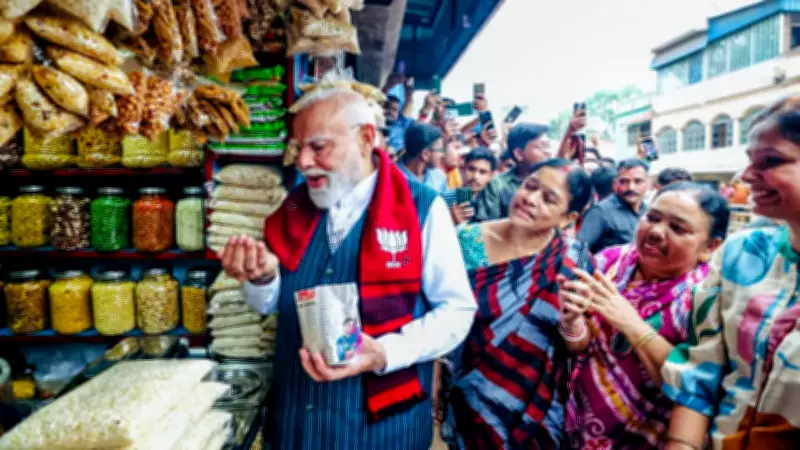
PM Modi's Jhalmuri Encounter Ignites Social Media Storm and Political Controversy
The simple yet beloved street snack jhalmuri has unexpectedly found itself at the center of a national conversation following Prime Minister Narendra Modi's recent tasting experience. This seemingly ordinary moment has captured the public imagination, generating unprecedented digital engagement and sparking a heated political exchange.
Viral Sensation: Crossing 190 Million Views in 24 Hours
The digital impact has been nothing short of phenomenal. Video clips of the Prime Minister enjoying jhalmuri have achieved viral status across major social platforms. On Instagram alone, the content has amassed over 100 million views within a single day, demonstrating remarkable reach and engagement. Similarly, Facebook has recorded approximately 90 million views, bringing the combined total to an astonishing 190 million views across these two platforms in just 24 hours.
The Jhargram Visit: A Snack and a Joke
The incident occurred during Prime Minister Modi's intensive election campaign tour in West Bengal on Sunday. He stopped at a jhalmuri stall in Jhargram, where vendor Vikram Saw, originally from Gaya in Bihar, prepared the popular puffed rice snack for him. An interesting moment unfolded when Saw inquired if the PM consumed onions. Modi responded with his characteristic wit, joking, "Pyaj khate hain, dimag nahi khate bas" (We eat onions, not brains). This light-hearted exchange has become a key part of the viral narrative.

Local Impact and Political Backlash
The immediate aftermath saw a surge of local interest, with curious residents flocking to Vikram Saw's shop to hear firsthand accounts of the encounter and, presumably, to try the now-famous jhalmuri. However, the event quickly transcended local curiosity and entered the political arena.
West Bengal Chief Minister Mamata Banerjee launched a sharp critique of the episode. Speaking at a political rally in Birbhum on Monday, she dismissed the entire visit as a staged performance. "A microphone fitted, SPG around him... How were cameras already installed in the shop? It's all a drama," Banerjee asserted, questioning the authenticity and spontaneity of the moment and suggesting it was a pre-arranged media event.
Analysis: Street Food, Symbolism, and the Digital Age
This episode highlights several contemporary trends. Firstly, it demonstrates the immense power of social media to amplify everyday moments into national phenomena. A leader's interaction with street food, a common element of Indian life, can generate hundreds of millions of impressions almost instantly.
Secondly, it underscores how such moments are instantly politicized in a charged electoral environment. What was a simple snack stop for the Prime Minister became a symbol interpreted differently by opposing political factions—as a relatable connection with the common man for some, and as a contrived political stunt for others.
The humble jhalmuri, through this confluence of digital virality and political theater, has temporarily become more than just a snack; it has transformed into a cultural and political talking point, illustrating the complex interplay between leadership, media, and public perception in modern India.






