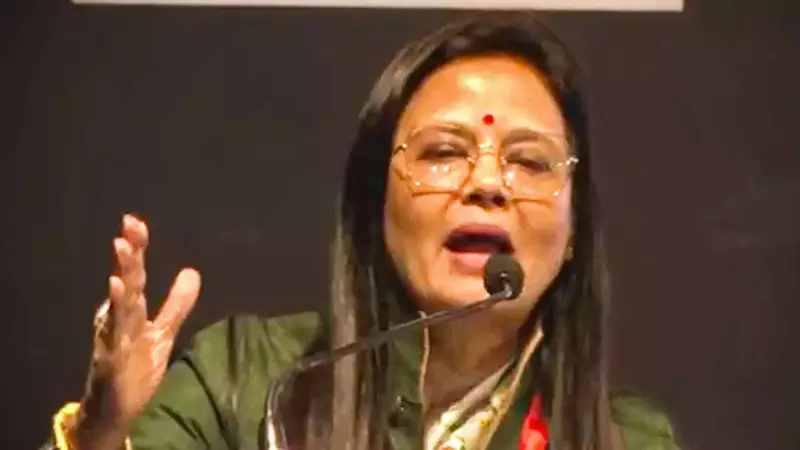
A fiery political debate erupted at the historic Calcutta Club on January 12, 2026, after Trinamool Congress MP Mahua Moitra drew a sharp distinction between Hinduism and Hindutva, directly linking the latter to the controversial term 'love jihad'. Her remarks have reignited one of India's most sensitive ideological battles, pulling religion and politics into a fresh, intense confrontation.
The Core of the Controversy: Pluralism vs Political Project
Addressing a packed audience, Mahua Moitra presented a clear dichotomy. She described Hindu Dharma as inherently pluralistic and inclusive, a tradition that celebrates diversity. In stark contrast, she framed Hindutva as a rigid political project designed to consolidate this diversity into a singular, monolithic identity. The flashpoint came when she illustrated this difference with a potent example.
'Hinduism allows for love across communities,' Moitra stated, 'while Hindutva labels the same act as 'love jihad'.' This direct correlation between the Hindutva ideology and the politically charged term, often used to describe interfaith relationships, immediately set the stage for a fierce rebuttal.

Immediate Political Rebuttal and Defence
The response from the Bharatiya Janata Party was swift. BJP MP and spokesperson Sudhanshu Trivedi countered Moitra's assertions head-on. He defended Hindutva, arguing that it represents the foundational 'Hindu element' of Indian civilization. Trivedi emphasized that the term is not intended as an insult or an exclusionary concept, but rather as a descriptor of the nation's core cultural ethos.
The debate panel, which also featured prominent voices like lawyer J Sai Deepak and Congress leader Mani Shankar Aiyar, highlighted the deep ideological divide. The discussion underscored how questions of religion, political identity, and social justice remain inextricably linked in contemporary India, explaining why this particular conversation is perennially unresolved and emotionally charged.
Why This Debate Resonates Beyond the Club Walls
The event at the Calcutta Club was more than just a panel discussion; it was a microcosm of a national debate. The sharp exchange between Moitra and Trivedi reflects the ongoing struggle to define the nation's identity. Key takeaways from the clash include:
- The Semantics of Identity: The battle over the meanings of 'Hinduism' and 'Hindutva' is central to political discourse.
- Political Mobilization: Terms like 'love jihad' are potent tools for political mobilization and polarisation.
- Unresolved Fault Lines: The debate proves that the intersection of faith, politics, and personal law remains a volatile and unresolved fault line in Indian society.
The intense reactions generated by the debate confirm that these topics are far from academic. They touch the raw nerves of electoral politics, social harmony, and constitutional values, ensuring that this ideological clash will continue to dominate headlines and political rallies for the foreseeable future.