

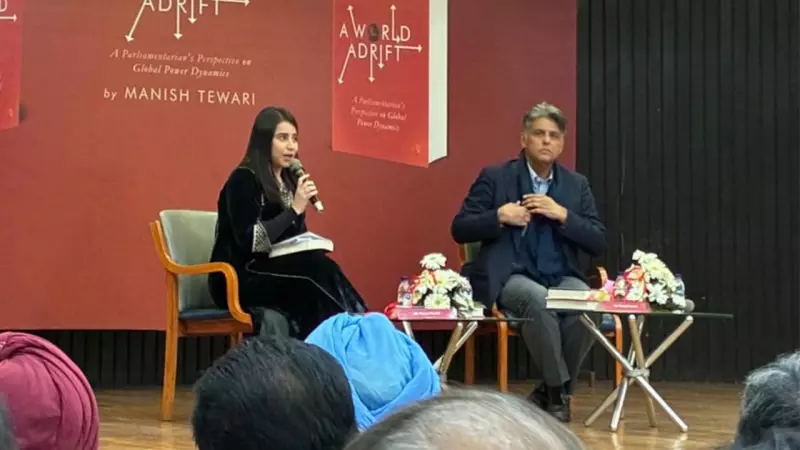
Congress MP Manish Tewari has called for a thorough investigation into recent Gen Z protests across South Asia. He emphasized the need to understand whether these movements were genuine expressions of public discontent or if external forces manipulated them.
Examining Youth-Led Political Upheavals
Tewari made these remarks during the launch of his new book, 'A World Adrift', at the India International Centre in New Delhi. The event saw former foreign minister Yashwant Sinha releasing the publication. Several prominent figures attended, including P Chidambaram, Ghulam Nabi Azad, Vivek Tankha, and Mukul Wasnik, along with numerous foreign delegates.
The MP pointed to three specific cases where protests led by younger generations resulted in government changes. Sri Lanka, Nepal, and Bangladesh all experienced significant political shifts following widespread demonstrations. These countries are close neighbors of India, making their stability a regional concern.

Distinguishing Organic Movements from Weaponized Narratives
Tewari stressed the importance of differentiating between two types of agitation. On one hand, there are autonomous protests that arise naturally from legitimate grievances within a society. On the other, there are movements where those grievances might be exploited or weaponized by external actors to drive specific narratives.
While he did not name any particular country, his comments implied that suspicions about foreign involvement in these coups should not be dismissed lightly. The MP suggested that some nations could potentially use youth protests as a cover for influencing political outcomes in Asia.
Broader Global Context and Regional Relations
His cautionary note came as part of a wider discussion on global turbulence. Tewari referenced various international crises, from Venezuela to Bangladesh to Greenland and the Ukrainian invasion. He painted a picture of a world facing multiple challenges simultaneously.
Addressing India's relationship with Bangladesh specifically, Tewari rejected the notion that "India has lost Bangladesh." He reminded the audience of India's historical role in Bangladesh's creation under Prime Minister Indira Gandhi, stating that this shared history remains significant for Bangladeshi people.
Current Tensions and Future Optimism
The MP acknowledged that the current transitional government in Dhaka has shown hostility toward India for reasons that are difficult to explain. However, he expressed confidence in the underlying emotional connection between the two nations.
Tewari predicted that Bangladesh would eventually return to what he described as India's "eminent domain" in the coming period. He based this optimism on the deep-rooted ties and mutual interests that bind the neighboring countries together, despite recent friction following the protests that led to Sheikh Hasina's government being toppled.






