Congress MP Demands Investigation into Youth-Led Government Overthrows
Congress MP Manish Tewari has called for a thorough study of Gen-Z protests that successfully toppled governments in three South Asian countries over the past three years. He emphasized the need to determine whether these movements were truly organic expressions of public grievance or something more orchestrated.
Examining the Nature of Popular Movements
Tewari stressed that analysts must carefully examine these protests for a critical distinction. They need to differentiate between autonomous agitations arising from genuine grievances and those potentially driven by manufactured narratives where grievances might have been weaponized for political purposes.
While the MP did not explicitly name any country that could have executed virtual coups under the guise of youth protests, his remarks clearly indicated that such suspicions deserve serious consideration and cannot be dismissed lightly.

Recent History of Regional Turmoil
The wave of protests began in Sri Lanka and subsequently led to the downfall of elected governments in Nepal and Bangladesh. All three nations are immediate neighbors of India, making their political stability a matter of direct regional concern for New Delhi.
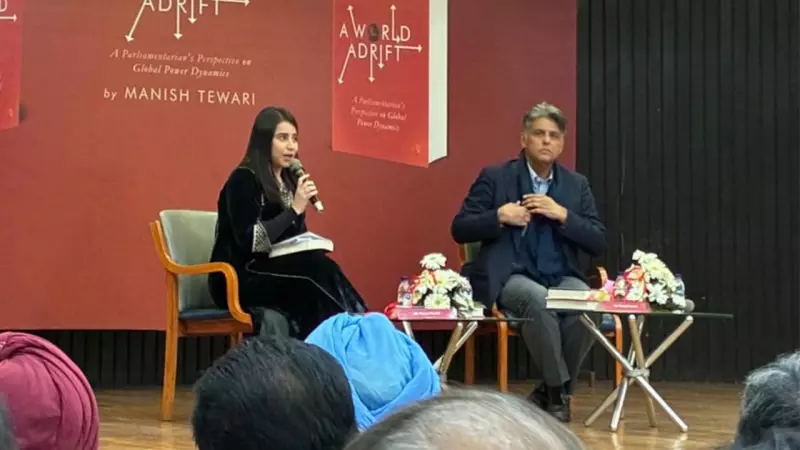
Tewari issued this note of caution during discussions about global turbulence at the launch event for his new book, A World Adrift. The book release took place at the India International Centre and was presided over by former foreign minister Yashwant Sinha.
Distinguished Gathering and Geopolitical Insights
The event attracted a significant gathering of political figures and foreign delegates. Notable attendees included senior Congress leaders P Chidambaram, Ghulam Nabi Azad, Vivek Tankha, and Mukul Wasnik.
During his address, Tewari tackled several pressing geopolitical issues. He specifically dismissed the growing belief that India has lost Bangladesh following protests that toppled the Sheikh Hasina government. These developments have increased friction between the two neighboring countries.
Historical Bonds and Future Optimism
The Congress MP reminded the audience that India invested significant blood and treasure in creating Bangladesh under Prime Minister Indira Gandhi's leadership. He asserted that this historical reality remains deeply ingrained in the consciousness of the Bangladeshi people.
Tewari acknowledged that the current transitional government in Dhaka displays inexplicable belligerence toward India. However, he expressed confidence that the strong emotive connection between the two nations will ultimately prevail. He predicted that Bangladesh would return to India's sphere of influence in the coming period.
Questioning Neighborhood Policy Effectiveness
Interestingly, Tewari urged greater focus on India's policymaking approach toward its neighbors. He revisited a question he previously raised in Parliament, asking pointedly whether India's neighborhood-first policy finds reciprocal commitment from neighboring countries.
Do any of India's neighbors actually have an India-first policy? he questioned, highlighting a potential asymmetry in regional diplomatic engagement.Surviving Global Challenges
Despite acknowledging the turbulence created by former US President Donald Trump's policies from Venezuela to Greenland, and recognizing threats to the established world order, Tewari maintained an optimistic outlook.
He drew a parallel with the COVID-19 pandemic, noting that many doubted the world's ability to survive that crisis, yet humanity persevered. With a laugh, he expressed confidence about navigating the challenges of the next three years, suggesting resilience in the face of global uncertainty.