From Colonial Power to Ceremonial Role: The Evolution of Mumbai's Mayoral Office
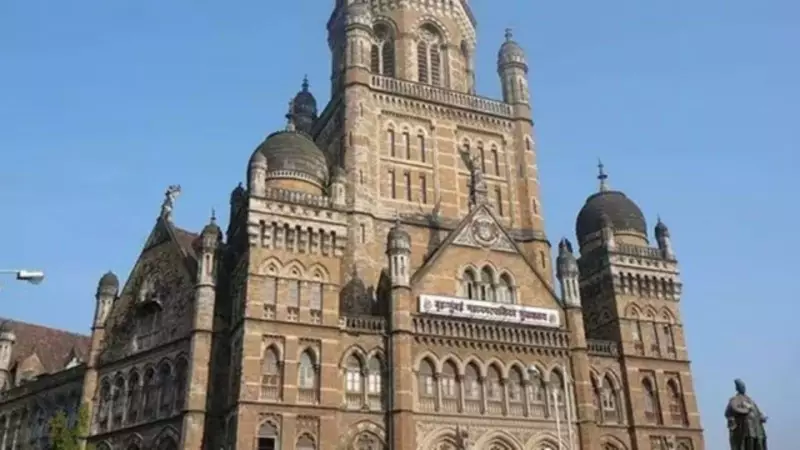
As Mumbai stands on the brink of electing its 59th mayor post-independence, with the mayoral lottery ensuring a woman will hold the city's top civic post this year, it is worth reflecting on the office's remarkable transformation. What is now largely a ceremonial position has roots stretching back nearly three centuries to a time when mayors wielded sweeping judicial powers under British rule. This journey from a potent colonial institution to a symbolic civic head is a fascinating chapter in Mumbai's administrative history.
The Controversial Colonial Origins
The term "mayor" first entered Bombay's lexicon in 1726 with the establishment of the Mayor's Court, created directly under the authority of the British King. This court possessed the power to hear and decide all civil cases arising within the town and its surrounding settlements. In its early years, the Mayor's Court was operated by non-professional judges and exercised extensive authority, including the power to punish offenders.
Historians and official records, including the Maharashtra State Gazetteer, have described this period as "one of the blackest periods in the history of British India," citing arbitrary decision-making and a complete absence of accountability. Similar Mayor's Courts existed in Madras and Calcutta, where mayors functioned not only as civic heads but also as judicial officers. In Bombay, this arrangement persisted until 1798, marking a dark colonial legacy.

Evolution and Democratic Reforms
In 1798, the Mayor's Court was abolished and replaced by the Recorder's Court of Bombay. While the mayor continued to play a central role, this change represented an early attempt to reform the city's administrative system. The real push for public participation emerged much later, driven by Indian leaders and reformers such as Sir Pherozeshah Mehta, Justice K T Telang, Justice Badruddin Tyabji, and Sir Dinshaw Wacha.
Their relentless efforts culminated in the Bombay Municipal Act of 1872, which for the first time introduced limited democratic control over civic governance. At the first meeting of the Bombay Municipal Corporation on September 4, 1873, Captain G F Henry was elected chairman. A pivotal moment arrived in 1875 when Dossabhai Framji became the first elected Indian chairman of the Corporation, marking a significant step toward local self-governance.
Changing Titles and Diminishing Powers
Over the decades, the title of the civic head underwent several transformations. The chairman was later redesignated as President of the Municipal Corporation of Bombay. In 1931–32, the title became "His Worship the Mayor." Following India's emergence as a sovereign republic in 1950, British honorifics were discarded, and the title was simplified to Mayor. Concurrently, the mayor's powers were gradually curtailed, transforming the position largely into a figurehead role.
A Legacy of Leadership
Since the civic body's establishment, the Corporation has witnessed 18 chairmen, 46 presidents, and 77 mayors. Despite this extensive history, only seven women have served as mayor. Sulochana Modi made history as the first woman mayor of Bombay, holding the post for just over five weeks from February 23 to March 31, 1956.
The mayoral chair has also been occupied by numerous prominent political figures, including Sir Pherozeshah Mehta, Vithalbhai Patel, Yusuf Meherally, Sir Homi Mody, K F Nariman, H M Rahimtoola, and S K Patil, each contributing to the city's civic narrative.
The Mayor's Contemporary Role
Today, the mayor fulfills two primary roles in Mumbai. The first is administrative: the mayor chairs meetings of the Municipal Corporation, ensures debates proceed smoothly, and guides councillors on rules and procedures. The second role is ceremonial: as the city's first citizen, the mayor represents Mumbai at official events, welcomes visiting dignitaries, and acts as the public face of the civic body.

The mayor is elected by councillors from among themselves. By convention, the office holder is expected to remain above party politics, avoid controversy, and help ensure the Corporation's smooth functioning. While the mayor lacks significant executive powers, the individual's political standing and public image have historically influenced civic politics in Mumbai, lending the post an importance that transcends its formal authority.
As Mumbai prepares to welcome its 59th mayor, the office stands as a testament to the city's complex journey from colonial subjugation to democratic self-governance, embodying both historical legacy and contemporary civic symbolism.