

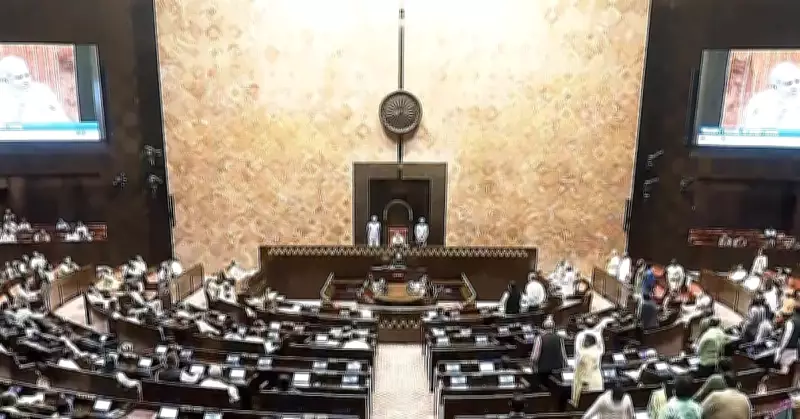
The National Democratic Alliance (NDA) is nearing a two-thirds majority in the Rajya Sabha following a series of defections from opposition parties, particularly the Trinamool Congress. This development strengthens the ruling coalition's ability to push through major constitutional amendments without relying on opposition support.
Rising Numbers in Rajya Sabha
Recent defections have significantly boosted the NDA's tally in the upper house. The alliance now commands 164 seats in the 245-member House, just 10 short of the two-thirds mark required for constitutional amendments. The Trinamool Congress has been the largest contributor, with several of its MPs crossing over to the Bharatiya Janata Party (BJP) and other NDA constituents.
Impact on Legislative Agenda
The increased strength in Rajya Sabha is expected to expedite the passage of key bills, including those related to uniform civil code, simultaneous elections, and changes in reservation policies. However, the NDA still faces challenges in the Lok Sabha, where it remains short of a simple majority.

Lok Sabha Challenges Persist
Despite gains in the Rajya Sabha, the NDA's position in the Lok Sabha remains precarious. The alliance currently holds 272 seats in the 543-member lower house, exactly the majority mark. Any further defections or by-election losses could destabilize the government. The opposition, led by the Indian National Congress, has accused the NDA of using intimidation and inducements to engineer defections.
Opposition Reaction
Congress spokesperson Pawan Khera criticized the defections, calling them a threat to democracy. He alleged that the BJP was misusing its political power to dismantle the opposition. The Trinamool Congress, meanwhile, has expelled the rebel MPs and accused them of betraying the party's mandate.
Long-Term Implications
Political analysts suggest that the NDA's growing strength in Rajya Sabha could pave the way for significant constitutional changes, but the government must first consolidate its position in the Lok Sabha. The next general election, due in 2029, will be a crucial test for the alliance's stability.






