Nehru and Cariappa: A Clash of Titans Revealed in Letters
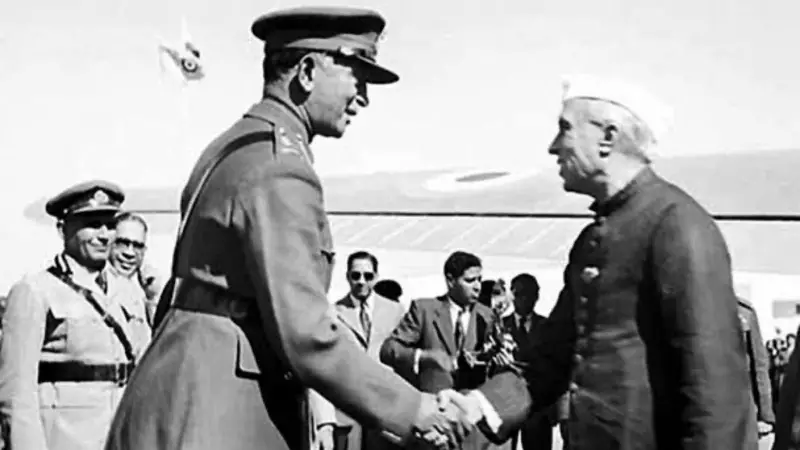
As India celebrates Army Day on January 15, a fascinating story emerges from the archives. The relationship between India's first Prime Minister Jawaharlal Nehru and the first Army Chief Kodandera Madappa Cariappa was far from smooth. Their correspondence reveals deep tensions between civilian leadership and military authority.
General Cariappa frequently expressed his views on various matters to the Prime Minister. Nehru often responded with criticism and sometimes outright dismissal. This dynamic created a series of pointed letters that highlight their ideological divide.
The Explosive Joint Defence Proposal
One major confrontation occurred in 1959. Tensions with China were rising, and disputes with Pakistan continued. On November 1, Cariappa gave an interview to PTI. He advocated for a "common defence" arrangement with Pakistan.

The General argued this would not contradict India's non-alignment policy. It would free up troops for other borders, including potential threats from China. His stance echoed proposals from Pakistan's President Ayub Khan.
Nehru responded fiercely four days later at a Delhi press conference. "I think General Cariappa is completely off the track, mentally and otherwise," he declared. The Prime Minister expressed surprise at what he called the General's lack of sense.
Laughter filled the hall when a reporter asked, "When did you discover it?" The remark seemed to sting Nehru. He immediately telegraphed Defence Minister V.K. Krishna Menon, dismissing Cariappa's ideas as foolish.
Nehru emphasized that defence policy could not be separated from foreign policy. He rejected any joint arrangement with Pakistan, despite appreciating Ayub's gestures on border issues.
In Parliament on November 4, Nehru regretted Cariappa's statement. He called it embarrassing coming from a former Army chief. The Prime Minister firmly rejected joint defence or premature expulsion of Chinese forces. He insisted India must defend its borders alone.
An Apology That Changed Little
An annoyed Cariappa wrote to Nehru on November 7. The Prime Minister replied on November 19 with an apology for his harsh words. "As for what I said at the press conference about you, I am sorry I used those words. I should not have done so," Nehru wrote.
He expressed particular regret for causing pain. However, Nehru stood firm on substance. "I think that many things that you have said have been very irresponsible and, to some extent, even harmful," he maintained.
The Prime Minister termed Cariappa's comments on frontier positions as alarming. He accused the General of supporting communal organizations like the Jana Sangh.
Early Clashes Over Non-Military Topics
This was not their first disagreement. In 1952, while Cariappa served as Army Chief, the RSS-affiliated weekly Organiser published a report. It covered his August 17 speech at a Rotary Club in Madras, now Chennai.
The report quoted Cariappa praising patriots like Veer Savarkar. It said he criticized Congress leaders for accepting Partition. The General reportedly claimed Independence came through a bloodless revolution.
The report suggested Cariappa lamented that Mahatma Gandhi failed to create true national heroes. Instead, he produced what Cariappa called "chhota Mahatmas" who sank low after gaining power.
Nehru was furious. On October 2, 1952, he wrote to Cariappa. "The matter affects your honour and reputation," the Prime Minister stated. "It is absolutely essential that you should pin the falsehood down in a court of law."
The Cabinet discussed the matter and rejected a mere apology. Cariappa filed a suit on October 23.
Earlier that year, Nehru had gently cautioned Cariappa about straying into non-military topics. In an October 17 letter, the Prime Minister wrote, "You have often touched upon various subjects, even economic subjects, in a manner which was sometimes not too happy."
He continued, "It is always a risky business to stray into fields which are not too well-known." Nehru praised Cariappa's efforts to build Army-civilian relations but advised caution.

Cariappa's actual 1952 speech, as reported in The Hindu, was more measured. He stressed the Army's role in defence rather than development. The General called for high morale, economic stability, and industrial self-sufficiency. He noted that wars are made by politicians, not soldiers.
The Karachi Trip Controversy
Another issue arose with Cariappa's trip to Karachi in December 1957. Nehru later wrote that the General had asked if he could discuss the Prime Minister's ideas about resolving the Kashmir issue.
Nehru said he told Cariappa he did not particularly like the idea. He feared the General would say the wrong things despite earnest intentions.
As Nehru expected, Cariappa discussed Kashmir with President Iskander Mirza. He hinted that accepting more or less the status quo was the only feasible solution. This created confusion over the delicate issue, forcing Nehru to explain matters to Parliament.
On Pakistan, a 1961 press query asked about using Cariappa as a mediator with Ayub Khan. Nehru gave a wry denial. "It would be an odd way of dealing with the situation," he responded.
Differences During the China War
Even during the 1962 Sino-Indian War, their differences lingered. On November 19, Nehru wrote to Cariappa. "I am sorry you have a feeling that I have been belittling you in public," the Prime Minister stated.
He acknowledged, "In some matters we have not agreed, but I have always respected you and felt some affection for you." Subsequent letters reaffirmed this affection amid continuing differences.
On October 13, 1963, Nehru wrote again. "There is no question of my disliking you. I have affection and respect for you," he assured Cariappa.
A Lasting Legacy of Tension
Recently published documents in the Nehru Archive show the friction began during Cariappa's tenure as Army Chief. It persisted long after his retirement, at least until the Sino-India war in 1962.
Dozens of correspondences between the two men tell the story of their conflicting views on key issues. These letters provide valuable insight into early civil-military relations in independent India.
The Cariappa-Nehru relationship demonstrates the delicate balance between military expertise and civilian control. Their exchanges remain relevant today as India continues to navigate complex defence and foreign policy challenges.