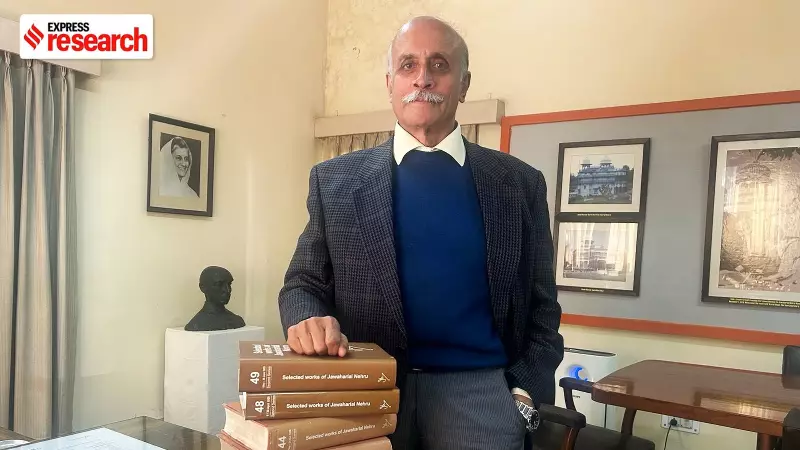
In a landmark move for historians and the public, the vast personal archive of India's first Prime Minister, Jawaharlal Nehru, has been fully digitised and made available online. The collection, comprising approximately 75,000 pages across 35,000 documents, offers an unfiltered window into Nehru's thoughts and the foundational years of modern India.
A Treasure Trove of History Goes Digital
The monumental task of digitising the Jawaharlal Nehru archive has been completed by the Jawaharlal Nehru Memorial Fund (JNMF). Under the editorship of historian Professor Madhavan K Palat, the entire Selected Works of Jawaharlal Nehru series—around 20 volumes published so far—is now freely accessible and fully searchable on a dedicated website.
Professor Palat, a former history professor at Jawaharlal Nehru University, has spent years meticulously working through the collection. He emphasises that the archive's most striking feature is Nehru's profound transparency. "He hid nothing," Palat states, revealing a leader who documented his thoughts with remarkable candour, even on controversial matters.

Inside the Archive: Letters, Speeches, and Nation-Building
The digital archive is expansive, covering over 300 themes. It includes personal letters, official correspondence, speeches, and photographs. Key documents provide direct insight into critical historical moments:
- A 1931 letter to Mahatma Gandhi where Nehru criticises Muhammad Ali Jinnah's "narrow-minded communalism."
- A 1949 warning to Uttar Pradesh Chief Minister Govind Ballabh Pant about the serious repercussions of placing idols inside the Babri Masjid in Ayodhya.
- Detailed correspondence with Sardar Vallabhbhai Patel regarding resolutions on Kashmir.
Palat explains that the archive, 90% of which came from Indira Gandhi's collection, was mandated for publication by her shortly after Nehru's death. The JNMF's collection is distinct in its exclusive focus on writings by and to Nehru, complementing the broader holdings of the Prime Ministers' Museum and Library.
Reassessing Nehru: From 'Weak' to Strategic Unifier
For Palat, a deep dive into the papers challenges the historical perception of Nehru as a weak or vacillating leader. "You get a more positive view of him by reading it all," he asserts. The documents reveal a leader whose paramount concern was keeping a newly partitioned country united and safeguarding its hard-won independence.
His strategy was one of accommodation and consensus-building, not brute force. Palat cites the linguistic reorganisation of states as a prime example of Nehru's statesmanship. Initially apprehensive post-Partition, Nehru eventually supported the creation of states like Andhra Pradesh after recognising the overwhelming democratic and intellectual pressure behind the move. He believed it would stabilise and unify the nation, though he remained opposed to the division of Punjab, viewing it as a communal demand.
"Being tough for its own sake doesn't help. If you are too tough, you alienate people," Palat reflects, noting the insurgencies in Nagaland and Kashmir that Nehru navigated. The archive shows a leader consciously building a historical record, preserving everything from his early days to his tenure as Prime Minister.
The Enduring Value of Private Papers
Professor Palat underscores the invaluable role such private archives play in historical scholarship. For public figures, the line between private and public life is blurred. Private papers often reveal the personal concerns and unstated reasoning behind public decisions, offering a multidimensional view of history that official records alone cannot provide.
With the digitisation project complete, this colossal repository is no longer confined to researchers in Delhi. Students, academics, and curious citizens worldwide can now freely access, download, and search through the thoughts of the man who helped shape India's destiny, discovering for themselves the mind of a leader who believed in speaking his truth to history.