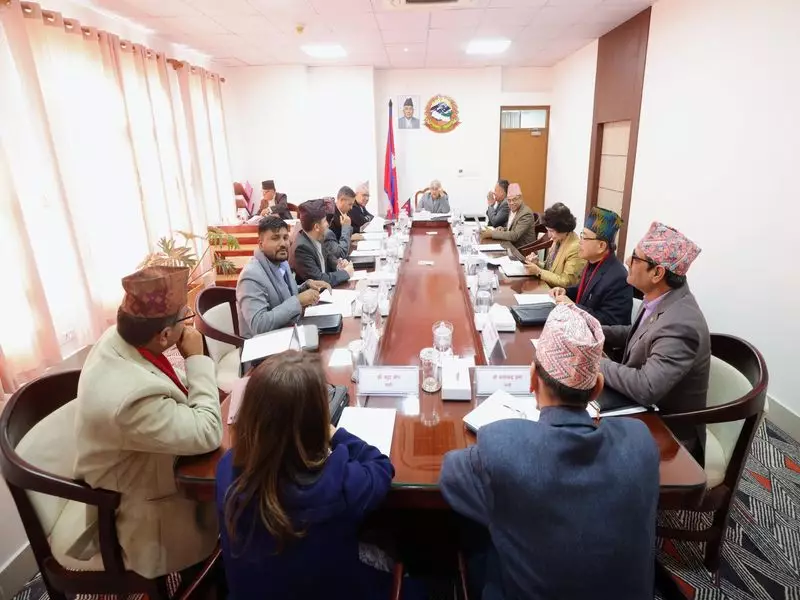
In a significant political move ahead of crucial by-elections, Nepal's caretaker Prime Minister Pushpa Kamal Dahal 'Prachanda' has directed three ministers in his cabinet to step down from their posts. The decision stems from their active political campaigning for specific parties, which is seen as a conflict of interest for ministers serving in an interim, election-time government.
The Ministers Asked to Resign
According to sources within the Prime Minister's secretariat, the three ministers who received the resignation orders are Health and Population Minister Mohan Bahadur Basnet, Forest and Environment Minister Shakti Bahadur Basnet, and Industries, Commerce and Supplies Minister Ramesh Rijal. Prime Minister Prachanda, who leads the CPN (Maoist Centre), communicated his directive to these ministers on Tuesday, February 20, 2024.
The core issue prompting this action is the ministers' open political alignment and campaigning. Both Mohan Bahadur Basnet and Shakti Bahadur Basnet are prominent leaders of the Nepali Congress, the primary opposition party in the dissolved parliament. Minister Ramesh Rijal is a key figure from the CPN-UML. Their active participation in election campaigns for their respective parties is viewed as a violation of the expected neutrality for ministers in a caretaker setup.
Context of the Caretaker Government and Upcoming Polls
This development occurs against the backdrop of a fragile political landscape in Nepal. The current government, led by Prachanda, is an interim, election-time administration. Its primary constitutional mandate is to ensure free and fair elections, not to pursue long-term policy agendas or engage in partisan politics.
The immediate trigger is the scheduled by-elections for the National Assembly (the upper house of the Federal Parliament) on March 13, 2024. These elections are critical for filling 19 vacant seats. The perception that sitting ministers are leveraging their government positions to influence the electoral outcome for their parties has forced the Prime Minister's hand to maintain the integrity of the electoral process.
An official from the PM's office stated that the ministers were asked to resign because their "political affiliation and activities" were no longer appropriate for their roles in a government meant to oversee elections. The interim government was formed after a political agreement following the dissolution of the House of Representatives.
Political Repercussions and Next Steps
The directive has immediate political ramifications. It underscores the tense and transitional nature of Nepalese politics, where coalition dynamics are fluid. The Nepali Congress, to which two of the ministers belong, is technically in opposition but has members in the cabinet—a common feature in Nepal's complex coalition governments.
As of now, it is reported that the ministers have verbally agreed to submit their resignations to the Prime Minister. Once formal resignations are tendered and accepted, Prime Minister Prachanda is expected to either reassign the portfolios to other existing ministers or manage the ministries himself until the election process is completed.
This move is being interpreted as an attempt by PM Prachanda to project an image of a fair and impartial administration ahead of the polls. It aims to curb accusations of the misuse of official resources for partisan gain and to level the playing field for all political contestants. The success of this action in ensuring truly neutral governance during the election period remains to be seen, but it sets a notable precedent for ministerial conduct in Nepal's caretaker governments.