

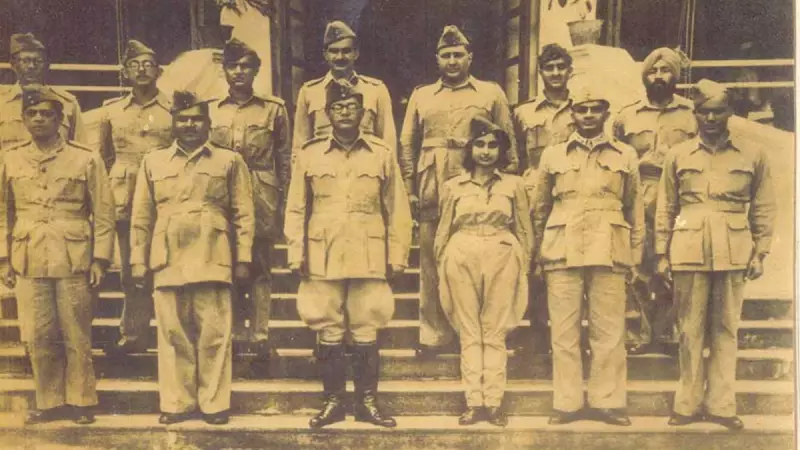
The Historic Founding of Azad Hind Fauj in Singapore
In the tumultuous year of 1942, a significant chapter in India's quest for independence was written far from its shores. Netaji Subhas Chandra Bose, a charismatic and determined leader, took a bold step by establishing the Azad Hind Fauj, also known as the Indian National Army (INA), in Singapore. This military formation was created with the crucial support of the Japanese forces during World War II, aiming to liberate India from British colonial rule through armed struggle.
The Strategic Context and Japanese Alliance
The formation of the Azad Hind Fauj was not an isolated event but part of a larger geopolitical strategy. At the time, Japan was advancing in Southeast Asia, having captured Singapore from the British in February 1942. Seeing an opportunity to weaken British hold on India, Japanese officials collaborated with Indian nationalists like Bose. This alliance was based on mutual interests: Japan sought to disrupt British resources in the region, while Bose envisioned the INA as a tool to galvanize Indian soldiers and civilians against colonial oppression.
Bose's leadership was instrumental in rallying support. He had earlier escaped British surveillance in India and traveled to Germany and then to Japan, seeking international backing for India's freedom. In Singapore, he addressed Indian prisoners of war and expatriates, inspiring them to join the Azad Hind Fauj. His famous slogan, "Give me blood, and I shall give you freedom," resonated deeply, attracting thousands of volunteers who were eager to fight for their homeland's sovereignty.

Impact and Legacy of the Azad Hind Fauj
The Azad Hind Fauj played a pivotal role in shaping India's independence movement, even though it did not achieve its immediate military objectives. Key aspects of its impact include:
- Military Campaigns: The INA participated in several battles alongside Japanese forces, most notably in the Burma Campaign and the attempted invasion of northeastern India. These efforts, though ultimately unsuccessful, demonstrated the resolve of Indians to take up arms for freedom.
- Inspirational Symbol: Bose and the Azad Hind Fauj became symbols of resistance and sacrifice. Their story inspired generations of Indians, highlighting the importance of unity and courage in the face of adversity.
- Post-War Influence: After World War II, the trials of INA soldiers by the British sparked widespread public outrage in India, fueling the final push for independence. This contributed to the British decision to leave India in 1947.
Today, the Azad Hind Fauj is remembered as a testament to Netaji Subhas Chandra Bose's visionary leadership and the indomitable spirit of those who fought for India's freedom. Its founding in Singapore in 1942 remains a key historical event, underscoring the global dimensions of the Indian independence struggle and the sacrifices made by countless individuals in pursuit of liberty.

