Netaji Subhas Chandra Bose's 'Parakram' Must Guide Bharat's Path to Progress
Prime Minister Narendra Modi has consistently emphasised the need to shed the colonial mindset and honour India's rich heritage and freedom fighters. This vision is powerfully reflected in the government's observance of Netaji Subhas Chandra Bose's birth anniversary as Parakram Diwas, a day dedicated to celebrating courage and valour.
Tribute to Netaji's Sacrifice and Vision
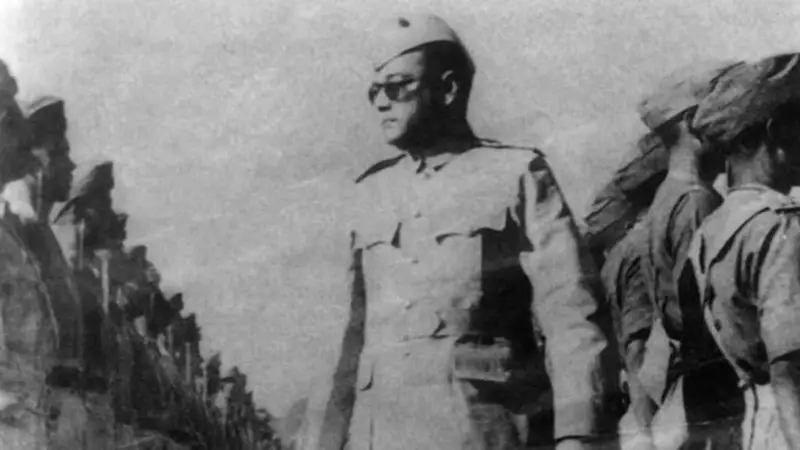
On Netaji Subhas Chandra Bose's birth anniversary, the nation pays heartfelt tribute to his unwavering courage, immense sacrifice, and passionate dedication to India's freedom. From a young age, Netaji displayed rare moral intensity, renouncing personal comfort and a prestigious career in the Indian Civil Service to devote himself entirely to the liberation of his motherland. For him, freedom was not just a goal but a sacred duty that demanded total commitment.
Gurudev Tagore's Recognition of Netaji as Deshnayak
A profound insight into Netaji's extraordinary personality comes from a remarkable tribute by Gurudev Rabindranath Tagore in 1939. He hailed Subhas Chandra Bose as deshnayak—the leader of the nation. Gurudev observed that in times of turmoil, a country requires the strong hand of an inspired and valiant leader. In Netaji, he saw a rare fusion of courage, visionary thinking, and moral force that could steer India towards independence.

Netaji's Revolutionary Path and the Indian National Army
When conventional paths appeared inadequate to achieve Independence, Netaji charted his own revolutionary course. He transformed the freedom struggle into an international movement through the formation of the Indian National Army (INA). His powerful assertion, "There is no power on earth that can deprive us of our birthright of liberty any longer," found bold expression in the INA's efforts. Netaji's clarion call—"Give me blood, and I will give you freedom"—resonated deeply across all regions and communities of India, igniting a spirit of rebellion and hope.
Deep Bond with the Tamil People and Southern Support
The emotional and ideological bond between Netaji and the Tamil people became one of the strongest pillars of support for the INA and the broader freedom movement. Netaji's popularity extended powerfully to Tamil communities in Malaya, Burma, and Singapore, showcasing his widespread appeal. From the early 1920s, Netaji recognised the political importance of the Madras Presidency in the Indian national movement. As a Congress organiser and national leader, he engaged closely with political workers in the region.
Netaji's Visits to Madras and Mobilisation Efforts
Netaji's visits to Madras (now Chennai) and other centres of the presidency were marked by large public meetings and enthusiastic receptions, particularly from students and politically conscious youth. On September 3, 1939, Netaji arrived at Madras Central Station, where he was received by supporters including lawyer and freedom fighter S Srinivasa Iyengar and Pasumpon U Muthuramalinga Thevar. Taken in an open jeep to "The Peak," the residence of civil engineer S P Ayyaswamy Mudaliar, he was followed by a sea of supporters. That evening, he addressed a massive public meeting at Marina Beach, galvanising the masses.
Key Leaders and Tamil Recruits in the INA
During this visit, Pasumpon U Muthuramalinga Thevar, a close associate of Netaji, emerged as a key leader of the Forward Bloc in Tamil Nadu. Often remembered as the "Bose of the South," he played a significant role in mobilising Tamil support for the INA and founded a Tamil weekly magazine named Netaji. Among the notable recruits was Ramu Thevar, originally from Ramnad in the Madras Presidency. Inspired by Netaji at an early age, he joined the INA and was later entrusted with intelligence duties in Penang. Arrested while attempting to reach India, he was imprisoned in Alipore Jail in Calcutta (now Kolkata). His letters to his mother speak of immense hardship and unwavering patriotism. Unaware of his execution in Madras Jail in 1944, his mother continued writing to him until 1948. Thevar was only 18 when he made the supreme sacrifice for the nation.

Women's Participation and the Rani of Jhansi Regiment
In a stirring address at the Padang in Singapore in 1943, Netaji urged women to join the struggle, declaring that this must be a truly revolutionary army. His words deeply moved Tamil Indian women in Malaya, many of whom had endured hardship on rubber plantations. Despite having never seen India, nearly a thousand of them volunteered for the Rani of Jhansi Regiment. While the bravery of Lakshmi Swaminathan (Captain Lakshmi Sahgal) is widely recognised, the contributions of Janaky Thevar, Anjalai Ponnusamy, and Rasammah Bhupalan are equally inspiring. Janaky Thevar, only 14 when she first heard Netaji speak, donated her diamond earring to the INA and later rose to a senior leadership position in the Rani of Jhansi Regiment. Saraswathi Rajamani, often regarded as one of India's youngest women intelligence operatives, joined the INA at 16 and served with distinction. In keeping with Netaji's egalitarian vision, women trained and served alongside men, and caste divisions were firmly rejected.
Countless Unsung Heroes and Netaji's Remark
Alongside these leaders stood countless unnamed Tamil soldiers and labourers from Ramanathapuram, Tirunelveli, Madurai, Sivaganga, Tiruchirappalli, and Cuddalore, who answered Netaji's call from Malaya, Burma, and Singapore. Deeply moved by this overwhelming support, Netaji is believed to have remarked that if he were to be born again, he would wish to be born a Tamilian, highlighting his profound respect and gratitude for their contributions.
Netaji's Vision for a Strong and Self-Reliant India
Netaji believed that political independence was only the beginning; the greater task was to build a strong, united, and self-reliant India that ensured dignity and justice for all. His special bond with the Tamil people stands as a powerful reminder that India's freedom was forged through the shared sacrifice of regions, communities, and countless unsung heroes. Prime Minister Narendra Modi's emphasis on shedding the colonial mindset, honouring India's values and freedom fighters, and advancing towards true freedom of the mind and spirit aligns closely with Netaji's enduring ideals.
Government Initiatives Honouring Netaji's Legacy
This vision is reflected in various government initiatives, such as the observance of Netaji's birth anniversary as Parakram Diwas, the renaming of historic islands in the Andaman and Nicobar Islands in his honour, and the installation of his statue at Kartavya Path. These actions serve to keep Netaji's legacy alive and inspire future generations.
Netaji's Enduring Ideals and Bharat's Progress
As Netaji once observed, "One individual may die for an idea, but that idea will, after his death, incarnate itself in a thousand lives." His ideals continue to guide Bharat as the nation moves forward with a collective resolve to translate parakram into tangible progress. By embracing Netaji's spirit of courage and self-reliance, India can chart a path towards greater prosperity and global leadership, honouring the sacrifices of all freedom fighters who paved the way for independence.