

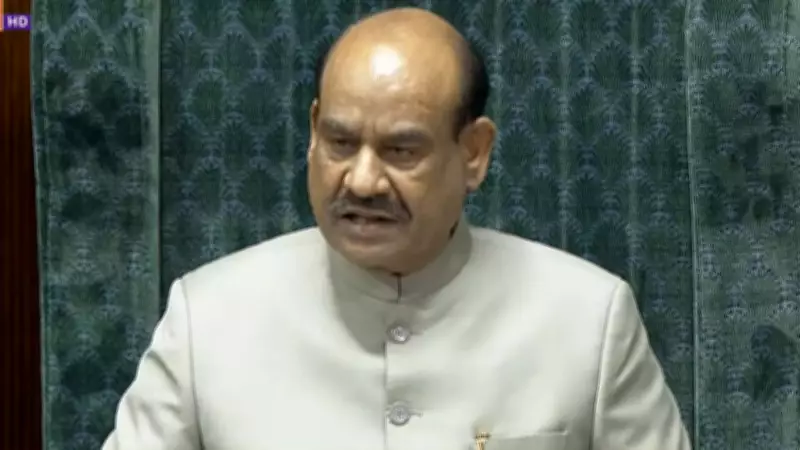
Opposition Gears Up for No-Confidence Motion Against Lok Sabha Speaker Om Birla
The political atmosphere in India's Parliament has intensified as the Opposition is reportedly preparing to move a no-confidence motion against Lok Sabha Speaker Om Birla. This development follows a significant parliamentary row that erupted over the handling of a sensitive issue involving a former Army Chief's unpublished memoir.
Root Cause: Memoir Quotation Controversy
The controversy began when Leader of Opposition Rahul Gandhi was barred from quoting from former Army Chief General M M Naravane's unpublished memoir during parliamentary proceedings. This decision by the Speaker's office sparked immediate backlash from Opposition members, who viewed it as an infringement on parliamentary freedom and debate.
In response to this restriction, Opposition parties initiated a boycott of parliamentary proceedings, bringing legislative work to a standstill. The tension quickly escalated beyond the initial issue, transforming into a broader confrontation about parliamentary norms and the Speaker's authority.

Opposition's Stance and Accusations
Congress MP KC Venugopal articulated the Opposition's frustration, stating that they have "no space" in the House under the current circumstances. His comments strongly hinted at upcoming parliamentary action, which has now materialized as the planned no-confidence motion.
The Opposition's move represents a significant escalation in parliamentary tensions, with members accusing the Speaker of partiality and restricting legitimate parliamentary discourse. This development comes at a time when the Congress party has been out of power at the national level for eleven years, adding political weight to their parliamentary strategy.
Defense of the Speaker and Counter-Arguments
JD(U) MP Sanjay Kumar Jha came to Speaker Om Birla's defense, emphasizing that the Speaker's rulings in the House are final and must be respected. This position highlights the constitutional authority vested in the Speaker's office and underscores the traditional parliamentary principle that the Speaker's decisions are not subject to challenge through normal parliamentary procedures.
LJP MP Rajesh Verma offered a different perspective, suggesting that the proposed no-confidence motion reveals political motives rather than substantive parliamentary concerns. He claimed that the Opposition is not contributing positively to parliamentary work and is instead using procedural mechanisms for political advantage.
Broader Parliamentary Implications
This brewing confrontation has significant implications for India's parliamentary democracy. No-confidence motions against the Speaker are rare and represent a serious challenge to parliamentary leadership. Such motions test the government's majority support while questioning the impartiality and effectiveness of the presiding officer.
The situation reflects deeper tensions in India's political landscape, where parliamentary procedures have become battlegrounds for broader political conflicts. The restriction on quoting from an unpublished military memoir has unexpectedly triggered a constitutional crisis of sorts, demonstrating how seemingly procedural matters can escalate into major political confrontations.
Historical Context and Precedents
While no-confidence motions against Speakers are uncommon in Indian parliamentary history, they represent the ultimate parliamentary challenge to the presiding officer's authority. The current situation echoes previous parliamentary standoffs where procedural matters have become flashpoints for larger political battles between ruling and opposition parties.
The outcome of this potential motion could set important precedents for parliamentary conduct, the Speaker's discretionary powers, and the boundaries of parliamentary debate in India's democratic system.






