

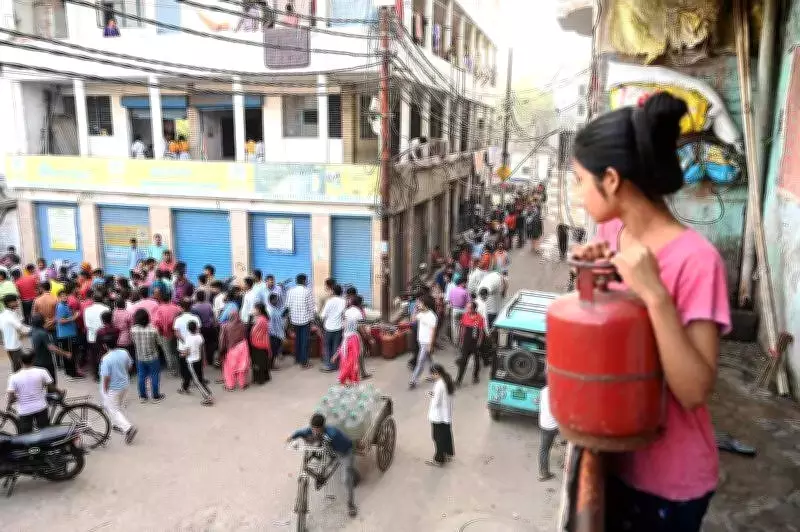
Noida Residents Rally to Support Staff Amid Severe LPG Supply Crisis
As the ongoing LPG supply strain continues to disrupt daily life for those most dependent on gas cylinders, a heartening response is emerging from unaffected PNG consumers in Noida. Several housing societies have initiated efforts to provide cooked meals to their support staff, while residents are extending similar assistance to domestic helpers, helping them navigate the severe shortage that has left many without access to a functional kitchen.
Community Initiatives in Noida and Greater Noida
In Forest Spa Society, Sector 93, resident Shruti Sharma shared that both her home helps had exhausted their gas cylinders days earlier. Living in nearby Gejha village, they were unable to secure a refill despite booking four days prior. "I have a PNG connection, so cooking is not a problem for us," Sharma explained. "When my house helps told me their cylinder was empty and the local gas agency had shut its doors, I invited them to cook in my kitchen and take food home for their families. They work long hours and support entire households. Without the ability to cook at home, their situation becomes incredibly difficult."
Similar community-driven efforts are unfolding in Greater Noida. At Tata Steel Officers Enclave, the apartment owners' association began distributing cooked meals to society staff, including security guards, electricians, and plumbers. Sukendra Yadav, the association's president, stated that the initiative was launched after residents recognized the widespread impact of the LPG crisis on workers from nearby villages.

"Many guards and maintenance staff informed us their LPG cylinders were empty, with no feasible way to obtain a refill," Yadav said. "We started organizing cooked food from within the society and also sent messages to residents, urging them to assist their domestic helpers in any possible manner."
Growing Desperation Among Workers
For Shilpi, a domestic helper residing in Gejha village and working in several flats at a nearby highrise, securing a cylinder has become increasingly challenging as the local gas agency has remained closed for days. "We must stand in long queues just to make a physical booking. I have been attempting for four days and still have not succeeded," she recounted.
Nisha, another Gejha resident, highlighted that some workers have begun leaving the city because they can no longer cook at home. "In rented accommodations, we cannot use a chulha," she said, referring to traditional wood-fired stoves. "At least in our native villages, we can cook on one. Consequently, some of my neighbours have taken leave from work and returned to their hometowns."
Residents across multiple housing societies reported that their support staff, predominantly migrant workers, have started departing for their hometowns. Rajiva Singh, a Sector 50 resident, noted that his domestic helper recently returned to her village after struggling to feed her family in the city. "She expressed that she cannot manage here without gas and plans to return once the LPG problem is resolved," Singh shared.
Broader Implications of the Crisis
The LPG shortage has not only caused logistical hardships but also triggered a minor exodus of essential service providers from urban areas. Long queues persisted outside gas agencies on Saturday, underscoring the severity of the supply disruption. This crisis highlights the vulnerability of migrant workers and low-income households who rely heavily on LPG for daily sustenance.
While PNG consumers remain insulated from the immediate effects, their proactive steps to support affected communities demonstrate a commendable spirit of solidarity. However, the departure of workers poses potential challenges for residential complexes and households dependent on their services, signaling broader economic and social ramifications if the supply issues persist.
The collective response in Noida serves as a poignant reminder of how urban communities can mobilize during crises, yet it also underscores the urgent need for systemic solutions to stabilize LPG distribution and prevent further displacement of vital workforce members.






