NRI Sabha Punjab Grapples with Leadership Void as Polls Remain Delayed
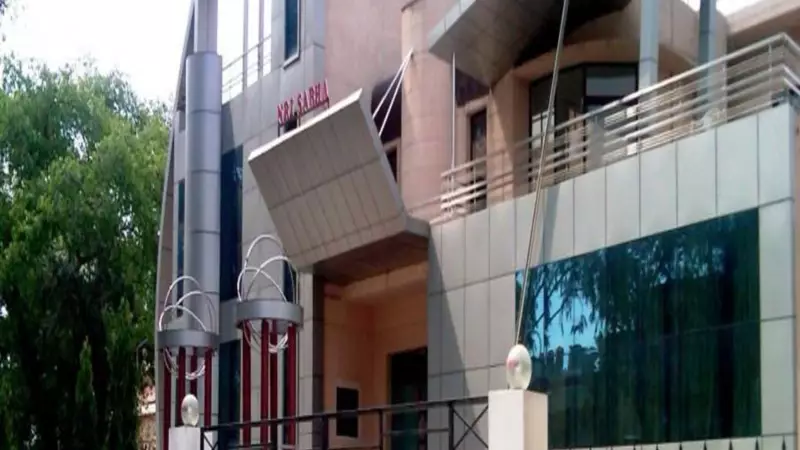
The NRI Sabha Punjab, the state's only registered statutory body for Non-Resident Indians, finds itself in a deepening governance crisis. This situation stems from the failure to announce election schedules even after the president's two-year term concluded on January 4. Members of the Sabha are now voicing serious concerns about prolonged constitutional violations and a lack of financial transparency within the institution.
Constitutional Deadline Missed, Creating Functional Paralysis
According to the NRI Sabha Punjab's Constitution, the election process must commence at least ninety days before the president's term expires. This ninety-day window allows for election preparations following the schedule announcement. With no notification issued to date, members point out that elections cannot realistically occur before April 2026, even if a schedule is announced imminently. This significant delay has effectively created a leadership vacuum, rendering the body largely ineffective in its duties.
The Sabha, with nearly 23,000 registered members, is designed to function as a democratic platform. Its core purpose is to address NRI community grievances and involve them in Punjab's socio-economic development. Established practice dictates that only registered NRI members can participate in elections, traditionally requiring physical presence for voting. Members are now demanding immediate announcement of elections to restore the organization's functional and transparent operation. They argue the continued delay is eroding the institution's credibility and weakening its capacity to serve NRIs effectively.

Legal Petition Highlights Government Inaction
The election delay was brought before the Punjab and Haryana High Court through a petition filed by Sabha member Karan Randhawa. The petition seeks directions to initiate elections strictly as per the Constitution. In response, the Divisional Commissioner of Jalandhar, who also serves as the Sabha's chairman and is constitutionally responsible for conducting elections, filed an affidavit. It stated that a request to start the election process was sent to the Department of NRI Affairs.
The affidavit further noted that on December 2, 2025, the department sought the proposed election schedule, which was then forwarded to Chief Minister Bhagwant Mann for approval. Based on this submission, the high court recorded that the election process had been initiated. However, no poll schedule has been officially notified yet, leading members to question the delay in implementing the assurance given before the court.
Reacting to the situation, petitioner Karan Randhawa stated that while the court recorded the government's statement, the absence of concrete action places the responsibility squarely on the Sabha's chairman to conduct elections without further delay.
Allegations of Constitutional Violations and Financial Opacity
Members of the Sabha pointed out that despite assurances made during the last elections, the outgoing president allegedly failed to revive the Sabha. Instead, they claim it was run in a unilateral manner, contrary to the spirit of collective decision-making enshrined in the Constitution. Randhawa alleged serious violations of the statutory body's Constitution and its bye-laws during the outgoing president's tenure.
Key allegations include:
- Failure to constitute the mandated central executive committee.
- Failure to form the administrative sub-committee.
- Failure to convene the Annual General Meeting (AGM).
- Failure to present monthly income and expenditure statements before the executive committee, violating transparency and accountability norms.
Seeking financial clarity, Randhawa filed an application under the Right to Information Act (RTI). The Sabha allegedly failed to provide the requested financial information. Randhawa also alleged that a binding order dated January 31, 2024, issued by the then Minister for NRI Affairs, Punjab, Kuldeep Singh Dhaliwal, was ignored. The order, which appointed five office bearers of NRI Sabha Punjab, was not implemented, further deepening the governance vacuum.

Historical Context and Current Impact
The NRI Sabha was inaugurated in 1996 and became operational around 1998 after its formal registration. Its objective is to provide NRIs a formal platform to raise issues and contribute to Punjab's development. The chief minister serves as the chief patron, while the commissioner of the Jalandhar division acts as its chairman.
Currently, around fourteen district units of the NRI Sabha are functional, with respective deputy commissioners chairing them. Initially, NRI members unable to be physically present could appoint nominees with voting rights. Over time, while nominees retained the right to raise issues on behalf of members, their voting rights were withdrawn. The Constitution also provides for forming district-level and area-level units. Where membership exceeds one hundred, elections are mandatory; where it is below one hundred, the unit president may be nominated by the respective district unit chairman.
Members have alleged that the absence of central leadership and elections has adversely affected the functioning of these grassroots units as well.
"If revived through timely, transparent, and constitutionally compliant elections, the body can play a pivotal role in resolving NRI grievances and contributing meaningfully to the state's development," said Randhawa. "We have urged the government to immediately declare the election schedule, uphold constitutional governance, and restore democratic functioning in the NRI Sabha Punjab, warning that continued delay risks further legal and institutional complications," he added.
When contacted for comment, the outgoing President Parvinder Kaur Australia did not offer a detailed response but mentioned she was busy in a meeting.