

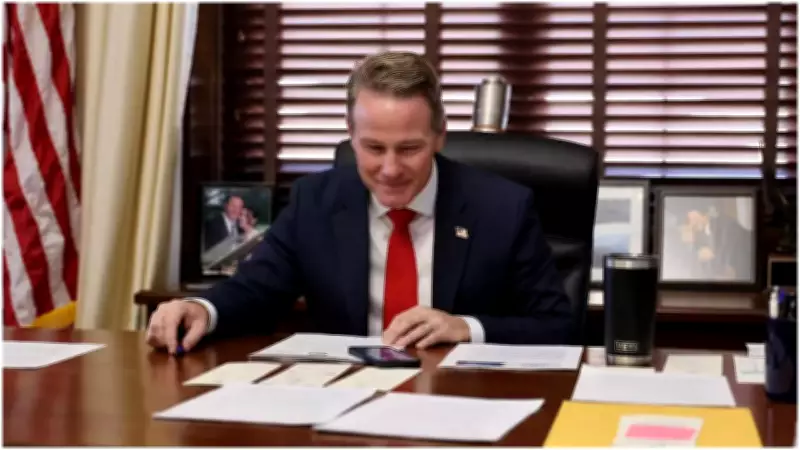
Ohio Senator Faces Scrutiny Over Epstein Vote and Donor Ties
In the high-stakes world of Washington politics, timing often raises critical questions, particularly when campaign contributions and legislative actions appear closely linked. A Republican senator from Ohio is now under intense examination after reports surfaced detailing his vote to obstruct the release of the Jeffrey Epstein files, which came shortly after he accepted a campaign donation from one of the convicted sex criminal's co-conspirators.
Donation Precedes Controversial Senate Vote
According to a recent report, Sen. Jon Husted (R-OH) received a $3,500 donation from Leslie Wexner, the former founder of Victoria's Secret, just three months before casting a vote to block a Senate resolution. This resolution aimed to compel President Donald Trump's administration to release the Epstein files earlier than they ultimately did. The financial transaction and subsequent vote have sparked allegations of potential ethical conflicts, drawing attention to the senator's decision-making process.
Long-Term Financial Support from Disgraced CEO
Campaign finance records reveal a deeper, more enduring connection between Husted and Wexner. Over the span of two decades, from 2001 to 2025, Husted accepted more than $116,000 in campaign donations from Wexner across 21 separate instances. This makes the disgraced CEO one of Husted's most consistent and long-standing financial backers throughout his political career. The report emphasizes that this financial relationship has persisted from Husted's early days in the Ohio legislature to his current role as a U.S. Senator, highlighting a pattern of support that raises further questions about influence and accountability.

Unique Position Among Senators Up for Re-Election
Notably, Husted stands out as the only senator facing re-election in 2026 who accepted contributions from Wexner during the 2025-2026 election cycle. This distinction places him in a unique spotlight as scrutiny intensifies over the Trump administration's handling of the Epstein case. The renewed focus comes as Wexner's name was mentioned among six of Epstein's co-conspirators, all of whom were redacted from the latest batch of 3 million documents released to the public.
Broader Implications for Political Ethics
The revelation of these ties arrives at a pivotal moment when the Epstein files are receiving renewed attention, with many calling for greater transparency and accountability. The interplay between campaign finance and legislative votes underscores ongoing debates about political integrity and the potential for donor influence to shape policy decisions. As investigations continue, this case serves as a stark reminder of the complex dynamics at play in American politics, where financial support and official actions can intersect in ways that demand public scrutiny and ethical evaluation.






