

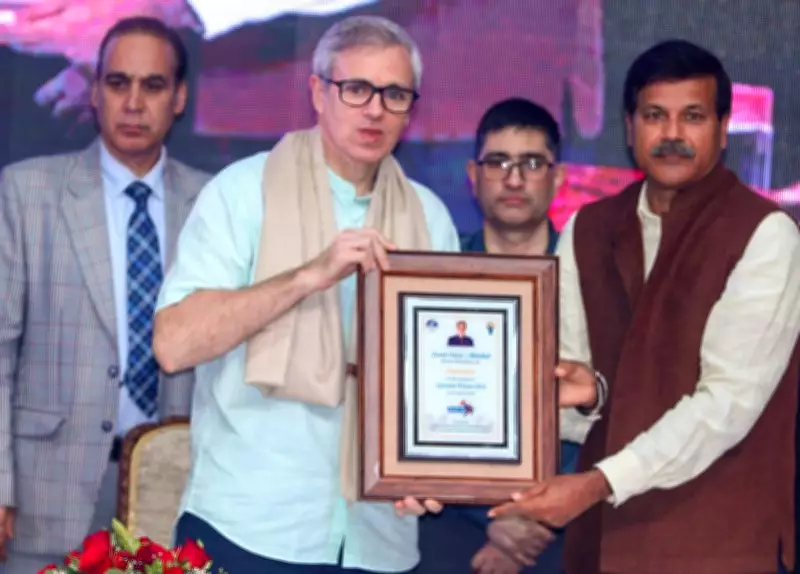
Omar Abdullah Stresses People's Choice in Political Change for Jammu and Kashmir
National Conference leader Omar Abdullah has made a strong statement regarding the political future of Jammu and Kashmir, asserting that any regime change in the region must be driven by the will of the people, rather than external intervention. This declaration comes amid ongoing discussions and debates about the governance and autonomy of the union territory.
Emphasis on Democratic Principles
In his remarks, Abdullah highlighted the importance of democratic processes in shaping political transitions. He argued that external forces should not dictate or influence changes in leadership, as this undermines the sovereignty and self-determination of the local population. "The choice of who governs must rest with the people of Jammu and Kashmir," he stated, reinforcing the need for internal consensus and participatory democracy.
Context of Regional Politics
The statement is seen as a response to broader geopolitical dynamics and historical contexts where external actors have been involved in the region's affairs. Abdullah's comments reflect concerns about maintaining the integrity of local decision-making processes. This perspective aligns with the National Conference's long-standing advocacy for greater autonomy and respect for the region's unique political landscape.

Implications for Future Governance
Abdullah's stance has sparked discussions on how political changes should be managed in Jammu and Kashmir. Key points include:
- Ensuring that electoral processes are free, fair, and reflective of public opinion.
- Resisting any form of coercion or interference from outside entities.
- Promoting dialogue and engagement among local stakeholders to foster stability.
This approach aims to build a more inclusive and representative political system, addressing past grievances and aspirations for self-governance.
Broader Reactions and Analysis
Political analysts note that Abdullah's remarks resonate with ongoing debates about federalism and regional rights in India. By emphasizing people's choice, he taps into broader themes of democracy and sovereignty that are critical in the post-Article 370 era. The statement also serves as a reminder of the complex interplay between local, national, and international factors in shaping Jammu and Kashmir's future.
In conclusion, Omar Abdullah's call for regime change to be a people's choice underscores the need for democratic integrity and local agency in political transitions. As discussions continue, this perspective will likely influence how policies and governance models are developed for the region, ensuring they align with the aspirations of its residents.






