Operation Sindoor Shatters Long-Standing Myths About India's Military Response
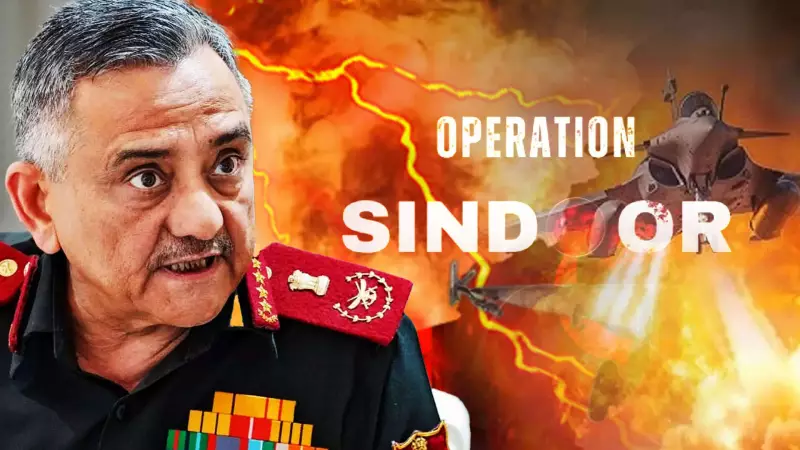
In a significant address that has captured national attention, Chief of Army Staff General Upendra Dwivedi has highlighted how Operation Sindoor has fundamentally altered perceptions about India's military capabilities and decision-making processes. The Army Chief's remarks came during the launch of the book 'Red Lines Redrawn: Operation Sindoor and India's New Normal' in Delhi, where he provided crucial insights into what he described as a transformative moment for India's defense establishment.
Jointness Among Armed Forces Becomes Operational Reality
General Dwivedi emphasized that Operation Sindoor demonstrated that jointness among India's armed forces is no longer merely theoretical discussion but has become an operational reality. "This operation proved that jointness is now executed successfully under pressure rather than just discussed in theory," the Army Chief stated, underscoring the practical implementation of coordinated military efforts that had long been envisioned.
The successful execution of Operation Sindoor under challenging circumstances has provided concrete evidence of how India's Army, Navy, and Air Force can work together seamlessly when faced with real-world pressures. This operational success marks a significant milestone in India's military evolution, showcasing capabilities that extend beyond traditional service boundaries.

Overturning Assumptions About Slow Decision-Making
Perhaps the most striking revelation from the Army Chief's address concerns how Operation Sindoor has overturned long-standing assumptions about India's military response mechanisms. General Dwivedi noted that the operation effectively challenged perceptions about:
- Extended mobilization timelines that were previously considered inevitable
- Slow decision-making processes within India's defense establishment
- Bureaucratic delays in military responses to emerging situations
"Long-standing assumptions about India's slow decision-making and extended mobilization timelines were effectively overturned," the Army Chief declared, pointing to Operation Sindoor as evidence of India's enhanced military responsiveness.
Government Support and Economic Measures
General Dwivedi also highlighted the crucial role played by government-led economic measures that supported the armed forces throughout Operation Sindoor. He stressed the importance of resilient supply chains and the broader Atmanirbharta (self-reliance) initiative in ensuring long-term security for the nation.
The Army Chief's remarks underscored how economic preparedness and strategic autonomy in defense manufacturing have become integral components of India's security architecture. This holistic approach, combining military operations with economic resilience, represents what General Dwivedi described as "India's new normal" in defense and security matters.
Implications for Future Military Operations
The success of Operation Sindoor and the insights shared by the Army Chief have several important implications for India's future military posture:
- Enhanced confidence in rapid response capabilities
- Greater emphasis on joint operations across service branches
- Continued focus on self-reliance in defense production
- Strengthened coordination between military and economic planning
As India continues to navigate complex security challenges, the lessons from Operation Sindoor provide valuable guidance for future defense planning and operational readiness. The Army Chief's address serves as both a reflection on past success and a roadmap for continued evolution in India's military capabilities.