

Operation Sindoor Demonstrated India's Advance in Domain Jointness, Says Army Chief
Army Chief General Upendra Dwivedi stated on Thursday that Operation Sindoor has showcased India's significant progression towards achieving "domain jointness," describing the military offensive conducted within Pakistani territory as a "defining case study" of operational integration. Speaking at the 'Ran Samvad' event in Bengaluru, he emphasized the creation of an information warfare organization and a psychological defence division following the 2025 operation.
General Dwivedi revealed that "15% of our effort was dedicated to managing the disinformation campaign" during Operation Sindoor. However, he cautioned that key challenges persist, particularly in synchronizing operations across strategic, operational, and tactical levels, as well as addressing the increasing prevalence of hybrid or grey-zone warfare.
Modern Warfare as a Complex Adaptive System
Characterizing the contemporary era as a "dispersed, undeclared world war," General Dwivedi highlighted that the battlefield is no longer a simple map but a layered, complex adaptive system. He underscored the reality of a "permanent conflict" world, where land force commanders must comprehend battles across multiple domains and understand how different domains interact during operations.

He explained that the Army is actively transforming multi-domain operations (MDO) from a conceptual framework into a tangible capability. According to General Dwivedi, MDO does not involve six domains operating in parallel but rather in constant dynamic interaction, with shifting weights and changing leads. The Army is accelerating efforts in Integration, Informatisation, and Intelligentisation to move beyond "domain purity" towards achieving "total domain fusion."
Challenges in Synchronizing Military Operations
General Dwivedi pointed out that the primary challenge lies in progressively integrating and synchronizing military operations across various domains, including land, air, sea, cyber, cognitive, and space. He noted the inherent disharmony between different levels of war—strategic, operational, and tactical—as each domain comprehends these levels differently or may overlook a level entirely.
"MDO concepts need to be developed to synchronize actions both horizontally across domains and vertically across levels of war," he asserted. To address these challenges, the Army has operationalized integrated battle groups (IBGs), Divyastra drone batteries, and command cyber operations wings.
Call for a New Command Culture
General Dwivedi advocated for a new command culture where leaders "command technology rather than merely operate it" to ensure decision advantage. He emphasized that while Operation Sindoor validated India's jointness capabilities, the ultimate objective is to establish a seamless "whole of nation" architecture where the seams between domains disappear entirely.
Navy Chief Cautions on Early Lessons from Gulf Conflict
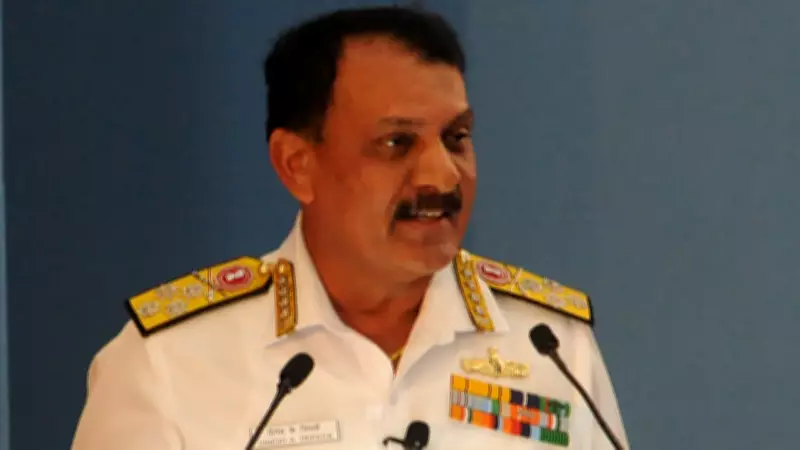
In his address at the same event, Navy Chief Admiral Dinesh K Tripathi remarked that it is "too early" to distill definitive lessons from the ongoing conflict in the Gulf. "The war is still going on. We are monitoring what is happening, what is working, what is not working, and learning the correct lessons," he stated.
Admiral Tripathi highlighted that carrier battle groups remain central to maritime power projection, demonstrating their operational effectiveness even in contested environments. Their vulnerability, he noted, depends on the adversary's capabilities and the balance of offensive and defensive systems.
Continuous Analysis and Adaptation in Modern Warfare
The Navy Chief disclosed that the services are analyzing the Gulf conflict "on a near 24x7 basis" and will incorporate lessons at an appropriate time. He stressed that modern warfare demands constant adaptation to rapidly evolving technological and operational realities. "Today, there is no fixed system of war, no rigid doctrine that we can blindly rely upon," Admiral Tripathi emphasized.

He further noted that ongoing instability in India's extended neighbourhood, particularly tensions in West Asia and disruptions to maritime traffic, underscores the interconnected nature of modern security. Technological advances are compressing decision-making timelines and merging operational domains, meaning distance no longer insulates nations from consequences.
Drawing from India's Strategic Heritage
Admiral Tripathi drew from India's civilisational strategic thought, noting that multi-domain operations are not entirely new. He cited Kautilya's concept of integrating diplomacy, deception, and force as a historical precedent for modern MDO principles.
Future Naval Capabilities and Unmanned Systems
Admiral Tripathi confirmed that the Indian Navy is firmly on course towards becoming a 200-plus ship Navy by 2035, with each new induction increasingly focused on modularity and technological evolution. Simultaneously, the Navy is pursuing the augmentation of fleet capabilities with uncrewed and autonomous solutions across domains, in alignment with the Indian Navy vision for unmanned systems 2022-30.





