

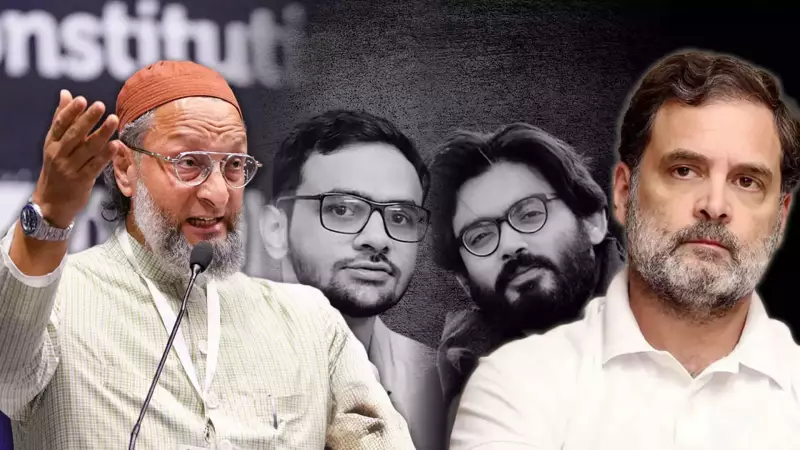
AIMIM president Asaduddin Owaisi has launched a sharp attack on the Congress party, holding it responsible for the extended incarceration of activists Umar Khalid and Sharjeel Imam. The two are in jail under the Unlawful Activities (Prevention) Act (UAPA) in connection with the 2020 Delhi riots case.
Congress Amended Law, Expanded Terrorism Definition: Owaisi
Owaisi's central accusation is that amendments made to the UAPA during the Congress-led UPA government's tenure are the root cause of the current situation. He stated that these changes, enacted in 2008, significantly broadened the definition of what constitutes a "terrorist act." This expansion, he argued, has made it exceedingly difficult for those accused under the law to secure bail, leading to prolonged detention without a trial.
The AIMIM leader specifically pointed to provisions that allow investigative agencies to keep an accused in custody for up to 180 days without even filing a chargesheet. He referenced observations made by the Supreme Court of India regarding the stringent nature of these clauses.

"Law Misused Against Minorities," Says Hyderabad MP
Owaisi, who is the MP from Hyderabad, asserted that the stringent provisions of the UAPA are frequently misused to target minority communities. He recalled raising strong objections in the Lok Sabha when the law was being amended, warning of its potential for misuse. "My warnings have now proven true," he claimed, highlighting the cases of Khalid and Imam.
He also posed a pointed question, asking why prominent leaders from the Congress party have not faced similar incarceration under the same law they helped strengthen. This rhetorical question was aimed at underscoring his allegation of selective application.
The Core Issue: Bail and Extended Detention
The crux of Owaisi's argument revolves around the bail provisions under UAPA. The law makes granting bail exceptionally hard, requiring the court to be satisfied that the accused is innocent. This high legal barrier, combined with the extended time given to investigators, often results in undertrial prisoners spending years in jail before their cases are conclusively heard.
Umar Khalid and Sharjeel Imam have been in custody for several years, with their bail pleas repeatedly rejected. Their case has become a focal point for debates on legal reform, the balance between national security and civil liberties, and the alleged weaponization of anti-terror laws.
Owaisi's remarks, made on January 10, 2026, add a significant political dimension to the ongoing legal and social discourse surrounding the UAPA and the Delhi riots cases. They directly challenge the Congress's record on civil rights and position the debate within the broader context of India's anti-terror legislation and its implementation.






