

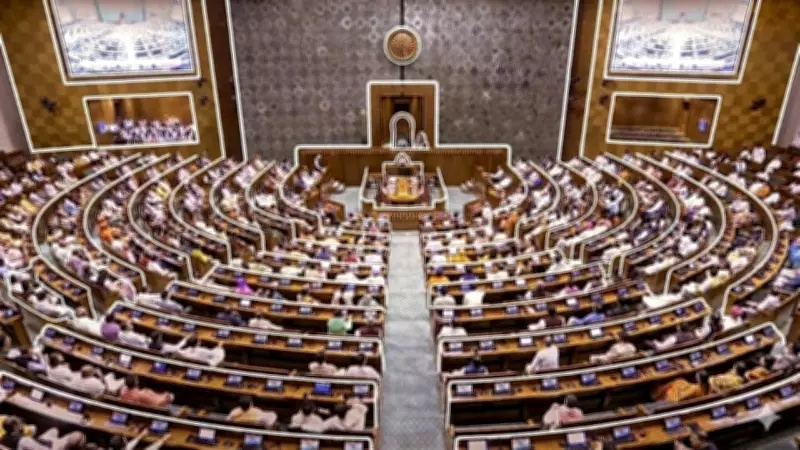
Historic Women's Reservation Bill Seeks Implementation Through Parliament's Special Session
When the 106th Constitutional Amendment, known as the Nari Shakti Vandan Adhiniyam or Women's Reservation Bill, passed through both Houses of Parliament in September 2023 with overwhelming support, it was celebrated as a landmark achievement for gender equality in Indian politics. The legislation received 454 votes in favor in the Lok Sabha and unanimous approval in the Rajya Sabha, marking the culmination of a three-decade-long legislative struggle. However, nearly two and a half years later, Parliament has been called back into a special session to address the critical gap between the bill's passage and its practical implementation.
The Long Road to Women's Political Representation
The Women's Reservation Bill is a constitutional amendment that reserves 33 percent of seats in the Lok Sabha and state legislative assemblies for women. This is not a new concept; similar bills were introduced in 1996, 1998, 1999, and 2008, but all lapsed due to various political challenges. The 2023 passage represented the successful conclusion of a legislative journey repeatedly derailed by coalition dynamics, ideological disagreements, and occasional outright hostility toward gender quotas in higher legislative bodies.
Currently, women constitute less than 15 percent of the Lok Sabha's membership, and in state assemblies, they make up less than 10 percent of members in most legislative bodies across India. This significant underrepresentation persists despite the 73rd and 74th Constitutional Amendments of 1993, which successfully reserved one-third of seats for women in local panchayats and municipalities. That three-decade experiment at the grassroots level demonstrated tangible benefits, with studies showing that women elected under reservation policies tend to invest more in public goods closely linked to women's concerns.

The Implementation Challenge and Delayed Timeline
The 2023 constitutional amendment contained a critical provision that effectively postponed its implementation. The law stipulated that the 33 percent reservation for women would only come into effect after the completion of a delimitation exercise based on the 2027 Census. This meant that under the original legislation, the reservation would not be enforceable before 2034, well past the 2029 general elections. The logic behind this delay was that determining which constituencies should be reserved for women requires knowing how many constituencies exist and where their boundaries lie, necessitating both a fresh census and subsequent delimitation.
With Census 2021 significantly delayed due to the COVID-19 pandemic and the next census now scheduled for 2027, the practical implementation of women's reservation faced substantial postponement. For all practical purposes, the amendment remained law in name only, creating what many advocates called an implementation gap that undermined the legislation's intended impact.
Special Session: Accelerating Implementation Before 2029
The government now proposes to amend the legislation to base implementation on the 2011 Census instead of waiting for the 2027 Census, ensuring the reservation comes into force before the 2029 general election. To achieve this, Parliament must amend Section 5 of the Act, which currently links women's reservation to a delimitation exercise following the first census after the law's commencement. As a constitutional change, this requires approval in both Houses by a majority of total members and at least two-thirds of those present and voting, a high threshold that necessitates at least some opposition support.
Alongside the amendment to the Women's Reservation Act, the government is introducing a Delimitation Bill that would dramatically redraw India's electoral map. The Lok Sabha is expected to expand significantly from its current strength of 543 seats to approximately 850 seats, reflecting decades of population growth since the last revision in 1976. Within this expanded House, one-third of the seats, around 283, would be reserved for women, marking the first time such a quota is implemented at the national level.

The Delimitation Debate and Regional Concerns
The proposed expansion of the Lok Sabha to around 850 seats has triggered intense debate, largely centered on a perceived North-South divide in representation. Since the redistribution is expected to be based primarily on population, northern states with higher population growth, such as Uttar Pradesh, Bihar, and Madhya Pradesh, are likely to gain a larger share of seats. Meanwhile, southern states like Tamil Nadu, Kerala, Telangana, Karnataka, and Andhra Pradesh, which have seen slower population growth due to effective family planning, could see their relative representation decline.
Several southern leaders have expressed concerns about this approach. Tamil Nadu Chief Minister M.K. Stalin has argued that states that followed the Union government's push for population control should not now be disadvantaged. Telangana Chief Minister Revanth Reddy has written to Prime Minister Narendra Modi and fellow southern leaders, urging resistance to any expansion based solely on population metrics and instead proposing a "hybrid model" that factors in economic contribution and development indicators alongside population.
Political Consensus and Opposition Concerns
While the Women's Reservation Bill enjoys near-universal support in principle, the path to implementation has revealed political divisions. Prime Minister Narendra Modi has written to floor leaders of all parties in both Houses, seeking their support and emphasizing that "this moment stands above any party or individual." However, opposition leaders have raised specific concerns about the process.
Senior Congress leader Sonia Gandhi has criticized the government's approach, noting that no draft amendments have been shared with opposition parties. Congress President Mallikarjun Kharge wrote directly to the prime minister, arguing that without details of the delimitation and other aspects, meaningful discussion on this historic law would be impossible. The timing of the special session has compounded these concerns, as it coincides with ongoing state elections that conclude on April 29, 2026, leaving opposition MPs torn between campaigning and parliamentary attendance.
Representation Arithmetic and Rotation Mechanism
Beyond the political negotiations, the bill raises important questions about the arithmetic of representation. Women constitute approximately 48.5 percent of India's population, yet the bill's 33 percent reservation falls significantly short of proportional representation. Critics argue that while the bill represents progress, it does not fully reflect the demographic weight of women in India's democracy. Defenders of the 33 percent figure point to the established benchmark in panchayats and municipalities and describe it as a realistic floor rather than an aspirational ceiling.
The reservation will be provided for an initial period of 15 years, though it may continue beyond that date as determined by Parliament. Importantly, seats reserved for women will be rotated after each delimitation, meaning no constituency will be permanently designated as a women's seat. This rotation mechanism aims to prevent the permanent restriction of voter choice in any particular area while ensuring broader geographic representation of women across constituencies.
The Path Forward and Historical Significance
What began as a legislative demand in 1996 has become, thirty years later, a constitutional amendment in search of implementation. The special session of Parliament will determine whether political consensus can be found to finally bridge the gap between legislation and practical effect before the 2029 elections. According to political analysts, no party in India's current political landscape is willing to be seen as voting against women's representation, particularly during an election season that includes important assembly elections in states like West Bengal and Tamil Nadu.
All the arguments about seats, states, and census data reflect genuine concerns about India's democratic structure. However, at its core, this legislation addresses a fundamental reality: women have been systematically excluded from the rooms where decisions about their lives are made for far too long. The Women's Reservation Bill represents not just a policy change but a structural transformation of India's political landscape, with the potential to reshape how laws are made and whose interests they serve for generations to come.





