

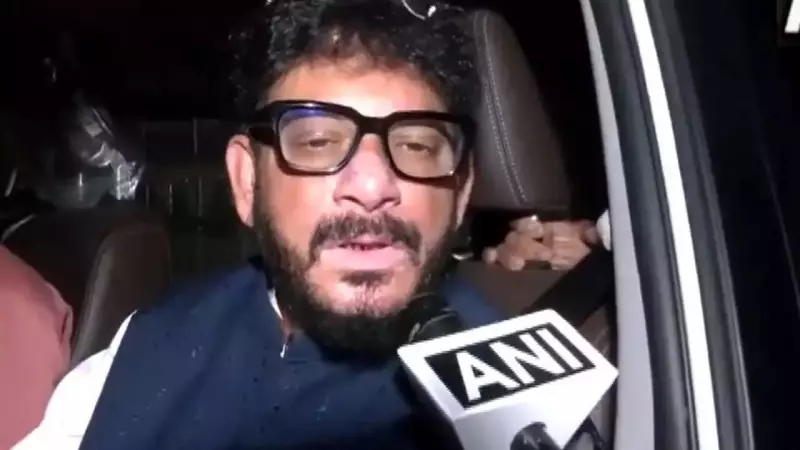
Mumbai witnessed a fresh political firestorm as AIMIM leader Waris Pathan issued a strong rebuttal to BJP leader Nitesh Rane's criticism of a statement made by party chief Asaduddin Owaisi. The controversy centres on the possibility of a woman wearing a hijab becoming the Prime Minister of India.
Pathan Cites Constitution, Dismisses Threats
Speaking on the issue, Waris Pathan firmly stated that the Constitution of India is the supreme governing document of the country. He emphasized that according to its provisions, any citizen has the right to aspire to and hold the highest offices, including that of the Prime Minister, Governor, or Mayor.
Defending his party chief, Pathan asked, "What did he (Asaduddin Owaisi) say wrong? He said that it is our wish that one day a woman wearing a hijab will become the Prime Minister of the country." He directly addressed the threats reportedly made against him, asserting his fearlessness. "The one who is threatening me should tell me where to come? We are not afraid of their threats," Pathan declared.

The Genesis: Owaisi's Solapur Speech
The remarks follow a statement made by AIMIM president Asaduddin Owaisi at an election meeting in Solapur, Maharashtra, on Friday. Owaisi had highlighted the inclusive nature of India's Constitution, framed by Babasaheb Ambedkar, contrasting it with Pakistan's constitutional limitations based on religion.
Owaisi pointed out that while Pakistan restricts its top offices to followers of a specific religion, India's foundational law allows any citizen to become Prime Minister, President, Chief Minister, or Mayor. He expressed his dream, stating, "His (Ambedkar's) dream was that a day would come when a Hijab-clad woman would rise to become the Prime Minister of India. The day will come in future."
BJP's Sharp Rejection: "This is a Hindu Nation"
The reaction from the BJP was swift and stern. Maharashtra minister and BJP leader Nitesh Rane strongly objected to Owaisi's vision. He asserted that such statements should not be made in India, which he termed a "Hindu nation where 90% of the population is Hindu."
Rane categorically stated, "Women who wear hijab or burqa will not become the Prime Minister or the Mayor of Mumbai." He further added, "Those who wish to hold such positions should go to their own Islamic countries, like Karachi. Here, they have no place." This response has intensified the ongoing political debate about representation, secularism, and constitutional rights in the country.
The exchange underscores the deep political and ideological divisions in India, bringing issues of minority representation, constitutional morality, and majoritarian rhetoric to the forefront of public discourse once again.






