

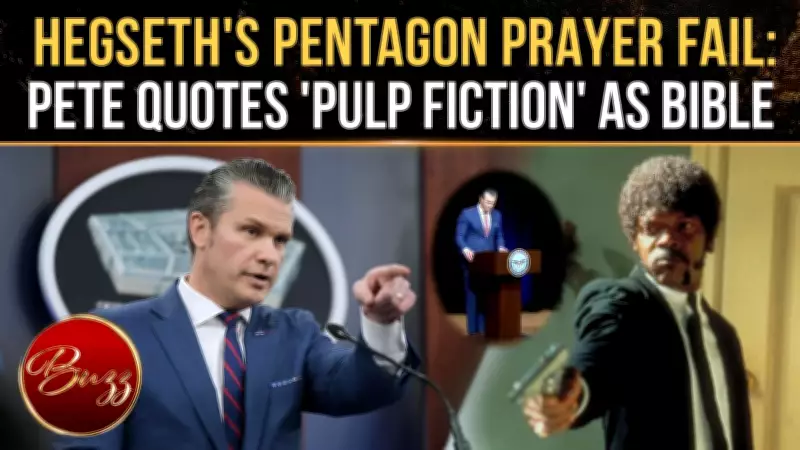
Pete Hegseth's Pentagon Sermon Mistake: Pulp Fiction Quote Misidentified as Bible Verse
In a stunning and highly publicized incident, Fox News host Pete Hegseth has ignited a firestorm of controversy after delivering a sermon at the Pentagon that mistakenly quoted dialogue from the iconic film Pulp Fiction as a passage from the Bible. The viral blunder, which occurred on April 16, 2026, has rapidly spread across social media platforms, drawing widespread mockery and criticism from users who quickly identified the mix-up.
The Viral Moment and Immediate Backlash
During the sermon, Hegseth, a prominent conservative commentator, intended to cite a biblical verse to support his message. However, instead of referencing scripture, he inadvertently recited lines famously spoken by actor Samuel L. Jackson's character, Jules Winnfield, in Quentin Tarantino's 1994 cult classic Pulp Fiction. The specific dialogue, often misattributed to religious texts, includes the memorable phrase: "The path of the righteous man is beset on all sides by the inequities of the selfish and the tyranny of evil men."
Social media erupted within minutes of the sermon, with countless users posting side-by-side comparisons of the Pulp Fiction script and actual Bible verses. Many labeled the incident as a bizarre and embarrassing blunder, questioning Hegseth's familiarity with religious texts. Hashtags such as #PeteHegseth and #PulpFiction quickly trended, amplifying the scrutiny and turning the moment into a global talking point.

Context Amid Rising Political Tensions
This incident comes at a time of heightened tensions between former President Donald Trump's administration and the Vatican, adding a layer of political significance to the backlash. The mix-up has fueled an already heated debate about the intersection of religion, politics, and media in the United States. Critics argue that the blunder underscores a lack of authenticity or attention to detail in public religious discourse, while supporters suggest it may have been an innocent mistake.
Observers note that the Department of War, often referenced in historical contexts, was mentioned in related discussions, though the sermon itself took place at the Pentagon. The viral nature of the event has drawn attention from various sectors, including entertainment news due to the Pulp Fiction connection, and political circles given Hegseth's ties to the Trump administration.
Analysis of the Blunder: Mistake or Misstep?
As the story continues to trend, key questions remain unanswered: Was this a genuine error by Hegseth, or does it reflect a deeper issue in how religious references are used in public speeches? Some analysts point to the possibility of confusion, as the Pulp Fiction dialogue is stylistically similar to biblical language and has been mistakenly cited before in informal settings. Others view it as a significant gaffe that could impact Hegseth's credibility as a commentator on faith-based topics.
The incident has sparked broader conversations about media literacy and the importance of verifying sources, especially in high-stakes environments like the Pentagon. With figures such as Samuel L. Jackson and Quentin Tarantino indirectly involved through their work, the blunder has also resonated in pop culture circles, highlighting how film quotes can permeate public discourse in unexpected ways.
In summary, Pete Hegseth's sermon blunder has not only gone viral but also intensified debates around religion, politics, and media accuracy. As social media continues to dissect the moment, the fallout serves as a cautionary tale for public speakers and a reminder of the power of fact-checking in the digital age.






