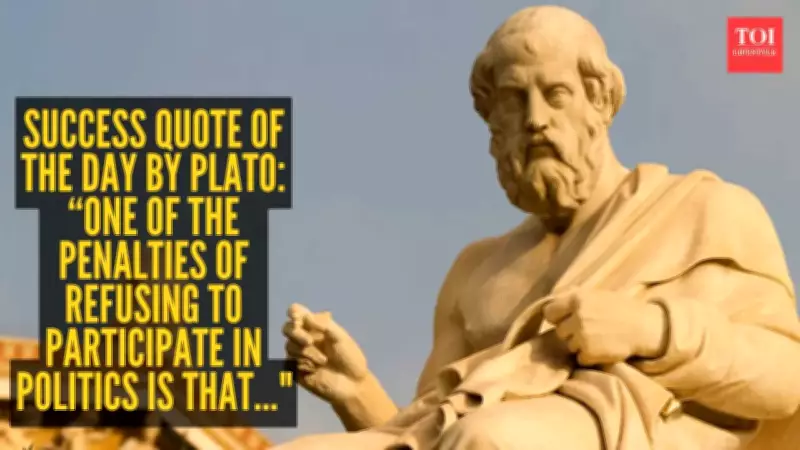
Success quote of the day by Plato, the Father of Western philosophy: “One of the penalties of refusing to participate in politics is that you end up being governed by your inferiors.” This timeless warning from the ancient Greek thinker continues to resonate in modern times, urging us to reconsider our role in civic life.
The Deeper Meaning of Success
Most people equate success with career achievements, financial wealth, or personal milestones. However, Plato, often hailed as the father of Western philosophy, expands this definition. He argues that true success encompasses civic courage—the willingness to engage with and care about the systems that govern our lives. His famous quote serves as a stark reminder that disengagement has consequences.
At first glance, Plato's words may seem harsh or elitist. Yet, a closer reading reveals a profound message about responsibility. When informed and thoughtful citizens choose silence or disengagement, they create a vacuum. This void is often filled by individuals who may not prioritize wisdom, fairness, or the greater good. Thus, the penalty for non-participation is not just theoretical but tangible: being governed by those less capable or principled.

Plato's View on Politics and Wisdom
Plato did not view politics as a dirty game of power. Instead, he saw it as intrinsically linked to ethics, education, and the moral fabric of society. In his ideal state, the Republic, leadership is entrusted to philosopher-rulers—individuals who value truth, justice, and long-term thinking over short-term gains. When Plato speaks of being governed by inferiors, he refers not to intelligence or social status but to character. Key questions arise: Do leaders prioritize long-term welfare or just the next election? Do they serve the people or their own interests?
When caring citizens disengage, less thoughtful and less principled voices step in simply because they show up. Over time, this shapes laws, public policy, and everyday life in ways that may not align with the common good.
Modern Forms of Non-Participation
Plato's warning remains relevant today, even though we live in a different era. Refusing to participate in politics can take many forms:
- Turning off the news and never voting
- Dismissing all politicians as the same and emotionally checking out
- Ignoring community issues, elections, or public debates deemed too complex or messy
When large groups withdraw, politics becomes dominated by the loudest, most extreme, or most cynical voices. Plato's reminder is clear: not caring is still a choice with consequences.
Personal Success and Civic Engagement
On a personal level, Plato's quote ties success to active participation in a world larger than oneself. True success involves using one's power and voice to shape the environment. By treating politics as someone else's problem, individuals allow others to dictate the rules of their lives. This quiet surrender can make even the most accomplished feel powerless.
A Call to Action
Plato's line is a gentle yet firm call to awareness. It invites us to view politics not as distant noise but as a shared space where our voices matter. Participation does not require running for office; it can be as simple as voting, reading, listening to diverse perspectives, and resisting cynicism. When thoughtful people engage, politics improves—not instantly, but gradually. Systems become more just, humane, and reflective of what most people want.
Ultimately, Plato's warning is a reminder of personal power. Refusing to participate risks letting the future be shaped by those who care less, think less, and feel less empathy. Choosing to show up makes one part of the quiet tide that nudges society toward something better.