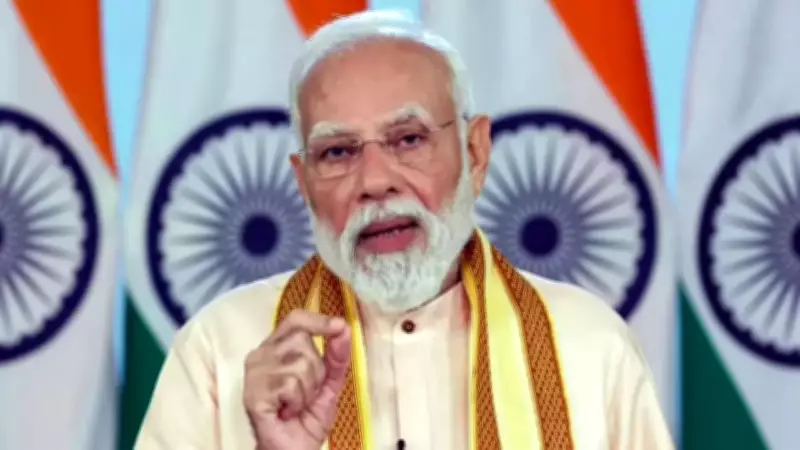
PM Modi Advocates for Defence Sector Modernization in Global Context
Prime Minister Narendra Modi on Sunday highlighted the urgent need to modernize India's defence sector, pointing to the evolving global landscape as a critical factor. In an interview with PTI, he called upon the private sector to actively participate in this effort while ensuring that gains are equitably shared with workers and shareholders.
Global Realities Drive Defence Priorities
"Since Day 1, our government has been unequivocal in its commitment to support and strengthen our defence forces. While this year's allocation marks a record high, viewing it in isolation offers only a limited perspective," PM Modi stated. He emphasized that as technology continues to reshape the world, India's armed forces must be equipped with cutting-edge innovation and industrial capabilities from domestic sources.
The Prime Minister's remarks come against a backdrop of increasing global fragility, where power dynamics are shifting with the United States and China pursuing expansionist policies. Ongoing conflicts in Ukraine and West Asia, with no immediate resolution in sight, further underscore the necessity for robust defence preparedness. India faces additional challenges from regional hostilities and the growing threat of cyber warfare.

Operation Sindoor and Defence Reforms
PM Modi referenced Operation Sindoor as a testament to India's growing proficiency in technological warfare. "The entire nation takes pride in the courage displayed by our armed forces during Operation Sindoor. This operation vividly demonstrated the advantages of the reforms implemented over the past decade," he explained.
He clarified that defence budgets and modernization efforts are part of a continuous strategic endeavor, not tied to any single issue. "The reality is that our nation must remain strong and prepared at all times, and that is precisely what we are doing," PM Modi affirmed.
Trade Agreements as Pillars of Global Integration
When questioned about recent trade agreements, the Prime Minister described them as integral to India's accelerated global integration. He noted that deals with partners like the United Kingdom and the European Union, which have been in negotiation for years, will enable Indian producers to diversify their markets and create opportunities for service professionals.
"These trade agreements hold significance beyond mere tariff reductions; they facilitate supply-chain integration and market access in advanced economies," PM Modi elaborated. He highlighted their role in gradually liberalizing manufacturing tariffs, deepening services integration, and opening new pathways for labour-intensive exports such as textiles, footwear, electronics, and engineering goods.
According to the Prime Minister, these Free Trade Agreements (FTAs) support structural transformation by anchoring domestic reforms to external commitments. They help widen export opportunities, reduce tariff disadvantages relative to competitors, and integrate Indian firms more deeply into global value chains.
Private Sector's Role in Innovation and Fairness
PM Modi urged the private sector to respond decisively to government reforms, reiterating his commitment to this vision. "Indian firms must invest more aggressively in research and development, adopt frontier technologies, enhance supply-chain capabilities, and compete on quality and productivity rather than protected margins," he asserted.
He acknowledged that incentives and tariff preferences can catalyze growth but stressed that lasting competitiveness must be built on innovation, efficiency, and scale. Importantly, he called for fair distribution of productivity gains among workers, shareholders, and owner-managers. "Sustainable growth requires social legitimacy. Rising real wages, skill upgrading, and stable employment reinforce domestic demand and social cohesion, which in turn support long-term investment," PM Modi added.
Budget Focus on Women's Empowerment
Addressing the Budget's emphasis on women, the Prime Minister stated that their welfare guides every government decision. He expressed national pride in Finance Minister Nirmala Sitharaman presenting the Budget nine consecutive times, a record that inspires women across India.

Among various initiatives, PM Modi highlighted the announcement related to hostels. "Many girls drop out not due to a lack of talent, but because commuting long distances to labs and managing late study hours are challenging. This intervention directly addresses that constraint," he explained.
He also pointed to steps for training Allied Health Professionals, which will particularly benefit women. "Women have traditionally been at the forefront of caregiving, often in informal roles. By training 1.5 lakh caregivers next year and expanding institutions for Allied Health Professionals, with a target of 1 lakh trained over five years, we are launching a large-scale effort to formalize care work," PM Modi said.
This initiative aims to create dignified, certified employment for women while simultaneously strengthening India's healthcare capacity, reflecting a holistic approach to empowerment and national development.