PM Modi Honors Guru Ravidas with Airport Naming and Emphasizes Equality in Punjab Visit
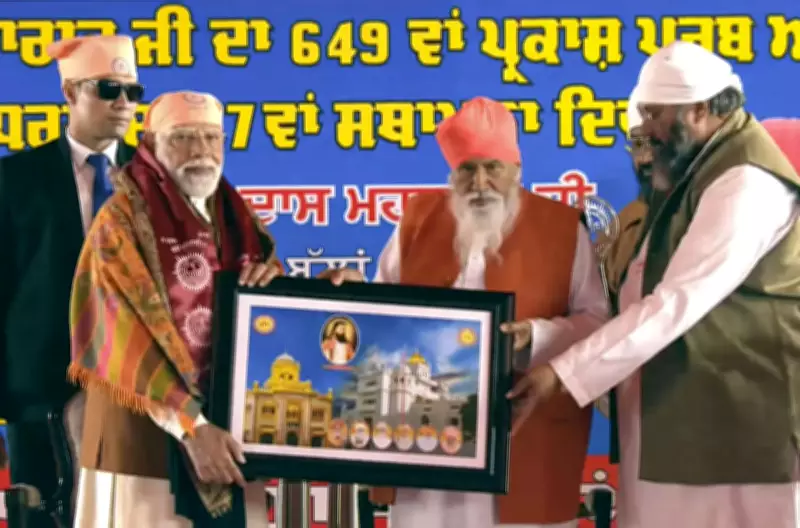
In a significant gesture aimed at the followers of Guru Ravidas, Prime Minister Narendra Modi on Sunday articulated his government's unwavering commitment to promoting the saint's ideals of social equality and harmony. Addressing a gathering at Dera Sachkhand Ballan in Jalandhar, Modi highlighted the continuous efforts to align governance with Ravidas's teachings, particularly resonating with Dalit communities in Punjab where his influence is substantial.
Symbolic Acts and National Recognition
The Prime Minister's visit coincided with the naming of Adampur airport after Guru Ravidas on his birth anniversary, a move that underscores the national importance now accorded to the saint. Modi lauded Ravidas's message of equality, stating, "I am confident that we will continue to strengthen the roots of our society with these efforts." This inclusion of Ravidas among revered figures like Lord Ram is widely perceived as a strategic step to deepen the Bharatiya Janata Party's cultural appeal and broaden its connection with marginalized groups.
Modi's personal touch was evident when he assisted the spiritual head of Dera Sachkhand Ballan, Niranjan Dass—recently honored with a Padma Shri—in descending from the dais, holding his hand and reassuring him with the words, "Hum hain na! Kam padenge kya?" This act of humility and support struck a chord with the Ravidassia community, enhancing the emotional impact of his outreach.

Emphasis on Equality and Government Initiatives
In his speech, Modi emphasized that Ravidas's promotion of equality over 600 years ago has inspired his government's mission to build a nation where every individual receives respect and opportunity. He pointed out that Ravidas's birth anniversary is now commemorated at a national level, with many states also recognizing it, and highlighted ongoing projects to construct memorials at the saint's birthplace in Varanasi, which falls within Modi's parliamentary constituency.
Furthermore, Modi referenced the naming of Ayodhya airport after saint Valmiki, another spiritual icon revered by Dalit communities, reinforcing the government's focus on honoring figures who champion social justice. This outreach is seen as part of a broader strategy to strengthen the BJP's bond with Scheduled Castes, who constitute 32% of Punjab's voters—the highest proportion in any Indian state—and hold significant influence, especially in the Doaba region where the dera is located.
Economic Benefits and Future Prospects
Beyond social themes, Modi connected his message to economic development, citing the Union Budget's focus on sectors like sports, textiles, and MSMEs. He asserted that Punjab, with its strong associations in these fields, stands to gain substantially from these initiatives. The Prime Minister also highlighted India's trade agreements, particularly with the European Union, as opening new avenues for exports of sports goods, textiles, and processed foods from the state, thereby boosting local industries and creating opportunities.
This multifaceted approach—combining symbolic gestures, policy acknowledgments, and economic promises—aims to solidify the BJP's presence in Punjab by addressing both cultural aspirations and practical needs of the Dalit and disadvantaged communities.