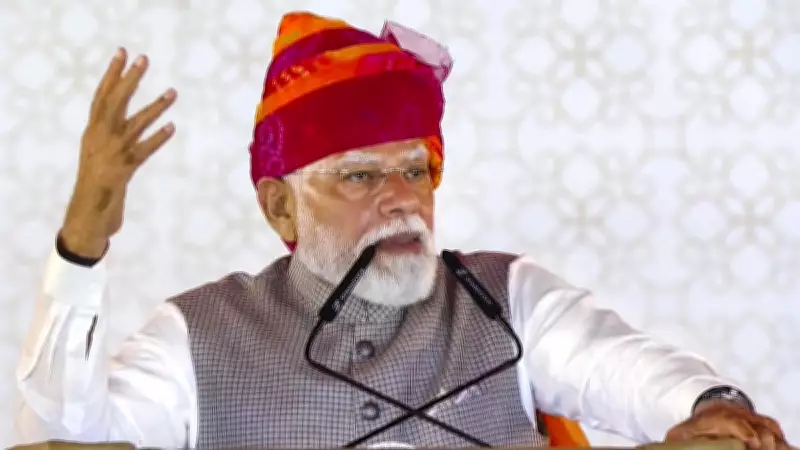
Prime Minister Narendra Modi stated that India successfully navigated one of its largest energy crises while imposing minimal burden on its citizens. Speaking in Rajasthan, Modi highlighted that oil companies faced losses exceeding Rs 75,000 crore between April and June due to rising global energy prices, but the government absorbed the financial impact to shield consumers.
Government absorbs losses to protect citizens
Modi emphasized that the central government took decisive action to prevent the spike in international oil prices from directly affecting the common person. According to the Prime Minister, state-owned oil marketing companies bore the brunt of the price surge, with losses mounting to over Rs 75,000 crore in the first quarter of the financial year.
The government chose not to pass on these costs to consumers, instead allowing the companies to absorb the losses. This move ensured that domestic fuel prices remained relatively stable, preventing additional inflationary pressure on households.

Context of global energy price volatility
The energy crisis was triggered by geopolitical tensions and supply disruptions that drove crude oil prices to multi-year highs. India, being heavily dependent on oil imports, was particularly vulnerable to such shocks. However, the Modi government's proactive measures helped mitigate the impact.
Modi's remarks came during a public event in Rajasthan, where he addressed the state's development and the central government's efforts to ensure energy security. He reiterated the government's commitment to prioritizing the welfare of citizens, even at the cost of short-term fiscal strain.
Impact on fiscal deficit and public finances
While the government's decision to absorb the losses provided relief to consumers, it also added pressure on the fiscal deficit. The Rs 75,000 crore burden on oil companies indirectly affected government revenues, as these firms are largely state-owned. However, officials argued that the move was necessary to maintain social stability and economic momentum.
Economic analysts noted that the government's approach contrasted with some other nations that allowed retail fuel prices to rise sharply, leading to public discontent. India's strategy was widely seen as a balancing act between fiscal prudence and political imperatives.
Broader energy policy and future outlook
Modi also used the occasion to outline the government's long-term energy strategy, which includes increasing domestic production, boosting renewable energy capacity, and reducing import dependence. He highlighted initiatives such as the National Hydrogen Mission and expanded ethanol blending programs as steps toward energy self-reliance.
The Prime Minister expressed confidence that India's energy infrastructure would become more resilient to global shocks in the coming years. He credited the government's reforms in the oil and gas sector for enabling the country to weather the crisis without significant disruption to citizens' lives.