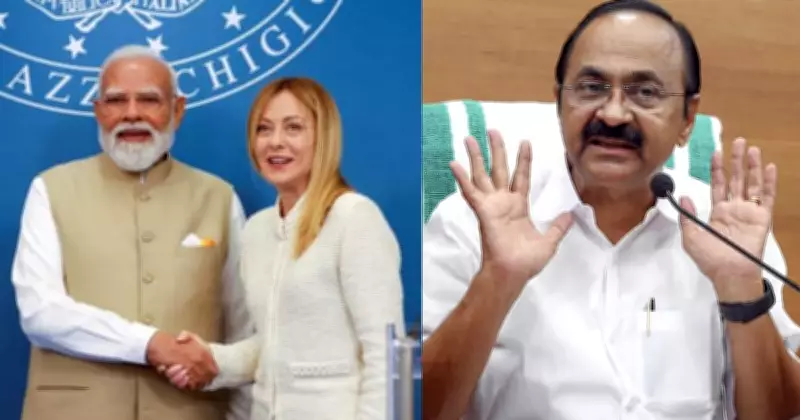
In a significant diplomatic engagement, Prime Minister Narendra Modi and Italian Prime Minister Giorgia Meloni held comprehensive talks focusing on enhancing bilateral cooperation in trade, defence, and energy sectors. The discussions, which took place on Wednesday, marked a step forward in strengthening India-Italy relations. Both leaders emphasized the importance of deepening economic ties and exploring new avenues for collaboration in renewable energy and defence technology.
Key Outcomes of the Modi-Meloni Meeting
The meeting between the two prime ministers covered a wide range of issues, including expanding trade volumes, joint defence exercises, and partnerships in green energy. Italy expressed interest in investing in India's infrastructure and technology sectors, while India sought Italian expertise in naval and aerospace defence systems. The leaders also discussed regional security challenges and committed to working together in multilateral forums.
Trade and Economic Cooperation
Both sides agreed to set up a joint task force to identify and remove trade barriers. They also discussed the possibility of a bilateral investment treaty. Italy is one of India's key trading partners in the European Union, and both nations aim to double bilateral trade by 2030. The talks also touched upon cooperation in the pharmaceutical and automotive industries.

Defence and Security Partnership
India and Italy agreed to enhance defence cooperation through joint military exercises, intelligence sharing, and technology transfers. Italy offered to collaborate on India's indigenous aircraft carrier and submarine projects. The two countries also signed a memorandum of understanding on cyber security and counter-terrorism.
Energy and Climate Change
Renewable energy was a major focus, with Italy pledging support for India's solar and wind energy projects. Both nations committed to achieving net-zero emissions and agreed to collaborate on green hydrogen technology. Italy also offered technical assistance for India's national hydrogen mission.
Kerala Portfolio Allocation Finalised
In Kerala, the state government finalised its portfolio allocation, with Chief Minister P. Satheesan retaining the finance portfolio. The allocation was announced after a series of meetings between the Chief Minister and coalition partners. The portfolios were distributed among the ruling United Democratic Front (UDF) allies, with key ministries going to senior leaders.
Key Portfolios and Ministers
- Chief Minister P. Satheesan - Finance, General Administration, and all unallotted portfolios.
- K. M. Balagopal - Home and Vigilance.
- P. A. Mohammed Riyas - Public Works and Tourism.
- Veena George - Health and Family Welfare.
- R. Bindu - Higher Education and Social Justice.
- V. S. Sunil Kumar - Agriculture and Animal Husbandry.
- P. Prasad - Electricity and Scheduled Castes Development.
The allocation ensures continuity in fiscal management, with the Chief Minister personally overseeing the state's finances amid challenging economic conditions. The opposition has criticised the move, alleging concentration of power, but the government defended it as necessary for stability.
Other significant decisions included the formation of a new department for coastal development and the appointment of a special officer for the rehabilitation of landslide-affected areas in Wayanad. The government also announced plans to introduce a new industrial policy aimed at attracting investments and generating employment.