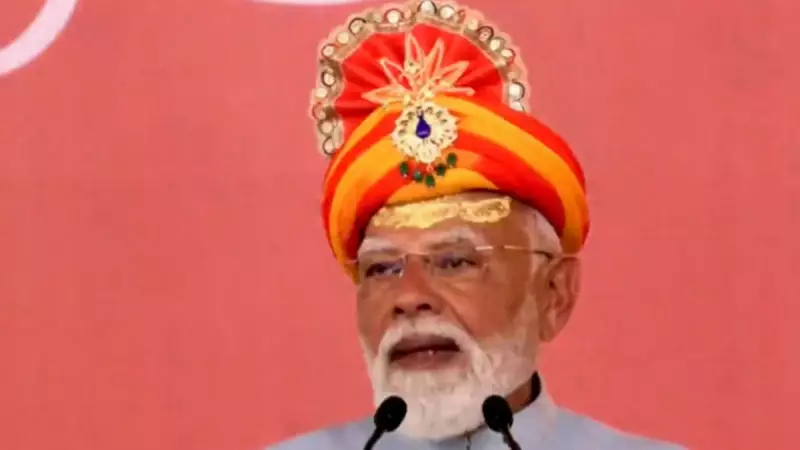
Prime Minister Narendra Modi delivered a powerful address at the 'Swabhiman Parv' event in Gujarat, making a significant historical and political statement. He asserted that the ideological forces which opposed the reconstruction of the historic Somnath Temple decades ago are still active in the country today. The Prime Minister connected this historical resistance to contemporary political narratives, suggesting a continuity of thought that challenges national pride and self-respect.
The Historical Context of Somnath Temple's Reconstruction
The Somnath Temple in Gujarat's Prabhas Patan near Veraval holds immense religious and symbolic value. It was looted and destroyed several times in history, most notably by Mahmud of Ghazni in 1026 CE. The movement for its reconstruction began in the pre-Independence era and gained momentum after 1947. The first President of India, Dr. Rajendra Prasad, performed the installation ceremony of the new temple's 'Jyotirlinga' in 1951, a project championed by Deputy Prime Minister Sardar Vallabhbhai Patel.
However, as PM Modi highlighted, this project faced significant opposition. He pointed out that even India's first Prime Minister, Jawaharlal Nehru, was against President Rajendra Prasad's participation in the consecration ceremony. This opposition, according to the Prime Minister, was not merely administrative but stemmed from a particular ideological mindset that sought to downplay or reject symbols of India's ancient cultural and religious heritage in the public sphere.

Linking Past Opposition to Present-Day Politics
In his speech, Prime Minister Modi drew a direct line from this historical opposition to current political dynamics. He stated that the same forces and their ideological descendants are active in present-day India. These groups, he implied, continue to exhibit a lack of 'swabhiman' (self-respect) and are uncomfortable with the celebration of India's civilizational achievements.
The 'Swabhiman Parv' event itself was framed as a counter to this mindset—a celebration of national pride and resilience. By invoking the Somnath Temple's story, PM Modi positioned the current government's focus on cultural revival and heritage as a continuation of a long struggle against what he described as a colonized mentality that persisted even after independence.
A Broader Message on National Identity and Governance
The Prime Minister's remarks extend beyond a historical commentary. They are deeply embedded in the current political discourse. His message serves multiple purposes: it reinforces the government's narrative of restoring India's cultural glory, draws a contrast with the opposition's perceived ideological stance, and mobilizes sentiment around national pride.
The speech underscores a central theme of PM Modi's tenure: the decolonization of the Indian mindset and the reclamation of historical narrative. By pointing to the Somnath Temple reconstruction as a pivotal moment of conflict, he frames contemporary debates around temple reconstructions, historical interpretations, and cultural policy as part of the same enduring battle.
Ultimately, the address at Swabhiman Parv was a potent blend of history, politics, and ideology. It reminded the audience that the debate over Somnath was never just about rebuilding a temple structure; it was about asserting a civilizational identity. According to Prime Minister Modi, that debate is far from over, and the same ideological battle lines remain relevant in defining India's present and future.