

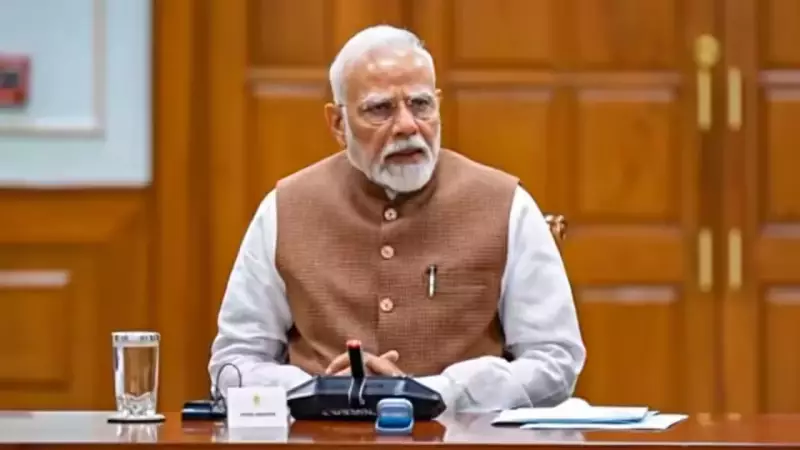
Prime Minister Narendra Modi is expected to move into his new office at the freshly built Sewa Teerth complex near Vayu Bhawan within the next seven days. This relocation marks a historic moment, as it will be the first time since India's independence that the Prime Minister's Office (PMO) leaves its traditional home in South Block.
A New Chapter Begins
Officials confirm that the office space designated for the PMO is fully prepared and ready for use. The transition is likely to occur between January 14, which coincides with Makar Sankranti, and January 23, the birth anniversary of Subhas Chandra Bose.
One official explained the timing, stating, "Kharmas, a period considered inauspicious for new beginnings in Vedic astrology, concludes with Makar Sankranti on Wednesday. Therefore, the move can proceed anytime from that day forward. All necessary arrangements have been finalized over the past two weeks."

Leaving Behind Colonial Legacy
South Block, along with its counterpart North Block, was constructed in 1931 as part of the Raisina Hills complex designed by British architect Herbert Baker. The PMO's journey began modestly in 1947 as the Prime Minister's Secretariat (PMS), providing basic administrative support.
Significant changes unfolded over the decades:
- In 1964, under Prime Minister Lal Bahadur Shastri, the PMS gained statutory status through the Allocation of Business Rules.
- During Indira Gandhi's tenure, the office's authority expanded considerably.
- In 1977, the Morarji Desai government officially renamed it the Prime Minister's Office (PMO).
Broader Administrative Shift
This move is part of a larger relocation of key government offices. The Cabinet Secretariat already shifted to 'Seva Teerth-2' in September, while 'Seva Teerth-3' is earmarked for the National Security Adviser's office, which is also expected to move within the week.
With the PMO and the defence ministry vacating South Block in the coming weeks, the power center of the country will completely depart from Raisina Hills. Officials view this as a clear step by the government to shed colonial remnants and what they describe as a "mentality of slavery."
North Block has already been fully emptied, with ministries relocating to new buildings along Kartavya Path, further emphasizing this transformative shift in India's administrative geography.






