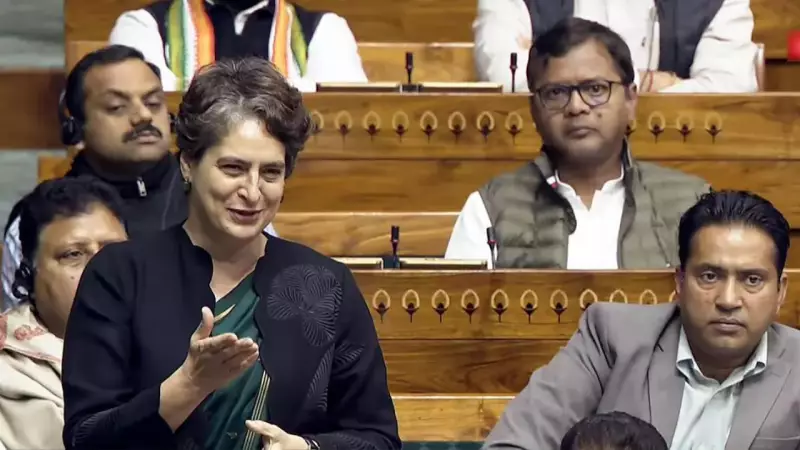
Congress leader Imran Masood has made a bold statement, asserting that Priyanka Gandhi Vadra would deliver a "decisive treatment" to Bangladesh if she were to become India's Prime Minister. The comment came as a direct rebuttal to criticism from the Bharatiya Janata Party (BJP), which had targeted Priyanka Gandhi for her perceived silence on the recent surge of violence against minorities in the neighbouring country.
Masood's Strong Defence of Priyanka Gandhi
Refuting the BJP's charges, Masood, a Congress Member of Parliament, reminded critics that Priyanka Gandhi had been among the first to raise her voice during previous instances of violence in Bangladesh. He drew a parallel to former Prime Minister Indira Gandhi's historic actions during the 1971 war. "Make Priyanka Gandhi the Prime Minister first, and then see how she responds, just like Indira Gandhi," Masood declared.
He further elaborated on his statement, adding, "Just like Indira Gandhi broke Pakistan into two places, Priyanka Gandhi will deliver a decisive treatment to the country (Bangladesh) so that it would not be able to become a hub of anti-India narratives." When questioned about the role of Rahul Gandhi in such a scenario, Masood described the siblings as inseparable, stating they are "like two eyes on the same face, the grandchildren of Indira Gandhi" and share one vision.

The Trigger: Mob Lynching of Hindu Youth in Bangladesh
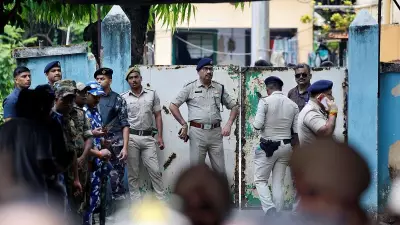
Masood's remarks are set against the backdrop of widespread protests in Dhaka and growing concern in India over the safety of minorities in Bangladesh. The immediate trigger was the brutal murder of a Hindu youth, Deepu (Dipu) Chandra Das, in the Mymensingh district.
On December 18, Das, a worker at a garment factory, was allegedly beaten to death by a mob over accusations of blasphemy. Shockingly, reports indicate that after his death, his body was hanged and set on fire. The incident has sent shockwaves through communities on both sides of the border.
Contradictory Claims in the Investigation
While initial reports from factory officials suggested Das was attacked inside the factory premises over alleged communal remarks, subsequent investigations have raised doubts. Md Samsuzzaman, the Rapid Action Battalion (RAB) Company Commander in Mymensingh, told The Daily Star that investigators found no evidence on the victim's Facebook that could have hurt religious sentiments. Local residents and fellow workers also could not corroborate the blasphemy allegations.
In response to the killing, the victim's brother, Apu Chandra Das, filed a formal case at the Bhaluka Police Station on Friday. The case names a staggering 140 to 150 unidentified individuals as accused, highlighting the scale of the mob violence.
Political Repercussions and Calls for Action
The lynching has sparked outrage and condemnation from political leaders, religious organisations, and minority groups in both Bangladesh and India. Priyanka Gandhi Vadra herself had earlier urged the Indian government to take serious note of the escalating violence against Hindu, Christian, and Buddhist minorities in Bangladesh.
Imran Masood's provocative statement is seen as a political counterpunch, aiming to position the Congress and the Gandhi family as stalwart defenders of minority rights and national security. It frames the issue not just as a humanitarian concern but as a matter of decisive national policy, invoking the legacy of Indira Gandhi. The incident and the subsequent political rhetoric have brought India-Bangladesh relations and the plight of minorities into sharp focus ahead of the election season.