Punjab's Economic Crisis Deepens Under AAP Rule
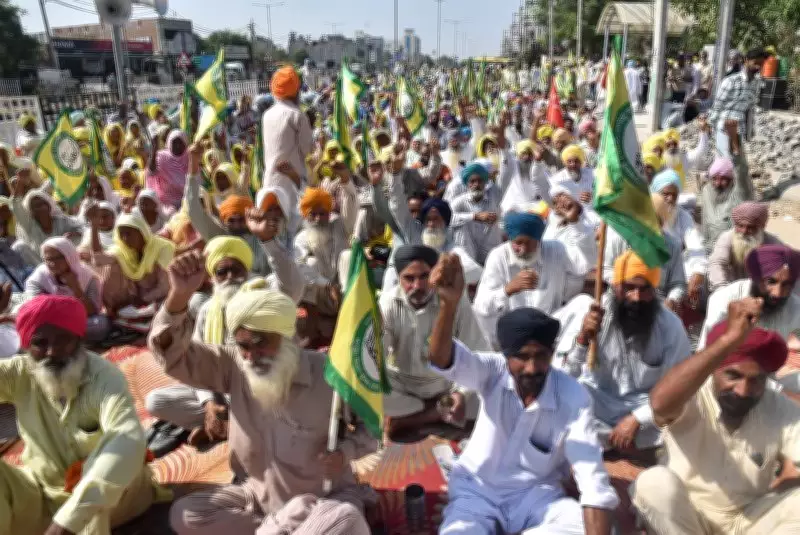
The Aam Aadmi Party (AAP) government in Punjab has squandered its historic mandate, making mistakes driven by political compulsion rather than accident, according to Ajay Vir Jakhar, Chairperson of Bharat Krishak Samaj. Writing in an op-ed titled "Punjab must face inconvenient truths," Jakhar highlights that the state's outstanding debt stood at Rs 2.85 lakh crore on March 31, 2022. Since then, the government has failed to manage finances effectively. Interest payments alone consume Rs 28,775 crore annually, surpassing combined spending on education and health. Controlling the state budget will alienate powerful blocs like government staff and farmers, requiring a rare political commodity: a statesman with the capacity to absorb public hatred.
Punjab's Per Capita Income Decline
In 1993, Punjab ranked third among Indian states in per capita income. Today, at least 15 states have overtaken it. BJP national spokesperson Shehzad Poonawalla and Geojuristoday Research Foundation director Rudraksh Aneja, in their op-ed "Warning bells for Punjab's future," note that a government unable to fund schools or roads from its own revenue is not governing a state but managing a slow bankruptcy. The bulk of revenue receipts is consumed by salaries, pensions, interest, and subsidies, leaving little for development.
Need for a Shared Political Vision
Former Punjab Parliamentary Affairs Minister Brahm Mohindra, in his op-ed "Punjab needs vision beyond politics," argues that the state's most serious challenge is the absence of a shared political vision. He calls for all political leaders to draft a common charter addressing questions such as: What should be Punjab's new economic model to reduce debt? Which industries should be prioritized? How can quality jobs be created? How can the state retain its youth and involve them in politics and governance?

Religious and Political Tensions
Senior journalist Nirmal Sandhu, in his op-ed "Politics takes a religious turn," discusses the Akal Takht Jathedar summoning elected legislators to explain their passage of the Jaagat Jot Sri Guru Granth Sahib Satkar (Amendment) Act. The AAP is caught between implementing the Jathedar's amendments or facing consequences. Sandhu notes that Sukhbir Badal controls the SGPC, which appoints Akal Takht Jathedars without due process, and his strategy was to put Chief Minister Bhagwant Mann on the spot. Had Mann consulted the SGPC rather than congratulating himself, opponents might not have reacted so harshly.
Citizenship and Voter Deletion
Supreme Court senior advocate Sanjay Hegde, in his edit piece "The kill switch of citizenship," explains that a passport is only a travel document, not proof of citizenship. The real machinery lies in electoral rolls. Voter deletion effectively unplugs citizens from the state. He cites the Special Intensive Revision in West Bengal, which struck off 63 lakh names from rolls, leading to removal from ration cards and passport non-renewal. Deletion is the kill switch of citizenship, and a citizen's name should not be removed without proof brought against them.
Daycare Crisis and Women's Workforce Participation
Author Meghna Pant, in her op-ed "A daycare crisis, a workforce crisis," reacts to videos showing caretakers at a Bengaluru daycare centre allegedly locking toddlers in bathrooms, placing them in washing machines, and spraying them with toilet jets. Such systematic cruelty sends a chilling message to women considering returning to work, questioning whether modern India truly supports working families. Women's empowerment begins not in the boardroom but in daycare facilities.
Kasol's Role in Israeli Conscription Therapy
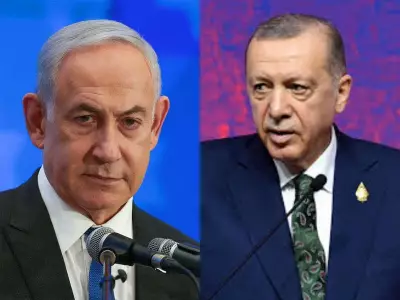
Former NCERT director Krishna Kumar, in his edit piece "An invoice for Netanyahu," notes that Israel requires every 18-year-old to serve 32 months in the military. Kasol in Kullu's Parvati valley, a hotspot for Israeli rave parties, recently faced a court order against police negligence in controlling rave culture. The place serves as therapy after conscription, with DJs, loud music, alcohol, and drugs restoring youths' capacity for battle. Kumar suggests sending an imaginary invoice to Prime Minister Benjamin Netanyahu for this service.

India's Energy Security and Gulf Relations
Former Ambassador to Egypt and UAE Navdeep Suri, in his edit piece "Gulf anchors India's energy security," advises India to rebuild strategic petroleum reserves and start similar reserves for LNG after weathering an energy crisis. Diversification of oil supplies is essential, but the Gulf remains India's most proximate source of oil and gas. The UAE's decision to quit OPEC amid the crisis indicates plans to raise crude output from 3.2 million to nearly 5 million barrels per day, potentially supplying more to the Indian market.