

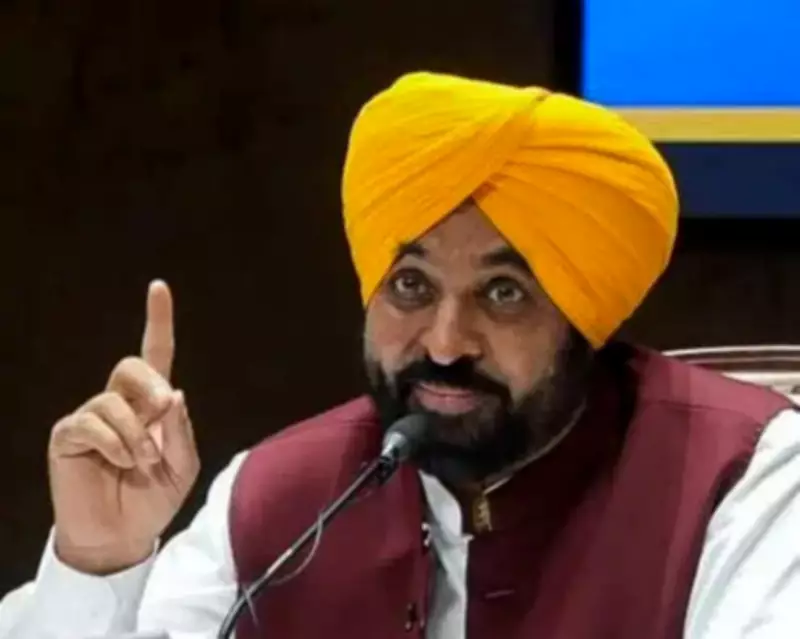
Punjab Moves Forward with DGP Appointment Process
In a significant development, the Punjab government, under Chief Minister Bhagwant Mann's approval, is preparing to submit a proposal to the Union Public Service Commission (UPSC) early next week. This proposal includes the names of 14 Indian Police Service (IPS) officers for consideration by the UPSC empanelment committee. The committee will shortlist three candidates for the position of regular Director General of Police (DGP) in the state.
Selection and Tenure Details
From the panel of three officers selected by the UPSC committee, Punjab will have the authority to appoint one as the regular DGP. As per the Supreme Court's landmark 2006 judgment in the Prakash Singh versus Union of India case and subsequent UPSC guidelines, the appointed DGP will serve a minimum tenure of two years, regardless of their superannuation date.
A government functionary revealed that Chief Minister Bhagwant Mann has cleared the proposal containing the names of 14 eligible officers. This move comes after the Supreme Court, on February 5, reprimanded several states, including Punjab, for continuing with acting DGPs. The UPSC initially directed Punjab to submit a proposal within 10 days, followed by a reminder when the state missed the deadline.

Eligibility and Current Scenario
Punjab currently has 16 DGP-rank officers. Among them, two 1993-batch IPS officers, Special DGP (Law & Order) Arpit Shukla and Special DGP (Human Resource Development & Welfare) Ishwar Singh, are set to retire on April 30 and May 31, respectively, this year. According to UPSC guidelines, officers must have at least six months of residual service from the vacancy date to be considered for the DGP post. The UPSC has fixed February 5, the day of the Supreme Court directive, as the vacancy date for Punjab's DGP position.
Notably, Parag Jain, a 1989-batch Punjab cadre IPS officer currently heading the Research & Analysis Wing (RAW), has declined consideration for the top post. The Ministry of Home Affairs has also not approved his repatriation to Punjab.
List of Eligible Officers
The 14 DGP-rank officers eligible for consideration include:
- 1992-batch IPS officers: Acting DGP Gaurav Yadav, Special DGP (Punjab Police Housing Corporation) Sharad Satya Chauhan, Special DGP (Anti Narcotics Task Force) Kuldeep Singh, and Harpeeet Singh Sidhu (awaiting posting).
- 1993-batch IPS officers: Special DGP (Community Affairs Division & Women Affairs) Gurpreet Kaur Deo, Special DGP (Punjab State Power Corporation Ltd) Dr Jitendra Kumar Jain, Special DGP (Railway) Shashi Prabha Dwivedi.
- 1994-batch IPS officers: Special DGP (Headquarters) Sudhanshi Shekhar Srivastava, Special DGP-cum-chief director, Vigilance Bureau, Praveen Kumar Sinha, Special DGP (Traffic & Road Safety) Aamardeep Singh Rai, Special DGP (Cyber Crime) Voruvuru Neeraja, Special DGP-cum-director, Maharaja Ranjit Singh Punjab Police Academy (MRSPPA), Phillaur, Anita Punj, Special DGP (Human Rights) Dr Naresh Kumar, and Special DGP (Tech Services) Ram Singh.
Acting DGP and Committee Adjustments
In July 2022, the AAP-led government appointed 1992-batch IPS officer Gaurav Yadav as acting DGP, superseding several senior officers. Yadav has since continued in this role. As he is now a contender for the regular DGP post, the UPSC has permitted Punjab to include the state home secretary in the empanelment committee alongside the chief secretary, replacing the DGP's position. Punjab made this request to the UPSC last month.
The UPSC empanelment committee typically comprises the chief secretary and DGP of the concerned state, along with the UPSC chairman or a member as chairman, Union home secretary or a nominee not below the rank of special secretary, and a head of a central police organization nominated by the MHA from outside the state cadre.
Background and Legal Context
Punjab has been operating with an acting DGP since July 2022 when Gaurav Yadav was appointed. Following the Supreme Court's February 5 directive against the 'acting DGP culture,' the UPSC set February 5 as the vacancy date. Normally, states must send proposals three months before a vacancy occurs.

Punjab had delayed its proposal, citing the Punjab Police Amendment Bill (2023), passed by the Punjab Assembly in 2023. This bill proposed a state-controlled seven-member committee for DGP selection, potentially bypassing the Supreme Court-mandated UPSC process. However, on March 12, the Supreme Court rejected Punjab's argument, which referenced the bill pending with the President.





